
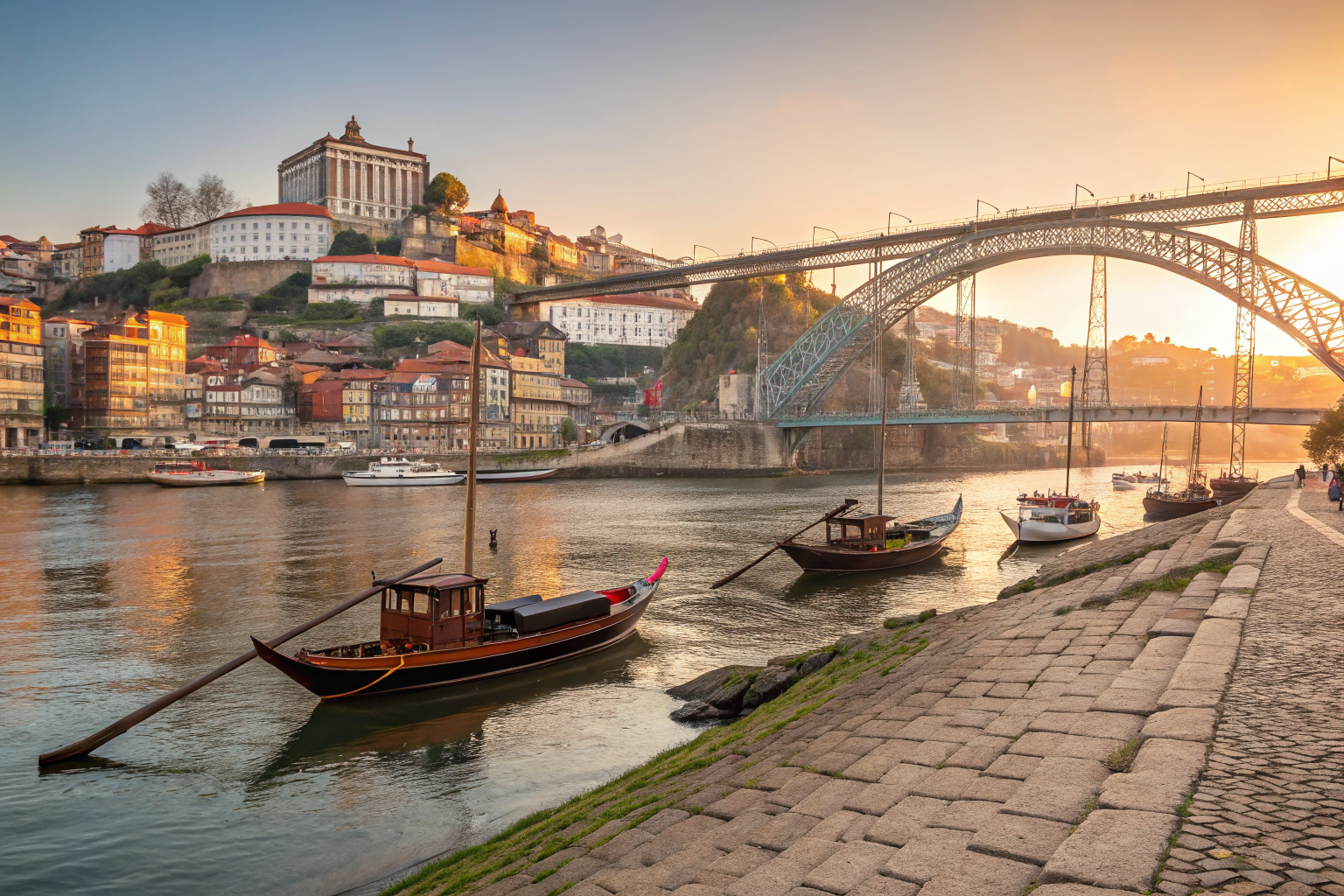
Porto old town is the city’s historic centre, with Ribeira as its most famous riverside quarter. It is the part of Porto most visitors picture first: colourful houses stacked above the Douro, steep cobbled lanes, tiled churches, viewpoints, and the bridge that leads to the famous port wine lodges in Vila Nova de Gaia.
What makes Porto’s old town special is not just the architecture, but how compact and walkable it feels once you understand the layout. You can move from cathedral viewpoints to riverfront cafés, historic streets, and wine-focused experiences in a single day — but only if you plan around the hills rather than against them.
In this guide, I’ll show you what Porto old town actually includes, which areas are worth prioritising, what to see on foot, where to eat and drink, and how to make the most of your time without turning the day into one long uphill climb.
Quick answer
- Best-known area: Ribeira
- Best first walk: São Bento → Sé → Ribeira → Dom Luís I Bridge
- Best add-on: cross to Gaia for port wine lodges and river views
- Main challenge: steep hills and cobblestones
Introduction
Porto old town is one of the easiest historic centres in Portugal to fall for. The views are dramatic, the streets feel layered with history, and almost every walk ends at a riverfront scene that looks better in real life than it does in photos.
At the same time, it helps to understand that Porto old town is not only Ribeira. Ribeira is the most iconic part, but the historic centre also includes uphill areas around the cathedral, São Bento, Clérigos, and the streets that connect the riverfront to the higher city. UNESCO’s listed historic centre is broader than the riverside alone. :contentReference[oaicite:1]{index=1}
That is why the best visit is not just “go to Ribeira.” It is understanding how the old town fits together, so you can move through it naturally and see the parts that make Porto feel both beautiful and lived-in.
What Porto old town actually includes

When people search for Porto old town, they often mean Ribeira — the photogenic riverside area with colourful buildings facing the Douro. But in practice, Porto’s old town is broader than that. The historic centre also includes the cathedral area, upper streets around São Bento and Clérigos, and the dense network of lanes that connect the riverfront with the higher city.
This matters because if you only go to Ribeira, you will see Porto’s prettiest riverside face, but not the full structure of the old town. The best experience comes from moving between the upper and lower levels of the city, rather than staying only by the water.
Porto’s historic centre is recognized by UNESCO as the Historic Centre of Oporto, Luiz I Bridge and Monastery of Serra do Pilar, which makes it clear that the old town is not a single square or district but a wider historic landscape. :contentReference[oaicite:2]{index=2}
Why the hills matter more than you expect
Porto looks compact on the map, but the hills change everything. Distances that seem short can feel much longer because of stairs, steep inclines, and cobbled streets that slow you down more than you expect.
- wear shoes with good grip for cobblestones
- plan your walk downhill where possible
- save viewpoints and steeper sections for cooler hours
- use the bridge, funicular, or transport strategically instead of climbing everything
If you plan around the terrain, Porto old town feels rewarding rather than exhausting.
Why the bridge and river views define the experience
The Dom Luís I Bridge is one of the main reasons Porto old town feels so visually unforgettable. It does more than connect Porto to Gaia — it ties together the two halves of the classic visitor experience: the historic centre on one side and the port wine lodges on the other.
For many visitors, crossing the bridge is the moment the layout of Porto finally makes sense. From there, you can see how the city climbs away from the river and why the old town feels so dramatic in photos and in person.
Best areas to explore in Porto’s old town
The easiest way to understand Porto old town is to break it into a few walkable areas. They are close to each other, but each one feels slightly different and works best at a different pace.
| Area | Best for | What it feels like |
|---|---|---|
| Ribeira | Views, atmosphere, riverfront walking | Iconic, lively, photogenic |
| Sé / cathedral area | Historic perspective and viewpoints | Older, quieter, more dramatic |
| São Bento / Flores / Clérigos | Major sights, shops, architecture | Busier, central, easy for first-time visitors |
| Gaia waterfront | Port lodges and skyline views back to Porto | Wine-focused, scenic, ideal at sunset |
If this is your first time in Porto, do not treat these as separate destinations. The pleasure of the old town comes from walking between them and seeing how the city changes with elevation, light, and river views.
Ribeira: where most first visits begin
Ribeira is the image most travelers already have in mind before they arrive in Porto. It is lively, colourful, and often crowded — but still worth it because the setting is genuinely beautiful. The riverfront, the boats, the stacked façades, and the view toward Gaia make it one of the easiest places in the city to simply slow down and enjoy where you are.
It works best as part of a larger walk rather than as the whole day. Come for the views, stay for a drink or meal, then keep moving uphill or across the bridge so you see more than the waterfront.
Upper streets and quieter corners
One of the nicest things about Porto old town is that it becomes calmer very quickly once you leave the most obvious riverside stretch. A few streets uphill, the city feels less performative and more local, with quieter corners, laundry lines, old façades, and small cafés that make the historic centre feel lived-in rather than staged.
If you have time, give yourself permission to drift a little away from the postcard view. Some of the best moments in Porto come from streets that are not famous, but simply feel right.
The cathedral area for history and perspective
The area around Porto Cathedral helps make sense of the city’s age and structure. It feels older, more elevated, and more defensive than Ribeira, which is one reason it gives such strong views over the roofs and the river below.
If you want Porto old town to feel like more than a pretty riverfront, the cathedral area is essential. It gives you the historical and topographical perspective that Ribeira alone cannot.
Must-see sights in Porto’s old town
If you are short on time, Porto old town is one of those places where it helps to focus on a few strong highlights rather than trying to check off everything. The best visit usually combines one or two major landmarks, one panoramic viewpoint, the riverfront, and at least one food or wine stop.
- São Bento Station
- Porto Cathedral
- Ribeira waterfront
- Dom Luís I Bridge
- A port lodge in Gaia
That combination gives you architecture, history, atmosphere, and one of Porto’s most characteristic experiences without turning the day into a marathon.
Best landmarks to prioritise on a first visit
| Site | Why it matters | Best use of your time |
|---|---|---|
| São Bento Station | One of Porto’s most iconic interiors | Quick stop at the start of a walking route |
| Porto Cathedral | Historic anchor of the old town | Visit for views and context |
| Dom Luís I Bridge | Defines the Porto skyline and links Porto with Gaia | Cross on foot for the full experience |
| Clérigos area | Central, lively, easy to combine with other sights | Good for a broader historic-centre walk |
If this is your first day in Porto, prioritise the places that help you understand the city visually. Porto is a place where views and movement between levels are as important as the monuments themselves.
Why azulejos matter in Porto’s old town
Azulejos are one of the visual details that make Porto instantly feel Portuguese. You will see them in stations, churches, and façades, and they add an extra layer of texture to the old town beyond the river views and stone streets.
Even if you are not specifically “into tiles,” they become part of what makes wandering through Porto feel rich and memorable rather than simply scenic.
Should you do a river cruise?
A short river cruise can be worth it if this is your first time in Porto and you want to see the old town from the water. It gives you a different sense of the city’s slopes, bridges, and skyline, especially if you have already walked the waterfront and want a new perspective.
That said, if your time is limited, walking through Ribeira and crossing to Gaia usually gives you a stronger feeling for Porto than a cruise alone. A boat ride works best as an add-on, not as the main event.
Food, drink and port wine experiences
One of the easiest ways to make Porto old town feel memorable is to plan it around one good meal and one wine moment rather than trying to graze randomly all day. The historic centre is full of places to eat, but the best experience usually comes from slowing down and choosing one or two spots well.
If food is part of why you travel, it is worth reading this alongside your guide to traditional food in Porto, so you know what to order beyond the obvious tourist menus.
What to eat in Porto’s old town
Porto old town is a good place to try classic local dishes, but not every restaurant in Ribeira is equally worth your time. In general, it helps to move one or two streets away from the most obvious riverfront tables if you want something that feels more local and less purely scenic.
For many visitors, the best strategy is simple: have one atmospheric riverside drink, but save your main meal for a place chosen more for food than for the view.
Which local dishes are worth trying
If you want one iconic Porto dish, try francesinha. If you want something more traditional and rooted in the city’s identity, look for older-style local dishes and tavern-style menus rather than tourist-only sets.
The key is not trying everything at once. Porto rewards slower eating and a little curiosity more than checklist-style dining.
Why you should cross to Gaia for port wine
Even though the article is about Porto old town, one of the best things you can do is cross the bridge to Vila Nova de Gaia. That is where the historic port lodges are, and it is also where you get some of the best views back toward Porto’s old town.
The combination works perfectly: explore Porto on foot first, then head to Gaia for a tasting or lodge visit later in the day. It is one of the most natural and rewarding half-day combinations in the city.
Where to stay in Porto’s old town
Staying in Porto old town can be a great choice if you want atmosphere, walkability, and the feeling of being inside the city rather than commuting into it. But the best area depends on what kind of trip you want.
| Area | Best for | Possible downside |
|---|---|---|
| Ribeira | Views and classic atmosphere | Can feel busier and noisier |
| Upper historic centre | Easier access to key sights | Still hilly, not as scenic as riverside |
| Gaia riverside | Wine lodges and postcard views of Porto | Less “inside Porto old town” feeling |
For first-time visitors, staying somewhere that lets you walk into the historic centre easily usually matters more than chasing the most famous view.
Practical tips for walking Porto’s historic centre
Porto old town is best explored on foot, but it is much more enjoyable if you accept that you will not see everything in one perfectly efficient loop. This is a city for walking, stopping, looking back, and letting the views slow you down a little.
- Wear shoes with grip for steep cobblestones
- Start higher and walk downhill where possible
- Build café stops into your route instead of rushing
- Do not underestimate how much energy the hills take
- Cross to Gaia only when you still have time to enjoy it properly
One well-paced day in Porto old town is usually more satisfying than trying to cover everything too quickly.
How to plan one perfect day in Porto old town
If you only have one day, the easiest route is to begin around São Bento, continue to the cathedral area for the higher-city perspective, walk down toward Ribeira, then cross or view the Dom Luís I Bridge and finish with a port wine experience in Gaia.
| Time of day | Best plan |
|---|---|
| Morning | São Bento, cathedral area, upper historic streets |
| Midday | Walk down into Ribeira and stop for lunch or a drink |
| Afternoon | Bridge views and Gaia wine lodges |
| Evening | Return for dinner with a view or a quieter local meal uphill |
This kind of route works well because it follows the geography of Porto instead of fighting it. It also gives you the classic old-town experience without feeling rushed.
If you are planning a wider trip, Porto also fits naturally into a broader Portugal and Spain itinerary, especially if you are moving between northern Portugal and Lisbon.
Frequently Asked Questions
Porto old town usually refers to the city’s historic centre, with Ribeira as its most famous riverside part. It includes more than just the waterfront and is best understood as a wider historic walking area. :contentReference[oaicite:3]{index=3}
Not exactly. Ribeira is the most iconic and photogenic part of Porto old town, but the historic centre also includes the cathedral area, upper streets, and other connected historic zones. :contentReference[oaicite:4]{index=4}
One well-planned day is enough for the essentials, but two days gives you a much better pace and more time for food, viewpoints, and Gaia.
Yes, but it is much hillier than it looks. It is walkable in the sense that the sights are close together, but the slopes and cobblestones make pacing important.
Yes, if you have time. Crossing to Gaia is one of the best ways to combine river views, port wine lodges, and a fuller sense of Porto’s historic setting.
