
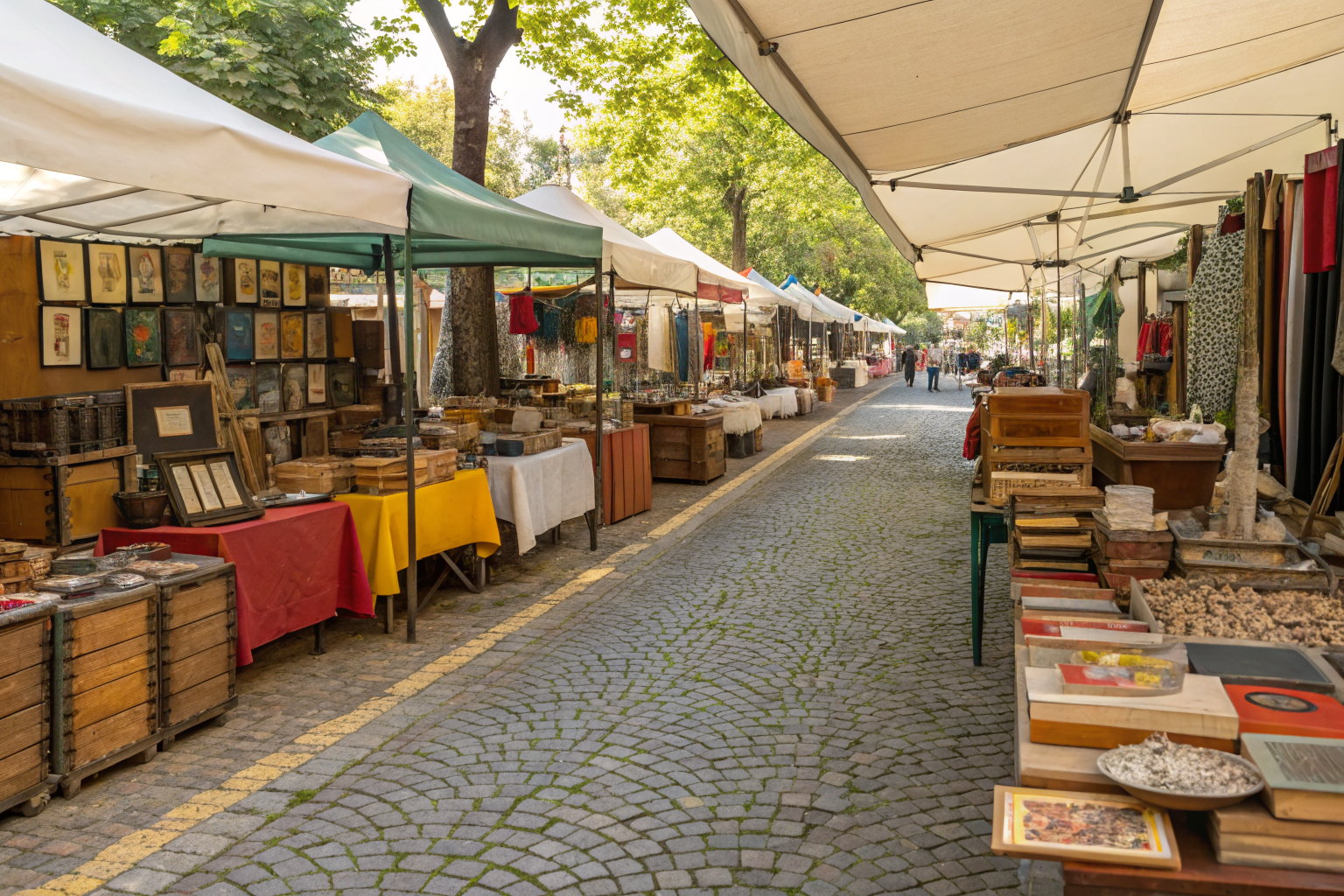
Flea markets in Lisbon are one of the best ways to experience the city beyond the usual sightseeing route. From antiques and vintage clothing to azulejo tiles, books, and unexpected home décor finds, Lisbon’s markets mix local atmosphere with the thrill of discovering something genuinely unique.
The most famous market is Feira da Ladra, but it is not the only one worth visiting. Depending on your interests, you may prefer a classic antiques market, a more creative vintage scene, or a smaller neighborhood market that feels more local and less touristy.
In this guide, I’ll show you which flea markets in Lisbon are actually worth your time, what to expect when you visit, how bargaining usually works, and how to fit a market visit naturally into your Lisbon itinerary.
Quick answer
- Best-known flea market: Feira da Ladra
- Best for first-time visitors: Feira da Ladra + the surrounding Alfama area
- Best time to go: early for browsing, later for easier bargaining
- What to look for: antiques, vintage pieces, books, ceramics, and one-of-a-kind souvenirs
Introduction
Lisbon flea markets are one of the easiest ways to see a more local side of the city. They combine browsing, people-watching, neighborhood atmosphere, and the chance to find something much more personal than a standard souvenir.
The best-known market is Feira da Ladra, held in the historic Santa Clara area, but Lisbon also has smaller markets and vintage-focused spots that can fit different travel styles. Some are better for antiques and collectibles, while others are more about casual browsing and enjoying the local scene.
Even if you are not planning to buy anything big, visiting a flea market in Lisbon is worth it for the atmosphere alone. It is one of those experiences that fits naturally into a slower morning in Alfama, Graça, or another historic part of the city.
Because many of Lisbon’s markets are set inside older districts, it helps to understand which Lisbon neighborhoods are easiest to combine with your itinerary.
What makes Lisbon flea markets special
Lisbon flea markets feel different from standard shopping because they are tied closely to the city’s neighborhoods and everyday rhythm. You are not just browsing objects — you are also walking through areas with real local character, often surrounded by old houses, viewpoints, cafés, and small streets that make the visit feel like part of the city experience rather than a separate activity.
Another reason they stand out is variety. In the same market, you might see antique furniture, vintage clothes, books, ceramics, vinyl, tools, old photographs, or handmade pieces. That mix is part of the appeal: Lisbon markets are less polished than boutiques, but much more interesting.
For visitors, that makes flea markets a good fit not only for shopping but also for slow travel. Even if you leave without buying anything, you still get a more personal feel for Lisbon than you would from a standard souvenir street.
Markets in areas like Alfama and Graça pair especially well with a walk through Lisbon old town, where the atmosphere is part of the experience.
How to visit Lisbon flea markets efficiently

Lisbon flea markets are fun, but they can also feel chaotic if you arrive without a plan. The easiest way to enjoy them is to treat them less like a shopping mission and more like a slow neighborhood experience: walk the whole market first, notice which stalls stand out, and only then go back for a closer look.
This helps in two ways. First, you get a better sense of prices before buying anything. Second, you avoid spending all your time at the first few stalls and missing the rest of the market. That matters especially at larger places like Feira da Ladra, where the best find is not always the first one you see.
- Do one full walk through the market before buying
- Take note of stalls with items you genuinely like
- Compare quality and prices before deciding
- Come back later if you want to negotiate
If you are visiting Lisbon for only a few days, markets work best when they are combined with a nearby neighborhood walk, café stop, or viewpoint rather than treated as a stand-alone shopping trip.
That is why flea markets pair especially well with a morning in Lisbon old town, where browsing can naturally turn into sightseeing.
Best time to visit Lisbon flea markets
The best time to visit depends on what kind of experience you want. If your priority is selection, go early. If your priority is a calmer atmosphere or a slightly better chance of bargaining, go later.
For most visitors, the best balance is mid-morning: early enough to see plenty of stalls, but not so early that the market feels rushed or crowded with serious buyers only.
| Timing | What it’s best for | What to expect |
|---|---|---|
| Early morning | Best selection | More choice, more energy, more serious buyers |
| Mid-morning | Best overall experience | Good selection, easier pace, better for casual visitors |
| Later in the day | Easier bargaining | Less choice, but sometimes more flexibility on price |
If you are visiting mainly for atmosphere and browsing, mid-morning is usually the sweet spot. If you are searching for something specific, arriving earlier is the safer option.
If you plan your market morning well, you can easily continue with lunch or coffee in the central Lisbon area afterward.
What to expect in different seasons
Lisbon flea markets can be worth visiting throughout the year, but the experience changes with the season. Spring and autumn are usually the most comfortable times to browse because the weather is mild and walking between stalls feels pleasant rather than exhausting.
Summer markets can still be enjoyable, but it is better to go earlier in the day before the heat builds. Winter visits tend to feel quieter and more local, although weather can affect how long you want to stay outdoors.
- Spring: one of the best seasons for browsing comfortably
- Summer: go earlier to avoid heat and stronger midday sun
- Autumn: pleasant weather and a relaxed city atmosphere
- Winter: quieter feel, but less ideal in bad weather
If you are visiting Lisbon primarily for city walks, markets fit especially well into spring and autumn itineraries, when they feel like a natural extension of a day outdoors.
What to bring to a Lisbon flea market
You do not need a special shopping kit to enjoy Lisbon flea markets, but a few practical things make the experience easier. Since markets are often set in hilly areas with cobblestones, comfort matters just as much as shopping strategy.
- comfortable shoes for walking on cobblestones
- a tote bag or foldable shopping bag
- some cash for small purchases
- your phone for directions and quick price checks
- water, especially in warmer months
If you think you might buy something fragile, it is also worth carrying a little extra space in your bag so you are not forced to improvise later.
What to buy at flea markets in Lisbon
One of the best things about Lisbon flea markets is that they are good not only for browsing, but also for finding items that feel more personal than a standard souvenir. The most interesting purchases are usually the ones that reflect the city’s design, daily life, or older craftsmanship.
| What to look for | Why it’s worth checking |
|---|---|
| Azulejo tiles | Iconic Portuguese design and one of the most recognizable local finds |
| Vintage ceramics | Easy to pack if small, often more interesting than souvenir-shop pieces |
| Old books and postcards | Affordable, atmospheric, and easy to carry home |
| Vintage clothing and accessories | Good if you enjoy one-of-a-kind pieces |
| Small home décor items | Great for bringing back something distinctive without buying furniture |
If you are shopping as a visitor rather than a collector, smaller items usually make the most sense. They are easier to carry, easier to pack, and often tell a stronger story about Lisbon than something bought in a generic gift shop.
If you are interested in objects that reflect the city’s visual identity, markets pair beautifully with a walk through historic Lisbon, where azulejos and old architectural details are part of the landscape.
How to spot good items at Lisbon flea markets
You do not need to be an antiques expert to enjoy Lisbon flea markets. But it helps to look at items a little more carefully before buying, especially if you want something that feels genuinely special rather than something you may regret carrying around all day.
- check for cracks, chips, stains, or missing parts
- compare similar items at different stalls before buying
- ask about price and origin if something stands out
- focus on pieces you genuinely like, not just “old-looking” ones
For most travelers, the goal is not finding museum-level antiques. It is finding something with character, good condition, and a real connection to Lisbon or Portugal.
Categories worth exploring at Lisbon markets
If you are not sure where to start, some categories are easier and more rewarding than others. Small decorative objects, books, ceramics, and vintage accessories usually make better travel purchases than large furniture or anything difficult to pack.
- Azulejo tiles and ceramics
- Old books, postcards, and prints
- Vintage clothing and accessories
- Small decorative objects with local character
- Affordable artwork or framed pieces if you can carry them safely
If you are visiting Lisbon for a short trip, focus on small items that are easy to bring home and easy to connect to your travel memories later.
How bargaining works at Lisbon flea markets
Bargaining is common at Lisbon flea markets, but it is usually calm and friendly rather than aggressive. You do not need to negotiate every item, and in many cases a small, polite question is enough to understand whether the seller is open to lowering the price.
If you are buying something inexpensive, it is usually better not to push too hard. But if you are buying more than one item, or if the day is getting later, there is often a little more room for flexibility.
- DO ask politely if the price is flexible
- DO bundle items if you want a better deal
- DO stay friendly and relaxed
- DON’T haggle aggressively over very small amounts
- DON’T assume every item must be negotiated
- DON’T be rude about quality just to lower the price
For most visitors, the best approach is simple: be polite, be realistic, and treat bargaining as part of the market culture rather than a battle.
Best flea markets in Lisbon
Lisbon has a few flea markets and vintage-focused spots worth knowing, but one clearly stands out for first-time visitors: Feira da Ladra. It is the market most people mean when they talk about Lisbon flea markets, and it is the easiest place to start if you want the classic experience.
| Market | Area | Best for | Why visit |
|---|---|---|---|
| Feira da Ladra | Alfama / Santa Clara | Classic flea market experience | The most famous, atmospheric, and varied market in Lisbon |
| LX Factory Market | Alcântara | Creative vintage and design atmosphere | Better if you prefer a more curated and trendy feel |
| Campo de Ourique area markets | Campo de Ourique | Smaller local browsing | Good if you want a lighter, neighborhood-based experience |
If you only have time for one, go to Feira da Ladra. It has the strongest atmosphere, the widest mix of items, and the easiest connection to other interesting parts of the city. It also works well for travelers who want to combine browsing with a wider morning walk through Lisbon.
Because Feira da Ladra sits close to older districts, it pairs especially well with exploring Lisbon old town afterward.
Feira da Ladra: why it is the best place to start
Feira da Ladra is the market most visitors should begin with because it gives you the clearest sense of what Lisbon flea markets are really like. It is lively, varied, and full of objects that range from practical and quirky to beautiful and completely unexpected.
Even if you do not buy much, it is worth going for the atmosphere: the mix of old Lisbon surroundings, casual browsing, and the feeling that you might discover something unusual at any moment.
Other markets worth checking if you have more time
If flea markets are a highlight of your trip rather than just a side activity, it can be worth exploring a second market with a different feel. LX Factory, for example, usually appeals more to travelers who enjoy creative spaces, modern vintage styling, and a more curated atmosphere than the classic flea market format.
Smaller neighborhood markets can also be enjoyable if you prefer slower, less crowded browsing. They may not be as iconic as Feira da Ladra, but they can fit naturally into a more relaxed Lisbon day.
Markets feel very different depending on the district, which is why it helps to know which Lisbon neighborhoods match your travel style.
How to fit a flea market into your Lisbon itinerary
The easiest way to enjoy a flea market in Lisbon is to treat it as part of a neighborhood morning rather than a separate shopping mission. Markets work especially well when combined with a walk, a café stop, or a visit to nearby historic streets rather than squeezed into a packed sightseeing schedule.
For example, Feira da Ladra fits naturally into a slower route through Alfama and the Santa Clara area. That makes it a good choice for travelers who want something a little more local and less structured than major attractions alone.
If you enjoy exploring cities through neighborhoods rather than checklists, flea markets are one of the easiest ways to make your Lisbon itinerary feel more personal.
Market mornings work especially well when combined with guides to Lisbon old town, best neighborhoods in Lisbon, or a relaxed breakfast in Lisbon before you start exploring.
Frequently Asked Questions
Feira da Ladra is the best-known and most popular flea market in Lisbon. It is the best place to start if you want the classic market experience with antiques, vintage pieces, and local atmosphere.
Feira da Ladra is traditionally held on Tuesdays and Saturdays, which is why many visitors plan their Alfama morning around those days.
Yes. Lisbon flea markets are worth visiting for the atmosphere alone, especially in older districts where browsing feels like part of the neighborhood experience.
Yes, polite bargaining is common, especially if you are buying more than one item or visiting later in the day. In most cases, it is best to keep it friendly and reasonable.
Small ceramics, azulejo tiles, old books, postcards, and vintage accessories are often the most practical and memorable choices for travelers.
Early morning is best for selection, while mid-morning is often the best overall balance for most visitors. Later in the day can be better for quieter browsing and occasional bargaining.
