
Key Benefits at a Glance
- Unforgettable Adventure: Explore a volcano from the inside by descending into the empty magma chamber of Algar do Carvão, a rare geological wonder.
- Rich History: Immerse yourself in culture by wandering the charming cobblestone streets of Angra do Heroísmo, a UNESCO World Heritage Site.
- Natural Beauty: Swim in natural ocean pools formed by volcanic rock in places like Biscoitos, offering a safe and unique way to enjoy the Atlantic.
- Accessible Outdoors: Discover the island’s lush landscapes through dozens of well-marked hiking trails suitable for various fitness levels.
- Authentic Cuisine: Experience true Azorean flavor by trying local dishes like Alcatra, a famous slow-cooked beef pot roast unique to the island.
Purpose of this guide
This guide is for travelers planning a trip to Terceira Island who want to discover its must-see attractions and hidden gems. It solves the problem of creating a balanced itinerary that covers historical sites, natural wonders, and cultural experiences. You will learn how to prioritize your time, find the best spots for photography and relaxation, and avoid common mistakes like missing the limited opening hours of key sites. Following these tips ensures a memorable and hassle-free adventure on one of the Azores’ most fascinating islands.What to Do in Terceira Island: An Insider’s Guide to the Azores’ Hidden Gem
I’ve visited Terceira Island four times over the past six years, and each trip reveals new layers of this remarkable Azorean gem. While most travelers flock to São Miguel, Terceira offers something uniquely compelling – a perfect blend of dramatic volcanic landscapes, authentic Portuguese culture, and the kind of genuine warmth that makes you feel like a welcomed friend rather than just another tourist. From descending into ancient volcanic chambers to swimming in natural lava pools, this island consistently surprises me with experiences I simply can’t find anywhere else in the Azores.- Volcanic landscapes including unique lava tubes and sulfur fields
- UNESCO World Heritage historic town of Angra do Heroísmo
- Natural swimming pools formed by volcanic rock
- Authentic cultural experiences with colorful Impérios chapels
- Car rental essential for exploring the island effectively
- 3-4 days minimum recommended for comprehensive visit
- Best weather in late spring and early fall
My introduction to Terceira Island
 Terceira Island sits in the central group of the Azores archipelago, roughly 900 miles off the coast of Portugal in the vast Atlantic Ocean. What struck me immediately during my first visit was how different this volcanic island feels compared to São Miguel – less touristy, more authentic, with a palpable sense of history that permeates every cobblestone street and volcanic crater.The island spans just 153 square miles, making it incredibly manageable to explore, yet dense with attractions that could easily fill a week. Unlike São Miguel’s dramatic lakes and hot springs, Terceira captivates with its unique combination of underground volcanic wonders, remarkably preserved colonial architecture, and a living culture that hasn’t been diluted by mass tourism. The locals still gather in traditional Impérios for community celebrations, fishermen still work from the same harbors their grandfathers used, and the island’s volcanic soil continues to produce some of the most flavorful beef and dairy I’ve tasted anywhere in Europe.
How I get to and around Terceira Island
Getting to Terceira requires some planning, but the journey has become significantly easier over the years. Lajes International Airport serves as your gateway, and I’ve found three main routing strategies that work well depending on your departure point and budget.From Europe, Ryanair offers the most affordable direct connections, particularly from Lisbon and several major cities. I’ve flown this route multiple times and appreciate both the price point and reliability. TAP Portugal provides more premium service with better baggage allowances and meal service, connecting through Lisbon or Porto Airport. For inter-island travel, Azores Airlines and SATA Air Açores operate frequent flights between Terceira and Ponta Delgada on São Miguel island, making multi-island trips seamless.North American travelers have seasonal direct options that I’ve witnessed fellow passengers rave about. Routes from Boston, New York, Oakland, and Toronto operate during peak season, eliminating the need for European connections. These flights typically run from late spring through early fall, coinciding with Terceira’s best weather.| Transportation | Pros | Cons | Best For |
|---|---|---|---|
| Car Rental | Complete freedom, access to remote areas, flexible timing | Narrow roads, weather challenges, parking in towns | Independent travelers, families |
| Public Bus | Affordable, eco-friendly | Limited routes, infrequent schedules, no remote access | Budget travelers, short distances |
| Guided Tours | Local expertise, no driving stress, group experience | Fixed schedules, higher cost, less flexibility | First-time visitors, non-drivers |
| Taxi/Private Guide | Personalized experience, local knowledge | Most expensive option, advance booking required | Luxury travelers, special occasions |
For travelers island-hopping in the Azores, combining Terceira with Faial creates a diverse itinerary featuring both volcanic craters and charming harbor towns connected by regular ferry service.
My recommendations for car rental on Terceira
After navigating Terceira’s roads in various weather conditions and vehicle types, I cannot overstate the importance of choosing the right rental car. The island’s narrow, winding roads and sudden weather changes demand more consideration than your typical vacation rental.I always book automatic transmission vehicles well in advance – they’re surprisingly limited on the island, and after struggling with a manual car on steep, wet roads during my second visit, I learned this lesson the hard way. The extra cost proves worthwhile when you’re navigating Terceira’s challenging terrain while trying to enjoy the scenery.Lajes Airport offers the best selection and convenience for rentals. I’ve used both international chains and local companies, finding that slightly larger vehicles handle the rural roads better than compact cars. The comprehensive insurance feels excessive until you encounter your first stretch of road barely wider than your vehicle, with stone walls on both sides – then it becomes invaluable peace of mind.- Book automatic transmission cars well in advance – they’re limited
- Choose comprehensive insurance due to narrow roads and weather
- Rent from airport location for convenience and better vehicle selection
- Avoid compact cars – slightly larger vehicles handle better on rural roads
- Check for GPS inclusion or download offline maps before arrival
Public transportation and guided tours I’ve tried
I tested Terceira’s public bus schedule during my third visit to understand alternatives for travelers avoiding car rental. The system covers major towns and some tourist sites, but operates on limited schedules that don’t align well with flexible sightseeing. Buses run more frequently between Angra do Heroísmo and Praia da Vitória, but reaching volcanic sites or remote beaches proves challenging without significant time investment.Guided tours offer a viable middle ground that I’ve sampled with visiting friends. Several operators provide full-day excursions covering major attractions, and the guides’ local knowledge adds valuable context I wouldn’t get driving independently. The downside involves fixed schedules and group dynamics that might not suit every traveler’s pace.Taxi services and private guides represent the premium option I’ve arranged for special occasions. While expensive, a knowledgeable local driver can customize the experience, share insider knowledge, and handle navigation while you focus on photography and enjoyment. For visitors uncomfortable driving or celebrating special occasions, this investment proves worthwhile.The scenic driving routes I love
Two scenic drives on Terceira consistently deliver breathtaking experiences that justify the car rental expense. I’ve driven both routes in different seasons and weather conditions, and they never disappoint.The EN5-2A interior route cuts through Terceira’s highlands, offering dramatic landscape changes from coastal views to volcanic crater lakes to dense forests. This road connects Santa Bárbara to the central volcanic sites, passing through terrain that feels almost otherworldly. I particularly love the section near Cabrito, where rolling pastures suddenly give way to volcanic moonscapes.My favorite drive follows the EN3-1A, locally known as the “Cookie Way,” connecting Angra do Heroísmo to Biscoitos along the northern coast. This route combines coastal sightseeing with cultural stops, passing traditional villages, wine cooperatives, and countless Impérios. The road hugs the coastline in sections, providing spectacular ocean views, then curves inland through agricultural areas where you’ll encounter more cattle than cars.Both routes offer numerous unmarked viewpoints that I’ve discovered through multiple visits. The key lies in driving slowly, pulling over safely when something catches your eye, and allowing extra time for spontaneous stops that often become trip highlights.Natural wonders and volcanic sites I’ve explored
Nothing prepared me for my first descent into Algar do Carvão – standing inside an ancient volcanic chimney remains one of my most awe-inspiring travel experiences. Terceira’s geological attractions offer something unique even among the volcanic Azores, with underground chambers and steaming fields that showcase the island’s fiery origins in ways you can touch, smell, and experience firsthand.The island’s volcanic sites represent 15,000 years of geological activity, creating a landscape that feels simultaneously ancient and alive. Unlike the more famous volcanic features on São Miguel, Terceira’s attractions allow intimate access to geological processes, from walking inside extinct volcanoes to observing active sulfur vents up close.What fascinates me most about these natural attractions is their accessibility combined with their raw power. You’re not observing volcanic activity from a distance – you’re literally walking through it, breathing the sulfurous air, feeling the temperature changes, and gaining visceral understanding of the forces that shaped not just Terceira, but the entire Azores archipelago.Algar do Carvão – my journey inside a volcano
Descending the narrow stone steps into Algar do Carvão feels like entering another world. This volcanic chimney, formed around 3,200 years ago, represents one of the few places on Earth where you can walk inside an extinct volcano and observe its internal structure from within.The lava tube extends 100 meters deep, with the final chamber opening into a cathedral-like space adorned with rare silica stalactites – formations found in only a handful of locations worldwide. The temperature drops noticeably as you descend, making warm clothing essential even on hot summer days. I learned this during my first visit when I descended in shorts and a t-shirt, quickly regretting my optimism.Photography inside Algar do Carvão challenges even experienced photographers due to the low light conditions and high humidity that fogs camera lenses. I’ve found that allowing equipment to acclimate for several minutes before shooting helps, though the otherworldly formations prove difficult to capture adequately regardless of camera skill.The steps can become extremely slippery, particularly after rain or during high humidity periods. I’ve witnessed several visitors struggle with inadequate footwear, making proper hiking boots or shoes with aggressive tread patterns essential for safe navigation.- Open: April-September 2:30-5:30pm, October-March 2:00-5:00pm
- Entry fee: €8 adults, €4 children (combined ticket with Gruta do Natal available)
- Wear non-slip shoes – steps can be extremely slippery
- Bring warm clothing – temperature drops significantly inside
- Photography allowed but challenging due to low light conditions
- Guided tours available in Portuguese, English, and French
My visit to Gruta do Natal Christmas Cave
Gruta do Natal offers a completely different underground experience from Algar do Carvão, despite their proximity. This lava tube system extends horizontally rather than vertically, creating tunnel-like passages that showcase different volcanic formation processes.The cave earned its “Christmas Cave” name from early explorers who discovered it on December 25th, though the formations inside create their own year-round wonder. Unlike the cathedral-like chamber of Algar do Carvão, Gruta do Natal feels more intimate, with lower ceilings and narrower passages that bring you closer to the volcanic rock formations.I recommend visiting both sites using the combined ticket option, as they complement each other perfectly. While Algar do Carvão impresses with its scale and unique stalactites, Gruta do Natal provides better understanding of how lava tubes form and evolve. The Gruta do Natal Interpretation Centre offers excellent geological context that enhances both experiences.The guided tours here prove particularly valuable, as guides explain formation processes and point out details easily missed during self-guided visits. I’ve taken both guided and independent tours, finding that the additional context significantly enriches the experience, especially for first-time visitors to volcanic caves.Furnas do Enxofre – Terceira’s steaming sulfur fields
Walking the boardwalk trail through Furnas do Enxofre engages all your senses in ways that photographs simply cannot convey. The distinctive sulfur smell hits you first, followed by the sight of steam rising from countless sulfur vents scattered across the landscape like natural chimneys.This area represents Terceira’s most accessible display of ongoing volcanic activity, with underground heat sources creating the steam and sulfurous gases that continuously emerge from the earth. The boardwalk system allows safe exploration while protecting both visitors and the fragile volcanic environment.I’ve visited Furnas do Enxofre in different weather conditions, finding that cooler days provide the most dramatic visual experience as the steam contrasts more sharply with the air temperature. Windy conditions can make the sulfur smell overwhelming, while calm days allow for better photography of the steam plumes.The site offers excellent comparison opportunities for visitors who’ve experienced similar volcanic features on other Azores islands. Having visited fumaroles on São Miguel and Faial, I find Terceira’s sulfur vents more accessible and visitor-friendly, with better infrastructure for safe observation and photography.Why I love the Serra do Cume viewpoint
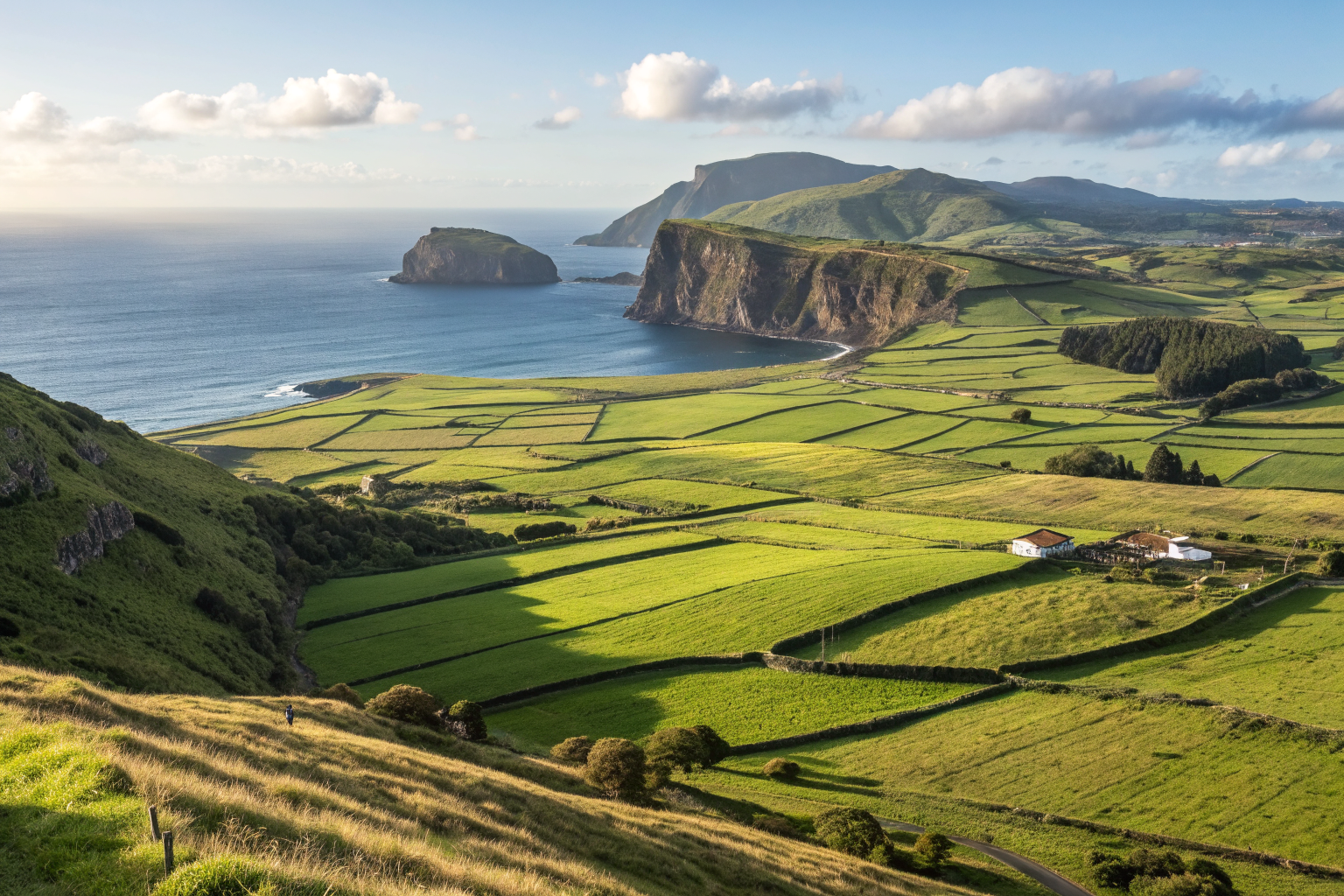
Serra do Cume provides Terceira’s most iconic panoramic view, showcasing the island’s distinctive “patchwork quilt” landscape that appears on countless postcards and travel brochures. I’ve visited this viewpoint in various lighting conditions and seasons, and it never fails to impress.The patchwork landscape results from centuries of agricultural development, with stone walls dividing pastures into geometric patterns that create an almost abstract art piece when viewed from above. Early morning and late afternoon provide the best lighting for photography, with dramatic shadows emphasizing the field divisions and creating depth in the landscape.Fog can obscure the view entirely, particularly during morning hours and in certain weather conditions. I learned to check weather forecasts and plan Serra do Cume visits for clearer periods, though even partially foggy conditions can create mysterious and beautiful scenery as clouds drift across the agricultural patterns below.The viewpoint offers excellent facilities including parking and viewing platforms, making it accessible for visitors with mobility limitations. I particularly appreciate how the site manages to accommodate tour buses and individual visitors without feeling crowded, thanks to multiple viewing areas that spread people across the ridgeline.Best beaches and swimming spots I’ve discovered
Terceira approaches coastal recreation differently than most Atlantic islands. Rather than traditional sandy beaches, the island excels at natural swimming pools carved from volcanic rock, creating protected swimming areas that offer calm water even when the ocean displays its more temperamental moods.These coastal attractions reflect Terceira’s volcanic origins, with black basalt formations creating natural barriers that calm ocean swells and provide safe swimming conditions. Having swum at various beaches across the Azores, I find Terceira’s approach to coastal relaxation uniquely appealing – less about sunbathing on sand, more about experiencing the ocean in intimate, protected settings.The natural swimming pools also offer year-round swimming opportunities, as the volcanic rock absorbs and retains heat, moderating water temperatures even during cooler months. This extends Terceira’s swimming season well beyond what traditional beaches would allow, making coastal activities viable from late spring through early fall.Why I keep returning to Biscoitos natural swimming pools
The Biscoitos swimming pools represent everything I love about Terceira’s approach to coastal recreation. These volcanic pools formed naturally when ancient lava flows met the ocean, creating a series of interconnected swimming areas protected from Atlantic swells by natural rock barriers.Water temperature in the natural pools remains surprisingly comfortable year-round, thanks to the heat-retaining properties of the dark volcanic rock and the protection from cold ocean currents. I’ve swum here in May and September, finding the water refreshing but not shocking, unlike many Atlantic swimming locations.The Biscoitos area offers excellent facilities that enhance the swimming experience without overwhelming the natural setting. Changing rooms, showers, and a snack bar provide convenience, while the design integrates sensitively with the volcanic landscape. Parking accommodates both individual cars and tour buses, though arriving mid-morning helps avoid the busiest periods.Beyond swimming, the Biscoitos village offers additional attractions including a wine museum and traditional biscuit bakeries that explain the area’s name. I always combine pool visits with village exploration, creating full-day experiences that showcase both Terceira’s natural beauty and cultural heritage.- Facilities: Changing rooms, showers, parking, snack bar
- Best time: Mid-morning to avoid crowds, check tide times
- Water temperature: Refreshing year-round, warmest July-September
- Safety: Natural pools protected from ocean waves
- Nearby: Wine museum and traditional biscuit bakeries in village
- Free entry with excellent facilities for families
Porto Martins beach and natural pool – my family-friendly pick
Porto Martins offers Terceira’s best family-friendly swimming experience, combining a small sandy beach with protected natural pools in a less crowded setting than Biscoitos. Located on the eastern coast, this area provides calmer conditions and more space for families with children.The beaches here feature both sand and volcanic rock pools, giving swimmers options based on preference and ocean conditions. During rougher weather, the rock pools provide safe swimming, while calmer days allow ocean access from the sandy areas. I particularly appreciate this flexibility, as it makes Porto Martins viable regardless of weather conditions.Facilities include basic amenities like parking and a small café, though less extensive than Biscoitos. This simpler approach creates a more relaxation-focused atmosphere that I find appealing when seeking quieter coastal experiences. The lack of tour bus access also means fewer crowds and more authentic local atmosphere.The surrounding eastern coast area offers additional exploration opportunities, with traditional fishing villages and coastal walking paths that extend the Porto Martins experience beyond just swimming. I often combine beach visits with village exploration and coastal hiking for comprehensive regional experiences.My day at Praia da Vitória bay
Praia da Vitória provides Terceira’s most traditional beach town experience, with a genuine sandy beach backed by a historic town that serves as the island’s second-largest settlement. This combination of ocean recreation and urban amenities creates a different coastal experience than the island’s more remote swimming spots.The sandy beaches here offer the most conventional beach experience on Terceira, with space for sunbathing, beach games, and traditional seaside activities. Water conditions vary with weather and season, but the protected bay location generally provides calmer swimming than more exposed coastal areas.Praia da Vitória town offers dining options, shopping, and cultural attractions that make full-day visits rewarding beyond just beach time. I particularly enjoy the seafood restaurants near the marina, where local catches provide authentic Azorean dining experiences with harbor views.The town also serves as an excellent base for exploring Terceira’s eastern region, with easy access to Porto Martins, traditional villages, and hiking trails. I often use Praia da Vitória as a central location for multi-day eastern coast exploration, appreciating the accommodation options and urban amenities.The cultural highlights and towns I recommend
Terceira’s historic towns and cultural attractions provide the perfect counterpoint to the island’s natural wonders, showcasing centuries of Portuguese colonial history and heritage that remain vibrantly alive in daily life. Unlike many tourist destinations where culture feels preserved in amber, Terceira maintains living traditions that locals actively practice and visitors can genuinely experience.“The city center of Angra do Heroísmo was classified as a UNESCO World Heritage Site in 1983, due to its unique urban layout and for being a testimony of …” — Explore Terceira Island, Unknown 2024 Source link
How I explore Angra do Heroísmo – a UNESCO World Heritage city
My Angra do Heroísmo exploration follows a walking tour route refined through multiple visits, designed to capture both the famous landmarks and hidden corners that make this UNESCO World Heritage city special. The historic center rewards slow exploration, with architectural details and cultural nuances that reveal themselves only to patient observers.I always start at Cantagalo viewpoint, which provides essential orientation and the best panoramic photography of the city’s layout. From this elevated perspective, you understand how Angra’s urban planning reflects centuries of strategic maritime importance, with the harbor, defensive positions, and residential areas creating a cohesive whole that earned UNESCO recognition.- Start at Cantagalo viewpoint for panoramic city overview and photos
- Walk down to marina area and explore Pátio da Alfandega customs yard
- Stroll along Rua Baixinha for colorful building facades and local shops
- Visit old square and continue to Rua Direita for historic architecture
- Explore Rua dos Minhas Terras for authentic local atmosphere
- End at Capitain’s table area for lunch with harbor views
My adventure around Monte Brasil peninsula
Monte Brasil offers Terceira’s most accessible hiking experience combined with significant historical exploration. This extinct volcanic peninsula connected to Angra do Heroísmo by a narrow isthmus provides viewpoints, historical fortifications, and trails that showcase both natural beauty and military heritage.“This fortress is located inside the area classified as World Heritage, Monte Brasil. The construction dates to 1593, and it was built during the Spanish dominance…” — Azores Airlines, Unknown 2024 Source link
The charming villages of São Sebastião and the eastern coast
São Sebastião and the surrounding eastern villages provide authentic glimpses of rural Terceira Island life that contrast beautifully with Angra’s urban sophistication. These villages maintain traditional architecture and agricultural practices that showcase Terceira’s culture beyond the tourist-focused areas.Porto Judeu offers coastal village charm with traditional fishing boats and seaside restaurants that serve locally caught seafood prepared in time-honored styles. Porto Martins combines village authenticity with beach access, creating opportunities to experience both cultural and natural attractions in single visits.The eastern villages showcase different architectural styles and economic focuses than western Terceira, with more emphasis on agriculture and fishing rather than tourism. I find conversations with locals in these areas particularly rewarding, as residents share insights about island life and traditions that provide deeper cultural understanding.Rural Terceira Island life in these villages revolves around seasonal rhythms of agriculture and fishing that have changed little over generations. Morning visits often coincide with farmers heading to pastures or fishermen returning with catches, providing authentic glimpses of working island life that tourism hasn’t significantly altered.The colorful Impérios – my favorite cultural icons of Terceira
Terceira’s Impérios represent one of the Azores’ most distinctive cultural features – small, colorful Holy Spirit chapels scattered throughout the island that serve as community gathering places for religious celebrations and social events. These colorful buildings fascinate me both for their architectural charm and their role in maintaining traditions that date back centuries.Each Império reflects its community’s character through color choices, architectural details, and decorative elements that create individual personalities while maintaining consistent overall style. I’ve photographed dozens of Impérios across Terceira, finding that each offers unique photographic opportunities while contributing to understanding of local culture.The Holy Spirit chapels become particularly significant during festival seasons, when communities gather for traditions that combine religious observance with social celebration. I’ve been fortunate to witness several of these events, finding them genuinely moving examples of living culture rather than tourist performances.Impérios also serve as navigation landmarks throughout Terceira, with their bright colors and distinctive architecture making them easily recognizable reference points. I often use Impérios as waypoints during driving exploration, finding that they mark communities worth visiting and provide excellent photography opportunities that capture Terceira’s unique cultural landscape.My peaceful retreat at Jardim do Duque da Terceira
Jardim do Duque da Terceira provides Angra do Heroísmo’s most peaceful retreat, combining historic garden beauty with a charming tea house that serves as my favorite relaxation spot during intensive city exploration. This historic garden offers respite from Angra’s busy streets while maintaining connection to the city’s cultural landmarks.The tea house features giant windows that flood the space with natural light, comfortable sofas that invite lingering, and vegetarian options that accommodate various dietary preferences. I’ve spent countless hours here reviewing photography, planning next activities, and simply enjoying the peaceful atmosphere that contrasts with Angra’s more energetic streets.The interpretation center designed by renowned architect Siza Vieira provides historical context about the garden’s significance and its connection to Portuguese literary figures like Almeida Garret and political figures like D. Pedro IV. This cultural depth transforms a simple garden visit into broader understanding of Portuguese history and Terceira’s role in national development.I particularly appreciate how Jardim do Duque da Terceira integrates seamlessly with Angra exploration, providing a natural mid-day break that enhances rather than interrupts city discovery. The combination of natural beauty, architectural interest, and cultural significance creates an experience that epitomizes Terceira’s ability to blend relaxation with education in uniquely appealing ways.Outdoor activities and adventures I recommend
Terceira offers outdoor activities that showcase the island’s diverse landscapes while accommodating various fitness levels and adventure preferences. Having explored similar adventure sports opportunities across the Azores, I find Terceira uniquely rewarding for its combination of accessible trails, diverse adventure options, and stunning natural settings that provide backdrops for memorable experiences.The island’s compact size allows sampling multiple outdoor activities during short visits, while its varied terrain ensures that hiking, water sports, and adventure sports each offer distinctly different experiences. Mistérios Negros and Rocha do Chambre provide trails that rank among the Azores’ most rewarding, while coastal activities take advantage of Terceira’s protected waters and volcanic formations.| Activity | Difficulty | Duration | Best Season | Location |
|---|---|---|---|---|
| Mistérios Negros Trail | Moderate-Hard | 2.5 hours | May-October | Central highlands |
| Rocha do Chambre Trail | Moderate | 3 hours | April-November | Western coast |
| Monte Brasil Hike | Easy | 1-2 hours | Year-round | Angra do Heroísmo |
| Whale Watching | Easy | 3 hours | April-October | Marina departure |
| Diving/Snorkeling | Easy-Moderate | Half day | May-September | Coastal sites |
| Off-road Tours | Easy | 4-6 hours | Year-round | Interior highlands |
My favorite hiking trails on Terceira Island
Terceira’s hiking trails provide access to landscapes and ecosystems that remain invisible from roads, revealing the island’s natural diversity through intimate exploration experiences. I’ve hiked extensively throughout the Azores, and Terceira’s trails consistently rank among my favorites for their variety, accessibility, and scenic rewards.Mistérios Negros trail and Baías da Agualva trail represent Terceira’s premier hiking experiences, each offering distinctly different environments and challenges. Mistérios Negros immerses hikers in dense forest environments that feel almost primordial, while Baías da Agualva provides coastal exploration with dramatic ocean views and volcanic formations.- Waterproof hiking boots essential – trails often muddy
- Rain jacket mandatory – weather changes quickly
- GPS device or offline maps – trail markers can be unclear
- Extra layers – temperature drops significantly in highlands
- Plenty of water and snacks – limited facilities on remote trails
- First aid kit for longer hikes in isolated areas
Conquering the mystical Mistérios Negros trail
Mistérios Negros hike transports you into Terceira’s most enchanting forest environment, where dense forest trail conditions create an almost mystical atmosphere that justifies the “mysterious” name. This technical hiking experience challenges both navigation skills and physical endurance while rewarding hikers with access to ecosystems found nowhere else on the island.The trail begins deceptively easily before entering forest sections where sunlight barely penetrates the canopy, creating an otherworldly environment that feels disconnected from the surrounding island. Dense forest conditions include swampy passages, steep sections, and terrain that requires careful foot placement and steady nerves.I consistently time Mistérios Negros at 2.5 hours, though this varies significantly with weather conditions and hiker fitness levels. The technical hiking aspects include muddy sections that can double travel time, steep descents requiring trekking poles or careful balance, and navigation challenges where the trail becomes unclear.Physical preparation for Mistérios Negros should emphasize cardiovascular fitness and ankle stability, as the uneven terrain and sustained effort challenge even experienced hikers. I recommend this adventure only for hikers comfortable with potentially muddy conditions and willing to accept that clothing will likely require post-hike cleaning.Why I love the Rocha do Chambre trail
Rocha do Chambre provides Terceira’s most varied landscapes hike, transitioning from forest environments to black stone walls to open ridges that showcase the island’s diverse ecosystems within a single trail experience. This hiking route offers something for every type of outdoor enthusiast while providing scenery that changes dramatically throughout the journey.The landscape diversity includes dense forest sections reminiscent of Mistérios Negros, agricultural areas bounded by traditional stone walls, and exposed ridges with panoramic views of Terceira’s interior and coastline. Each section presents different hiking challenges and photographic opportunities that prevent monotony during the 3-hour journey.- Start counterclockwise for easier navigation and better views
- Wear gaiters in wet conditions to keep mud out of boots
- Follow stone wall markers when trail becomes unclear
- Take breaks at ridge sections for panoramic photography
- Allow extra time in winter – muddy sections slow progress significantly
- Carry trekking poles for stability on steep muddy descents
My whale and dolphin watching experience
Whale watching from Terceira provides access to marine wildlife populations that migrate through Azores waters throughout much of the year, with peak seasons offering remarkable opportunities to observe multiple species during single ocean excursions. I’ve participated in several dolphin tours, finding each experience unique due to the unpredictable nature of wildlife encounters.Species commonly spotted include sperm whales, pilot whales, and various dolphin species, with marine wildlife guides providing excellent interpretation of behavior and biology that enhances observation experiences. The ocean conditions around Terceira generally provide stable platforms for whale watching, though seasickness-prone individuals should prepare accordingly.Whale watching operators departing from Monte Brasil marina offer various trip lengths and vessel types, from larger boats accommodating groups to smaller vessels providing more intimate experiences. I’ve found that longer excursions increase wildlife encounter probabilities, though even shorter trips can provide memorable marine wildlife observations.Photography during whale watching requires telephoto lenses and fast shutter speeds to capture wildlife behavior, though operators typically position boats to optimize viewing opportunities. The ocean environment creates challenging lighting conditions that test photography skills while providing potentially spectacular results when marine wildlife cooperates with camera timing.Diving into Terceira’s underwater world
Terceira’s underwater environment showcases marine life and volcanic formations that create unique diving and snorkeling opportunities throughout the island’s coastline. The clear, calm waters provide excellent visibility for observing colorful fish, octopuses, rays, and other ocean creatures that thrive in the volcanic habitat.Diving sites around Terceira offer experiences ranging from shallow snorkeling areas suitable for beginners to deeper locations that challenge experienced divers with caves, swim-throughs, and dramatic underwater topography. The volcanic origin of the island creates interesting underwater landscapes with unique rock formations and diverse marine habitats.Water temperatures remain comfortable for diving and snorkeling from late spring through early fall, with wetsuits recommended year-round due to Atlantic Ocean conditions. I’ve found that morning diving often provides the best visibility and calmest conditions, though afternoon sessions can offer different lighting that enhances underwater photography.Local diving operators provide equipment rental, guided tours, and certification courses that accommodate various experience levels and interests. The adventure aspect of Terceira diving includes the possibility of encountering larger marine species, though most underwater exploration focuses on smaller marine life and geological features.My off-road adventures on Terceira Island
Buggy tours and jeep tours provide access to Terceira’s interior highlands and remote areas that remain inaccessible to standard vehicles, offering off-road adventures that showcase landscapes and viewpoints unavailable through conventional exploration. These guided experiences combine adventure with education as local operators share knowledge about geology, ecology, and history.Off-road adventures typically visit Reserva Florestal Parcial da Serra de S. Barbara e dos Misterios Negros, Lagoa das Patas, Riacho, and various viewpoints including Miradouro da Serra de Santa Bárbara and Miradouro da Ponta do Queimado. These locations provide perspectives on Terceira that self-driving cannot achieve, making buggy tours valuable even for visitors with rental cars.The adventure aspect includes navigating challenging terrain, experiencing Terceira’s microclimates, and accessing areas where weather conditions change rapidly and dramatically. I’ve participated in off-road adventures during different seasons, finding that each offers unique experiences based on vegetation, weather, and seasonal animal activity.Jeep tours and buggy tours also provide social experiences that solo travelers and small groups particularly appreciate, as shared exploration creates opportunities to meet other visitors while benefiting from local guide expertise. The guided nature ensures safety while maximizing access to locations that independent exploration might miss or find challenging to locate.Local food and drink experiences I treasure
Terceira’s food scene reflects the island’s unique position within the Azores, combining traditional cuisine with local ingredients and cooking methods that create gastronomy experiences unavailable elsewhere. Having sampled food across the archipelago, I find Terceira particularly rewarding for its authentic restaurants, distinctive dishes, and genuine hospitality that makes every meal a cultural food experience.The island’s seafood benefits from pristine Atlantic Ocean waters and traditional fishing methods that ensure freshness and quality. Local restaurants like Beira Mar, Ti Choa, and O Forno consistently provide memorable meals that showcase Terceira’s culinary heritage through both preparation methods and ingredient sourcing that emphasizes local products.Traditional cuisine on Terceira reflects centuries of Portuguese influence combined with island adaptations that create unique dishes and flavors. São Mateus area and Angra do Heroísmo offer the highest concentration of authentic restaurants, though excellent food experiences can be found throughout the island in family-run establishments that maintain traditional cooking methods.Traditional dishes I always order on Terceira
Alcatra represents Terceira’s signature dish – a traditional food that showcases the island’s beef quality and distinctive cooking methods that create flavors impossible to replicate elsewhere. This Azorean beef stew slow-cooks in clay pots with wine and spices, creating tender meat and rich flavors that epitomize Terceira’s gastronomy.- Alcatra – Traditional beef stew slow-cooked in clay pot with wine and spices
- Linguiça – Spicy local sausage, best grilled with sweet potato
- Lapas – Grilled limpets with garlic butter, coastal specialty
- Queijadas da Graciosa – Sweet cheese pastries, island dessert favorite
- Vinha d’Alhos – Marinated pork dish with wine and bay leaves
- Fresh fish – Daily catches including grouper, tuna, and local varieties
Frequently Asked Questions
What are the best things to do in Terceira Island?
Terceira Island offers a variety of exciting activities, including exploring the volcanic cave Algar do Carvão, swimming in natural lava pools like those at Biscoitos, and wandering the UNESCO-listed streets of Angra do Heroísmo. Visitors can also hike scenic trails, watch whales and dolphins on boat tours, or experience traditional bull-running events. Don’t miss tasting local cuisine such as Alcatra stew for an authentic cultural immersion.
How many days do you need to explore Terceira Island?
To fully explore Terceira Island, plan for at least 4-7 days to cover major attractions without rushing. This allows time for volcanic sites, hiking, beach relaxation, and cultural experiences in Angra do Heroísmo. If you’re short on time, a 3-day trip can hit the highlights like caves, pools, and viewpoints.
Is Terceira Island worth visiting?
Absolutely, Terceira Island is worth visiting for its stunning volcanic landscapes, rich history, and unique Azorean culture that sets it apart from mainland Europe. Highlights include UNESCO heritage sites, natural swimming pools, and adventure activities like hiking and whale watching. It’s an ideal destination for nature lovers and those seeking an off-the-beaten-path island experience.
What is the best time of year to visit Terceira Island?
The best time to visit Terceira Island is from June to September when the weather is warmest and rainfall is minimal, perfect for outdoor activities like hiking and swimming. Spring (April-May) offers blooming landscapes and fewer crowds, while winter can be rainy but milder than continental Europe. Avoid peak summer if you prefer avoiding higher tourist numbers.
How do you get around Terceira Island?
Renting a car is the most convenient way to get around Terceira Island, allowing flexibility to explore remote volcanic sites and scenic drives at your own pace. Public buses connect major towns like Angra do Heroísmo and Praia da Vitória, but schedules are limited in rural areas. Taxis, guided tours, or even biking are viable options for shorter distances or specific excursions.
What makes Terceira Island unique compared to other Azores islands?
Terceira Island stands out with its vibrant cultural festivals, including traditional bullfights and colorful Holy Ghost celebrations, which are more prominent here than on other Azores islands. It boasts unique volcanic features like the accessible Algar do Carvão cave and a well-preserved historic center in Angra do Heroísmo, a UNESCO World Heritage site. The island’s mix of colorful architecture, lush interiors, and coastal beauty provides a distinct blend of adventure and heritage.
