
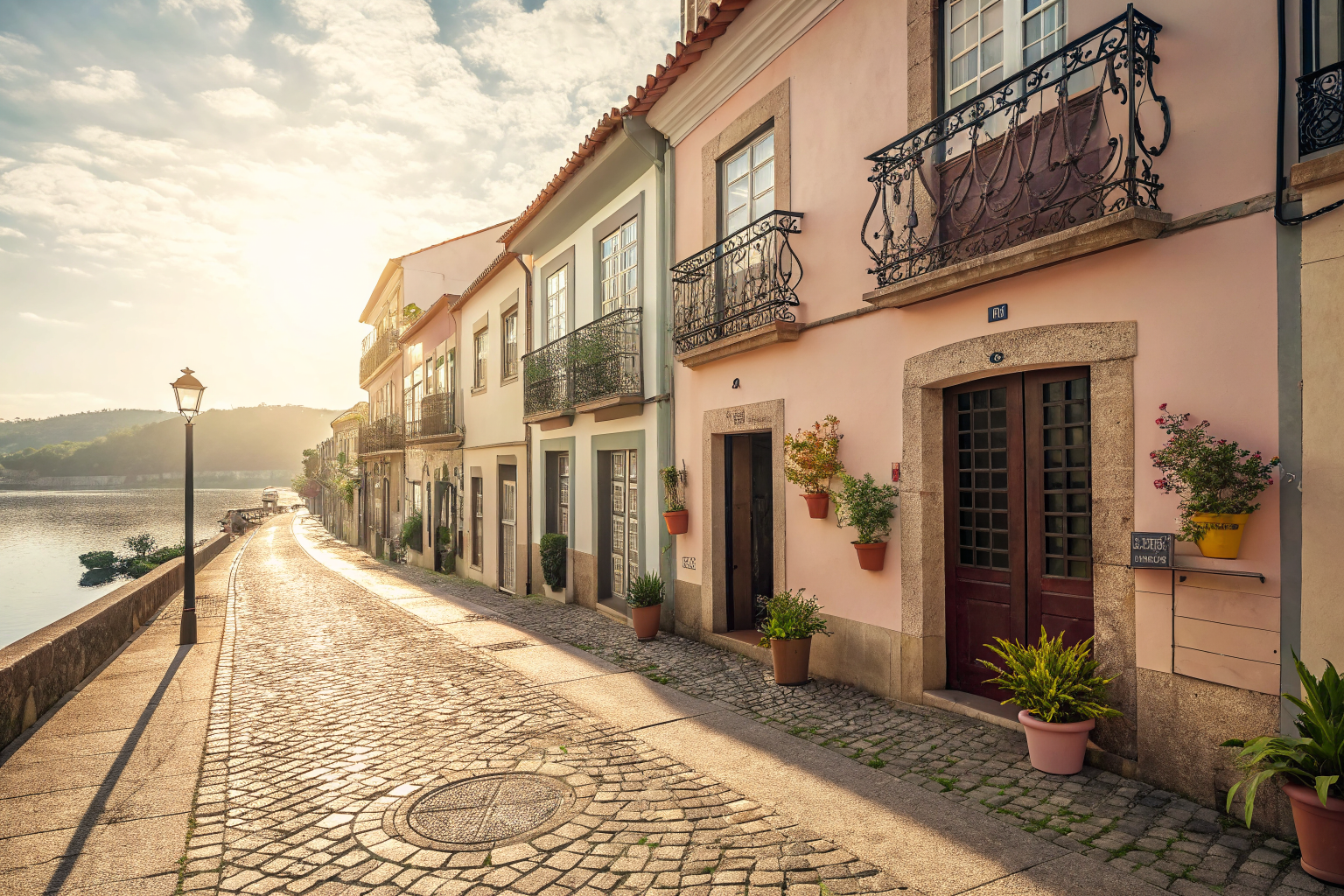
Portimão Old Town is the historic centre of the city, set slightly inland from the beach zone and shaped by the Arade River, fishing traditions, and the old sardine industry. It feels very different from Praia da Rocha: less resort-focused, more local, and much more interesting if you want a sense of everyday Algarve life beyond the beach.
That does not mean it is “better” than Praia da Rocha — just different. If you want a base with more character, better local restaurants, and a walkable centre with real history, the old town is absolutely worth your time. If all you want is beach, nightlife, and hotel convenience, Praia da Rocha is the easier fit.
In this guide, I’ll show you what Portimão Old Town is actually like, what is worth seeing, where to eat, how to explore it on foot, and how to use it as a smart base for the western Algarve.
Quick answer
- Worth visiting? Yes — especially for food, local atmosphere, and the museum
- How much time do you need? Half a day for the essentials, a full day if you add lunch and the museum properly
- Best for: Travelers who want a more local Algarve experience than Praia da Rocha
- Best nearby contrast: Pair it with Ferragudo or Praia da Rocha on the same trip
Table of Contents
Is Portimão Old Town worth visiting?
Yes — especially if you want to see a different side of the Algarve. Portimão Old Town is not as visually dramatic as some cliffside villages, and it does not compete with the big beach resorts on sand or nightlife. What it offers instead is something rarer in this part of the coast: a working Portuguese town with a real centre, a strong food identity, and enough history to give the place substance.
This is the kind of place that works well for travelers who like walking through local streets, stopping for coffee in real squares, eating grilled sardines where local families eat them too, and using one town as a base for a wider region. If that sounds like your kind of trip, Portimão Old Town is very much worth it.
It works especially well if you combine it with nearby places like Ferragudo or use it as part of a broader western Algarve itinerary.
Portimão Old Town vs Praia da Rocha — what’s the difference?
This is the key distinction many first-time visitors miss. Portimão Old Town and Praia da Rocha belong to the same municipality, but they feel like two separate travel experiences. The old town is a real urban centre with churches, squares, local restaurants, and riverside heritage. Praia da Rocha is the beach-and-resort side of Portimão, known for its long sandy beach, hotels, bars, and summer energy.
| Aspect | Portimão Old Town | Praia da Rocha |
|---|---|---|
| Atmosphere | Local, historic, urban | Beachy, resort-style, more touristy |
| Best for | Culture, food, slower travel | Beach time, nightlife, sea views |
| Dining | Traditional restaurants and local cafés | More international and beach-focused options |
| Stay here if… | You want character and a better base for excursions | You want the beach outside your hotel |
The good news is that you do not really have to choose one forever. They are close enough to combine, which is why many people stay in one and visit the other. But if your question is specifically about Portimão Old Town, it is the better choice for travelers who want something with more local identity than a standard resort strip.
Best things to do in Portimão Old Town
Portimão Old Town is not a place you “tick off.” It works best when you move through it slowly, letting the details build up — a square, a church, a street, a coffee stop. The distances are short, but the atmosphere is layered. Give it time, and it starts to feel much richer than it first appears.
Praça da República
This is where the old town comes together. Not because of a single landmark, but because of what happens here throughout the day. Mornings are quiet — locals reading newspapers over coffee. By late afternoon, the benches fill, conversations overlap, and the space starts to feel like a shared living room.
It’s the best place to pause early in your walk. Sit down, order a coffee, and watch how the town moves. It tells you more than any guidebook summary.
Igreja do Colégio
The façade stands out immediately — confident, detailed, and unmistakably historic. Even if you’re not particularly interested in churches, this one gives the centre a sense of depth and permanence. It reminds you that Portimão was once more than just a seaside stop.
It’s a short stop, but an important one. Architecturally, it anchors the entire area.
Igreja Matriz de Nossa Senhora da Conceição
Set slightly higher than the surrounding streets, this church feels more connected to the town’s older layers. The approach alone — through narrower, quieter streets — already shifts the atmosphere.
Look for the older stonework and decorative details around the entrance. This is one of the places where Portimão’s past is still clearly visible, not just implied.
Rua Direita and surrounding streets
This is where the old town feels most natural. No big sights, no set pieces — just everyday architecture, small shops, worn façades, and streets that still function as part of daily life.
Walk without a plan here. Turn when something catches your attention. This is where you start to notice the details that don’t appear on maps.
Municipal market area
If your timing lines up, the market adds another layer to the experience. It’s not curated for visitors — it’s practical, busy, and tied to everyday routines.
Fresh produce, seafood, local products — but more importantly, a glimpse into how the town actually works beyond its historic streets. If you can visit in the morning, it’s worth adjusting your route to include it.
Museu de Portimão — the one place you really shouldn’t skip
If you only have time for one indoor attraction, make it the Museu de Portimão. It is housed in the restored former Feu Hermanos canning factory and is the best place to understand why this town matters beyond the beach. The museum is not just “about sardines” — it is about how fishing, industry, the river, and daily life shaped Portimão as a whole.
What makes it especially worth visiting is that the building itself is part of the story. This is not a generic museum dropped into a modern space. You are walking through a former industrial site that connects directly to the town’s identity. The museum also received the Council of Europe Museum Prize 2010, which says a lot about its quality. Admission and free-entry policies can change, so it is worth checking the current schedule before you go.
Give yourself at least 60–90 minutes here. The museum works best either at the start of your visit, when it gives you context for everything else, or in the middle of the day when you want a cooler indoor break before continuing on foot.
The Ribeirinha riverfront walk
The riverfront is one of the most pleasant parts of Portimão Old Town because it shows how the town’s past and present meet. The Arade was not just scenery — it was the reason the town grew here in the first place. Today, the waterfront is calmer and more recreational, but it still carries traces of the working river that shaped Portimão’s economy.
Walking here also gives you some of the best views across the water toward Ferragudo. That contrast — industrial-Portuguese town on one side, postcard village on the other — is part of what makes this area more interesting than a standard waterfront promenade.
If you have time, do this walk twice: once in daytime, when you notice the structure of the town, and once later in the day, when the light softens and the riverfront feels more atmospheric.
Self-guided walking route (half day or full day)
If you want a simple route that covers the essentials without backtracking too much, this is the easiest way to do it:
- Start at Museu de Portimão — begin with the history so the town makes more sense afterward.
- Walk the Ribeirinha — follow the river toward the centre and get your bearings.
- Pause at Praça da República — coffee stop, people-watching, and a feel for local rhythm.
- Head uphill to Igreja do Colégio — one of the strongest visual landmarks.
- Continue to Igreja Matriz — this adds historical depth and a slightly elevated perspective.
- Drift back through Rua Direita and nearby streets — this is where the old town feels most lived-in.
- Finish with lunch or dinner — ideally somewhere traditional rather than by default in the beach zone.
This route works in around half a day if you move steadily, or a full day if you include a slower museum visit, a proper meal, and time to sit by the river.
If you want a contrast after your walk, crossing to Ferragudo makes a very easy second half of the day.
Where to eat in Portimão Old Town
Food is one of the best reasons to come here. Portimão’s identity is tied closely to fish, especially sardines, and the old town is much better for finding local-style meals than the more resort-oriented areas. If you want atmosphere plus better value, this is where you should sit down to eat.
The obvious order is grilled sardines when they are in season, but the old town also works well for cataplana, simple grilled fish, and lower-key tavern meals that feel more Portuguese than polished. In general, the safest rule is this: if the place looks like it still serves local families, you are on the right track.
- Look for grilled sardines in season
- Try cataplana if you want a more classic Algarve seafood dish
- Choose one strong local meal rather than multiple random stops
- Move a little off the most obvious main drag if you want a more local feel
Portimão is also one of the places where the food makes more sense when you know the regional context. The western Algarve has a stronger Atlantic identity, and that comes through in what arrives on the table.
If food is one of the reasons you travel, this article pairs well with your guide to the western Algarve, where fish, coast, and smaller towns shape the mood of the region.
Best time to visit Portimão Old Town
The old town works surprisingly well year-round, which is one of its advantages over places that depend more heavily on beach-season energy. If you want the best balance of good weather, manageable crowds, and easy walking, spring and early autumn are usually the sweet spots.
- Spring: mild weather, easier walking, less pressure from peak-season tourism
- Summer: lively and bright, but hotter and busier, especially when combined with beach traffic
- Early autumn: one of the best times overall — warm, calmer, and still very pleasant
- Winter: quieter, more local, and still workable if you want a slower Algarve trip
If your goal is a more local experience rather than a beach-heavy holiday, the shoulder seasons are especially good. The old town feels more like itself when it is not competing with the full intensity of summer resort life.
Getting there and getting around
Portimão is straightforward to reach from Faro and is much easier as a destination than many people expect. Once you are in the centre, the old town itself is walkable. The main thing to plan for is not distance, but surface: cobbles, uneven pavements, and some mild inclines.
- From Faro Airport by car: the most flexible option if you plan day trips
- By bus or train: workable if you are staying central and traveling light
- Inside the old town: walking is the best way to explore it properly
If you are basing yourself in Praia da Rocha, coming into the old town for half a day is easy. If you stay in the old town, beach access still remains simple — it just is not the beach-outside-your-door kind of trip.
Day trips from Portimão
One of Portimão’s biggest strengths is that it works very well as a base. The old town gives you more local character in the evening, while the wider area gives you enough variety for several day trips without constant long drives.
| Day trip | Why it works from Portimão |
|---|---|
| Ferragudo | Closest contrast: prettier village feel, easy river perspective back to Portimão |
| Silves | Best inland historical contrast to Portimão’s maritime character |
| Lagos | Easy western Algarve add-on if you want bigger coastal scenery |
| Monchique | Best change of landscape if you want hills, viewpoints, and cooler air |
If you are doing a wider Algarve route, Portimão also sits in a useful position between the more rugged western side and the more resort-heavy eastern stretches.
For longer regional planning, it helps to read this together with your East Algarve and Albufeira guides, especially if you want to balance local towns with beach-resort energy.
Where to stay
If your priority is atmosphere, food, and using the region as a base, staying in or near the old town makes a lot of sense. If your priority is waking up close to the sand, Praia da Rocha is the more obvious choice.
| Area | Best for | Main trade-off |
|---|---|---|
| Old Town | Culture, food, local atmosphere | Less beach-immediate than Praia da Rocha |
| Marina / in-between areas | A compromise between comfort and access | Less character than the centre |
| Praia da Rocha | Beach, nightlife, resort convenience | You will commute into the old town for culture and food |
For travelers who want the Algarve to feel more Portuguese and less generic, the old town is the more interesting base.
Practical tips
- Shoes matter: cobbles can be slippery and tiring with the wrong soles
- Carry some cash: it still makes life easier in smaller places
- Do the museum early or midday: it works best as context or as a break from heat
- Do not rush lunch: Portimão is better enjoyed at a slower pace
- Treat the old town as a base, not just a checklist: that is when it really becomes rewarding
Frequently Asked Questions
Yes — especially if you want a more local and cultural Algarve experience than a beach-only stay. The museum, food, and riverfront make it well worth at least half a day.
Half a day is enough for the main walk and a meal. A full day is better if you want to include the museum properly and explore at a slower pace.
The main reason is that it shows a more grounded, local side of the Algarve — with better context, stronger food identity, and more substance than a beach-resort strip alone.
Not better for everyone — just better for travelers who want local atmosphere, food, and history. Praia da Rocha is stronger for beach time and resort convenience.
Yes. The old town itself is walkable, and it is possible to reach Portimão without driving. A car mainly becomes useful if you want to use the town as a base for multiple Algarve day trips.
Grilled sardines are the obvious local classic when in season, and cataplana is another strong Algarve choice if you want something more substantial.
