
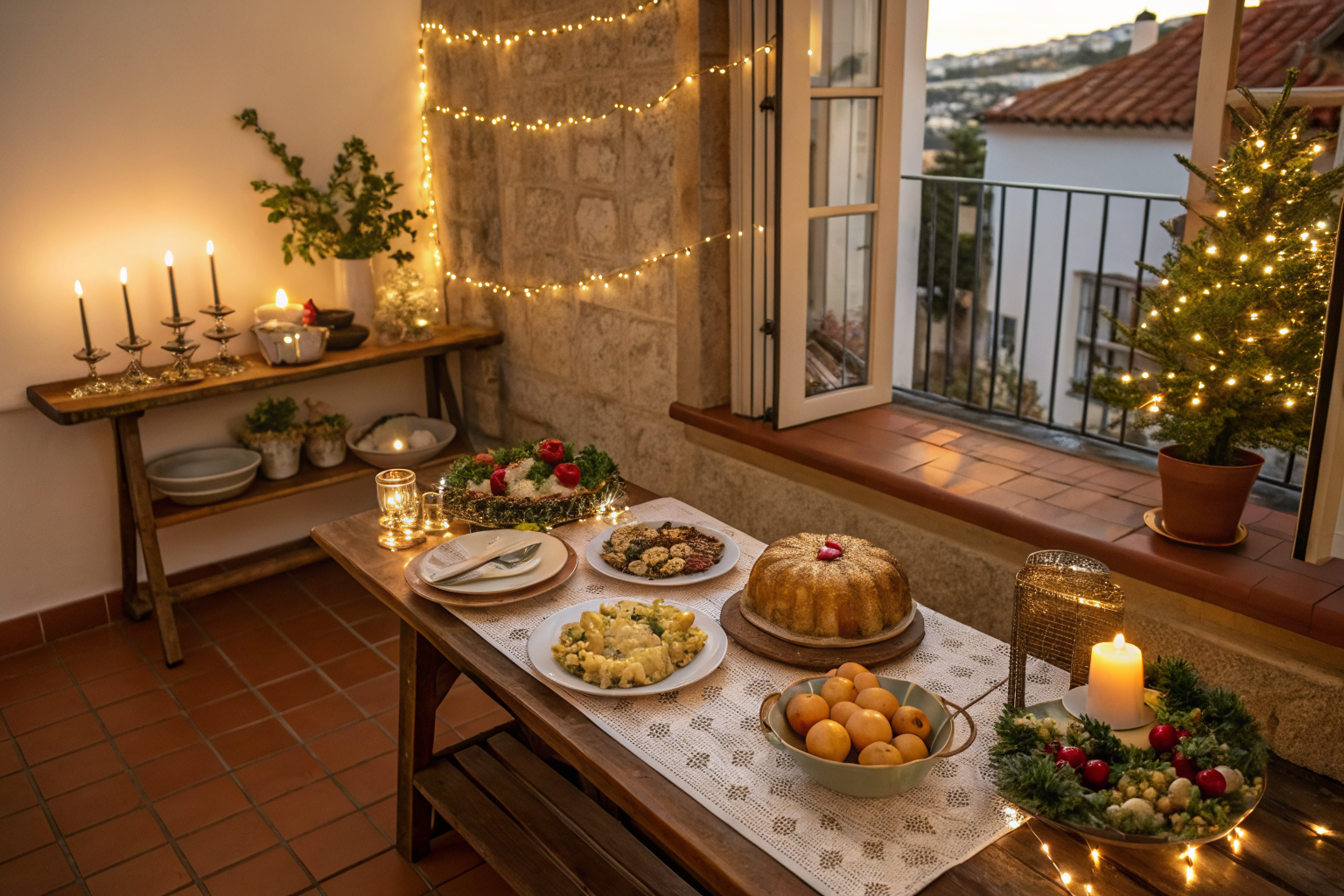
Experiencing christmas in portugal means embracing rich traditions centered on family, food, and faith. The season, known as ‘Natal’, is characterized by mild winter weather, elaborate nativity scenes (presépios) instead of Christmas trees as the main focus, and a special late-night feast on Christmas Eve. While gift-giving occurs, the holiday is less commercialized than in many other countries, emphasizing community gatherings and religious observances like the Midnight Mass (‘Missa do Galo’).
Key Benefits at a Glance
- Mild Weather: Enjoy comfortable winter temperatures, perfect for exploring cities and coastal towns without the freezing cold of other European destinations.
- Authentic Cuisine: Taste unique festive foods you won’t find elsewhere, including Bolo Rei (King Cake), filhós (fried dough), and the traditional bacalhau (salt cod) Christmas Eve dinner.
- Rich Cultural Traditions: Experience authentic customs firsthand, from community bonfires (‘Madeiros’) lit after Midnight Mass to the widespread art of creating detailed nativity scenes.
- Festive, Relaxed Atmosphere: Discover charming Christmas markets, beautifully lit streets, and a celebratory spirit without the overwhelming crowds of larger European capitals.
- Affordable Travel: Benefit from a more budget-friendly holiday season, with lower costs for accommodation, food, and activities compared to many other Western European countries.
Purpose of this guide
This guide is for travelers, families, and cultural enthusiasts planning a trip or simply curious about spending Christmas in Portugal. It solves the challenge of knowing what to expect, from key traditions to practical logistics. You will learn about the most important festive foods, the best cities to visit for Christmas lights and markets, and unique cultural events. We’ll also cover common mistakes to avoid, such as expecting shops to be open on December 25th, ensuring you have a smooth and memorable holiday experience.
After living in Portugal for several winters, I’ve discovered that Christmas here offers something truly magical that differs from the holiday celebrations most visitors expect. Unlike the Christmas morning traditions familiar to many, Portuguese Christmas centers on Christmas Eve (Consoada), creating an atmosphere of warmth, family unity, and deep religious significance that has captivated me year after year. From the elaborate nativity scenes (Presépios) that grace every home to the distinctive tradition of eating codfish on Christmas Eve, Portugal’s holiday celebrations blend centuries-old Catholic customs with regional flavors that vary dramatically from the sunny Algarve to the snow-capped Serra da Estrela mountains.
What makes Christmas in Portugal particularly special is its extended celebration period, beginning with Advent preparations in early December and culminating in the Epiphany (Dia dos Reis) on January 6th. This isn’t just a single day of festivities but a season of community gatherings, religious observances, and culinary traditions that reflect Portugal’s deep Catholic heritage and regional diversity.
Understanding Portuguese Christmas key differences

Portuguese Christmas celebrations differ fundamentally from Northern European and American traditions in ways that often surprise first-time visitors. The most striking difference is the primacy of Christmas Eve (Consoada) over Christmas Day itself. While Christmas Day remains important, December 24th is when families gather for their main celebration, complete with elaborate dinners, gift exchanges, and the spiritual centerpiece of Midnight Mass (Missa do Galo).
Christmas in Portugal centers on Christmas Eve (December 24th), called Consoada, which is the primary celebration rather than Christmas Day itself. Families gather for an elaborate dinner featuring salted cod (bacalhau) with potatoes, cabbage, and boiled eggs, though roasted lamb, octopus, and turkey are also traditional. Desserts include Bolo Rei (King’s Cake), rabanadas (French toast), and filhós (fried pastries).
“Christmas Eve on December 24th is the main day of celebration. Families get together to enjoy dinner and celebrate until late. Gatherings tend to start between 6 and 7 pm. While dinner is only served later, between 8 and 9 pm.”
— Portugal.com, 2025
Source link
Religious observance remains central to Portuguese Christmas. After dinner, families attend Midnight Mass (Missa do Galo, meaning “Rooster’s Mass”), which celebrates Christ’s birth. Nativity scenes (Presépios) are displayed in homes and churches, with the Baby Jesus figure traditionally added only on Christmas Eve.
The Portuguese Christmas vocabulary reflects these unique traditions. Natal means Christmas, while Filho de Deus (Son of God) emphasizes the religious significance that permeates every aspect of the celebration. Gift-giving follows the tradition of Menino Jesus (Baby Jesus) bringing presents rather than Santa Claus, though modern influences have introduced both figures into contemporary celebrations.
Christmas gifts are traditionally opened at midnight after Mass, though the custom of leaving shoes in the chimney for the Child Jesus (Menino Jesus) to fill has largely faded. The Christmas season concludes on January 6th (Dia dos Reis, Day of the Kings), when families gather again to celebrate the Three Wise Men’s visit to Jesus.
Weather and what to pack for Christmas in Portugal
Portugal’s December weather varies dramatically across its regions, creating packing challenges for visitors expecting either Mediterranean warmth or European winter conditions. The reality lies somewhere between these extremes, with mild temperatures, occasional rain, and significant regional variations that require thoughtful preparation.
| Region | Temperature Range | Precipitation | What to Pack |
|---|---|---|---|
| Algarve | 12-18°C | Low | Light jacket, umbrella |
| Lisbon | 8-15°C | Moderate | Warm coat, waterproof shoes |
| Porto | 6-13°C | High | Heavy jacket, rain gear |
| Serra da Estrela | 0-8°C | Snow possible | Winter coat, warm layers |
Regional weather variations
The Algarve enjoys Portugal’s mildest December weather, with daytime temperatures reaching 18°C and minimal rainfall. Faro and coastal towns maintain a pleasant Mediterranean climate that allows for outdoor Christmas market visits and comfortable evening strolls. However, even here, temperatures drop significantly after sunset, making light jackets essential.
Lisbon experiences typical Atlantic coastal winter weather, with temperatures ranging from 8-15°C and moderate rainfall. The capital’s hills and proximity to the ocean create microclimates where neighborhoods like Alfama can be several degrees cooler than sunny Belém. December brings frequent light rain showers that create slippery conditions on the city’s famous cobblestone streets.
Porto and northern coastal regions face Portugal’s wettest Christmas weather, with heavy rainfall and temperatures between 6-13°C. The city’s granite buildings and narrow streets can feel particularly chilly, while the nearby Minho region often experiences persistent drizzle that locals call chuvisco.
Serra da Estrela and other mountain regions offer Portugal’s only reliable Christmas snow, with temperatures dropping below freezing and winter conditions that require serious cold-weather preparation. Towns like Guarda and Covilhã transform into winter wonderlands, though road conditions can become challenging for unprepared drivers.
- Pack layers for temperature variations throughout the day
- Bring waterproof footwear for cobblestone streets
- Include formal attire for Midnight Mass attendance
- Pack warm clothes even for southern regions – evenings get cool
Portuguese Christmas traditions and customs
Portuguese Christmas traditions blend deep Catholic faith with family-centered celebrations that have evolved over centuries. These customs create a distinctly Portuguese holiday atmosphere that emphasizes religious observance, extended family gatherings, and culinary traditions passed down through generations.
The cornerstone of Portuguese Christmas is the Presépio (nativity scene), which appears in virtually every home, church, and public space throughout December. Unlike simple nativity displays found elsewhere, Portuguese Presépios often feature elaborate landscapes with multiple scenes depicting Christ’s birth, the journey of the Three Kings, and village life in biblical times.
Presépios nativity scenes
Portuguese nativity scenes represent far more than simple Christmas decorations—they embody the spiritual heart of the holiday season. Families begin setting up their Presépios during the first week of December, carefully arranging figures that often include family heirlooms passed down through generations. The most important tradition involves leaving the Baby Jesus figure empty until Christmas Eve, when it’s ceremonially placed in the manger at midnight.
The craftsmanship of Portuguese nativity scenes reflects centuries of artisan tradition. In regions like Estremoz, local potters create distinctive clay figures with regional characteristics, while northern areas specialize in carved wooden scenes that incorporate local architectural elements. Many families spend weeks preparing their displays, adding new figures each year and creating elaborate landscapes with moss, cork, and miniature buildings.
Churches compete to create the most impressive public Presépios, often featuring life-sized figures and complex mechanical elements. The tradition extends beyond religious buildings, with shopping centers, town squares, and even subway stations displaying elaborate nativity scenes that attract thousands of visitors throughout December.
- Igreja do Carmo, Porto – Elaborate baroque nativity display
- Sé Cathedral, Lisbon – Traditional family-style Presépio
- Santa Maria da Feira – Community-built outdoor nativity village
- São Paio de Oleiros – Artisan workshop with handcrafted scenes
- Óbidos – Medieval setting with multiple nativity displays
Christmas Eve Consoada celebrations
Christmas Eve (Consoada) represents the emotional and spiritual climax of Portuguese Christmas celebrations. The evening begins with family members gathering throughout the afternoon, often traveling significant distances to reunite in ancestral homes. The atmosphere builds gradually through shared preparation of the traditional meal, storytelling, and anticipation of midnight’s approach.
The Consoada dinner follows centuries-old Catholic fasting traditions, featuring fish rather than meat as the centerpiece. Families gather around tables decorated with their finest linens, candles, and small nativity scenes, creating an atmosphere of reverence and celebration. The meal progresses slowly, with multiple courses and extended conversation that can last several hours.
Gift-giving during Consoada varies by family tradition. Some exchange presents after dinner but before Mass, while others wait until returning from Midnight Mass. The gifts themselves often reflect Portuguese values, emphasizing practical items, religious objects, or locally-made crafts rather than expensive commercial products.
Missa do Galo (Midnight Mass) concludes Christmas Eve celebrations with profound spiritual significance. Churches fill beyond capacity as entire families attend together, creating a powerful sense of community worship. The service includes traditional Portuguese carols, elaborate decorations, and often concludes with congregational singing that extends well past midnight.
| Aspect | Christmas Eve (24th) | Christmas Day (25th) |
|---|---|---|
| Main Meal | Consoada dinner with family | Leftover dishes, lighter meals |
| Gift Giving | Primary gift exchange | Minor gifts or none |
| Religious Focus | Midnight Mass attendance | Quiet reflection, church visits |
| Social Activity | Large family gatherings | Relaxed family time |
| Business Hours | Shops close early | Most businesses closed all day |
The 24th vs the 25th
The distinction between December 24th and 25th in Portuguese Christmas celebrations often confuses visitors accustomed to Christmas Day being the primary celebration. In Portugal, Christmas Eve functions as the main event, with Christmas Day serving as a quieter continuation of the festivities rather than the climactic celebration.
December 24th begins early with final preparations for the Consoada feast. Family members arrive throughout the day, bringing traditional contributions to the meal and gifts wrapped in simple paper. The atmosphere builds steadily toward evening, when the formal dinner begins around 8 PM. This timing allows families to eat, exchange gifts, and still attend Midnight Mass together.
Christmas Day, by contrast, maintains a peaceful, reflective atmosphere. Families typically sleep late after the previous night’s celebrations, then gather for light meals featuring leftovers from the Consoada feast. Many families attend morning church services, but these lack the drama and community participation of Midnight Mass. The day focuses on quiet family time, with children playing with new gifts and adults enjoying relaxed conversation.
Business and commercial activity reflects this cultural pattern. Shops and restaurants close early on December 24th to allow employees to celebrate with their families, while Christmas Day sees virtually everything shuttered as the entire country observes the holiday. Visitors should plan accordingly, ensuring they have necessary supplies before Christmas Eve arrives.
Unique regional traditions
Portugal’s regional diversity creates fascinating variations in Christmas celebrations that reflect local history, geography, and cultural influences. These traditions demonstrate how Portuguese Christmas adapts to different environments while maintaining its essential spiritual and family-centered character.
“Every year, villagers climb the church tower and throw up to 150 kg of chestnuts onto the embers of the Christmas Madeiro bonfire below.”
— Idealista, December 2025
Source link
Braga’s famous Bananeiro tradition exemplifies Portugal’s regional Christmas diversity. This 40-year-old custom brings locals to Casa das Bananas on Christmas Eve, where they consume Moscatel de Setúbal wine accompanied by sliced bananas. What began as a small gathering has evolved into a major community celebration that attracts participants from across northern Portugal.
Northern mountain regions maintain communal bonfire traditions (Madeiros de Natal) that create extraordinary community gatherings. In villages throughout Bragança and Guarda districts, residents collect wood throughout December to build massive bonfires lit after Midnight Mass. These fires burn through the night, with villagers sharing food, wine, and traditional songs until dawn.
Portugal features distinctive regional traditions. In Braga, the Bananeiro ritual—started 40 years ago—involves locals gathering on December 24th at Casa das Bananas to enjoy Moscatel de Setúbal wine with bananas. Guimarães erects a towering Christmas tree on November 29th, carried through the city on a bull cart. In the Trás-os-Montes region, Caretos de Varge features masked young men dancing through streets on December 25th, singing satirical songs and receiving food from homes.
- Braga: Bananeiro tradition – Moscatel wine with sliced bananas on Christmas Eve
- Bragança: Community bonfires in village squares on Christmas night
- Guarda: Mountain caroling groups visiting homes with traditional songs
- Aveiro: Sweet bread shaped like baby Jesus distributed after Mass
- Viana do Castelo: Fishermen’s blessing ceremony on Christmas morning
Traditional Portuguese Christmas food and drinks
Portuguese Christmas cuisine reflects the country’s maritime heritage, Catholic traditions, and regional agricultural abundance. The culinary calendar follows religious observances, with Christmas Eve’s fish-based feast giving way to Christmas Day’s meat celebrations, creating a progression from fasting to feasting that defines the holiday’s gastronomic rhythm.
Food plays a central role in Portuguese Christmas celebrations, serving not just as sustenance but as cultural expression and family bonding. Traditional recipes pass down through generations with careful attention to technique and seasonal ingredients. The preparation itself becomes part of the celebration, with multiple generations working together in kitchens throughout December to prepare preserved foods, sweets, and special dishes.
While Bolo Rei and bacalhau are national staples, seasonal celebrations also follow local service customs—knowing when and how to tip during holiday meals ensures smooth interactions in restaurants and markets.
Christmas Eve codfish Bacalhau da Consoada
Bacalhau da Consoada represents perhaps Portugal’s most iconic Christmas tradition, transforming the humble salt cod into a feast worthy of the year’s most important dinner. This preparation follows centuries-old Catholic fasting traditions that required fish rather than meat on holy days, but Portuguese cooks elevated the restriction into culinary art.
The traditional preparation emphasizes simplicity and quality ingredients. Salt cod, soaked for days to remove excess salt, is gently boiled with bay leaves until tender. Accompanying vegetables—potatoes, cabbage, carrots, and hard-boiled eggs—are cooked separately to preserve their individual flavors and textures. The final presentation arranges these components on large platters, drizzled with Portugal’s finest olive oil and garnished with fresh herbs.
Regional variations reflect local preferences and available ingredients. Northern regions often include chickpeas and turnip greens, while southern areas might add sweet potatoes or different olive oil preparations. Some families serve bolinhos de bacalhau (cod fritters) as appetizers, extending the codfish theme throughout the meal.
- Soak salt cod for 24-48 hours, changing water 3-4 times
- Boil cod with bay leaves until tender, about 20 minutes
- Cook potatoes, cabbage, and carrots in separate pots
- Hard boil eggs and prepare olive oil with garlic
- Arrange all ingredients on platter, drizzle with olive oil
- Serve with boiled chickpeas and traditional bread
Christmas Day meats
Christmas Day meals represent the feast after the fast, featuring rich meat dishes that contrast sharply with Christmas Eve’s simple fish preparation. Traditional choices include roasted kid goat (cabrito assado), lamb, and increasingly, turkey, though preparation methods remain distinctly Portuguese.
Cabrito assado holds special significance in rural areas where goat herding remains common. The meat is typically roasted whole in wood-fired ovens, seasoned with garlic, bay leaves, and white wine. The slow cooking process creates incredibly tender meat with crispy skin that families share in a communal celebration of abundance.
Lamb preparation varies by region, with northern areas favoring herb-crusted roasts while southern regions prefer wine-braised preparations. Turkey, though a more recent addition to Portuguese Christmas tables, receives traditional treatment with Portuguese seasonings including paprika, garlic, and local herbs.
These meat dishes typically accompany rice preparations, roasted vegetables, and regional specialties that reflect local agricultural products. The meals tend to be less formal than Christmas Eve’s Consoada, focusing on comfort food that extends the celebration through a relaxed Christmas Day.
King Cake Bolo Rei and Christmas sweets
Bolo Rei (King Cake) stands as Portugal’s most recognizable Christmas dessert, its distinctive ring shape and colorful decorations making it instantly identifiable in bakery windows throughout December. This traditional cake combines candied fruits, nuts, and a light, sweet bread dough that creates a festive centerpiece for holiday tables.
The cake’s hidden fava bean tradition adds excitement to family gatherings. Whoever finds the bean in their slice must provide the following year’s Bolo Rei, creating ongoing family connections and anticipation. Some modern versions include small gifts instead of beans, but traditional families maintain the original custom.
Rabanadas represent Portugal’s version of French toast, but preparation and presentation elevate them far beyond simple breakfast food. Thick slices of day-old bread are soaked in milk, egg, and sugar mixture, then fried until golden and dusted with cinnamon and powdered sugar. The result is a rich, custardy dessert that appears on virtually every Christmas table.
Filhós are traditional fried pastries that vary significantly across Portuguese regions. Northern versions tend to be larger and flatter, while southern preparations create smaller, puffier pastries. All versions share the characteristic of being fried in abundant olive oil and dusted with sugar and cinnamon, creating irresistible aromas that fill homes throughout the holiday season.
Festive drinks and toasting traditions
Portuguese Christmas beverages reflect the country’s renowned wine-making traditions and unique liqueur heritage. Port wine naturally takes center stage, with families bringing out their finest vintage or aged tawny bottles for special toasts. The wine’s sweetness and strength make it perfect for sipping throughout long Christmas Eve dinners.
Ginjinha, Portugal’s famous cherry liqueur, appears at Christmas celebrations across the country. Traditionally served in small chocolate cups that are eaten after drinking the liqueur, ginjinha provides a distinctly Portuguese conclusion to heavy meals. Different regions produce variations with subtle flavor differences that locals debate with passionate enthusiasm.
Licor Beirão, an herbal liqueur with secret ingredients, serves as Portugal’s national digestif during Christmas celebrations. Its complex flavor profile, combining sweet and bitter elements, makes it perfect for settling rich holiday meals. Many families have traditional toasting rituals involving Licor Beirão that date back generations.
- Port Wine – Vintage or Tawny for special toasts
- Ginjinha – Cherry liqueur served in chocolate cups
- Licor Beirão – Herbal liqueur for digestif
- Moscatel – Sweet wine, especially in Braga’s Bananeiro tradition
- Aguardente – Strong brandy for warming winter nights
- Vinho Verde – Light wine for Christmas Eve dinner
Christmas markets and shopping in Portugal
Portugal’s Christmas market scene has evolved significantly over the past decade, transforming from small local fairs into sophisticated seasonal attractions that rival traditional European markets while maintaining distinctly Portuguese character. These markets emphasize local artisans, regional products, and authentic Portuguese craftsmanship rather than mass-produced holiday goods.
Portuguese Christmas markets distinguish themselves through their focus on traditional crafts, regional foods, and authentic cultural experiences. Unlike German or Austrian markets that often feature similar vendors across different cities, Portuguese markets celebrate local specialties and regional variations that reflect the country’s diverse cultural heritage.
Must visit Christmas markets
Wonderland Lisboa represents Portugal’s largest and most elaborate Christmas market, transforming Marquês de Pombal square into a winter wonderland from December 1st through January 6th. The market features over 100 vendors selling everything from traditional crafts to international holiday foods, plus carnival rides and entertainment that attracts families from across the region.
Óbidos Vila Natal creates perhaps Portugal’s most magical Christmas atmosphere by transforming the entire medieval village into a Christmas-themed destination. The market operates within the castle walls, creating an authentic fairy-tale setting that includes traditional Portuguese crafts, regional foods, and cultural performances that celebrate local heritage.
Porto’s Christmas markets spread across multiple locations throughout the city center, with the main market at Avenida dos Aliados featuring traditional Portuguese products alongside international holiday goods. The city’s markets emphasize local artisans and regional specialties, making them excellent destinations for authentic Portuguese gifts.
- Wonderland Lisboa – Marquês de Pombal, December 1-January 6
- Óbidos Vila Natal – Medieval village transformation, December-January
- Porto Christmas Market – Avenida dos Aliados, December 1-31
- Funchal Christmas Market – Madeira, November 30-January 6
- Cascais Christmas Village – December 7-January 6
- Viseu Christmas Fair – Historic center, December weekends
Authentic Portuguese Christmas gifts
Portuguese Christmas markets offer exceptional opportunities to purchase authentic gifts that reflect the country’s rich artisanal traditions and regional specialties. Azulejo tiles remain among the most sought-after Portuguese gifts, with hand-painted versions representing genuine artistic heritage that visitors can’t find elsewhere.
Cork products showcase Portugal’s leadership in sustainable cork production, offering everything from fashionable handbags to practical wallets that demonstrate Portuguese innovation in eco-friendly materials. These items combine functionality with environmental consciousness while supporting traditional Portuguese industries.
Traditional Portuguese ceramics from renowned producers like Bordallo Pinheiro or Vista Alegre represent centuries of ceramic artistry. Christmas markets often feature pieces specifically designed for the holiday season, including nativity figures and decorative items that capture Portuguese artistic traditions.
- Azulejo tiles – Hand-painted ceramic tiles (€15-50)
- Cork products – Wallets, bags from sustainable cork (€10-40)
- Ginjinha liqueur – In traditional ceramic cups (€8-15)
- Portuguese ceramics – Bordallo Pinheiro or Vista Alegre (€20-100)
- Conserved fish – Premium tinned sardines and tuna (€5-25)
- Traditional textiles – Linen from Guimarães or wool from Serra da Estrela (€30-80)
Regional Christmas celebrations across Portugal
Portugal’s Christmas celebrations vary dramatically across its regions, reflecting geographic diversity, historical influences, and local cultural traditions that create distinct holiday experiences within a single country. From the subtropical celebrations of Madeira to the snow-covered mountains of Serra da Estrela, each region offers unique perspectives on Portuguese Christmas traditions.
These regional variations extend beyond simple climate differences to encompass distinct culinary traditions, religious practices, and community customs that have evolved over centuries. Understanding these differences helps visitors appreciate the rich diversity within Portuguese culture and choose destinations that match their holiday interests.
Understanding how Christmas varies across Lisbon’s diverse neighborhoods—from traditional Alfama to trendy Príncipe Real—helps travelers choose the festive atmosphere that suits their preferences.
Christmas in Lisbon and Central Portugal
Lisbon transforms into Portugal’s Christmas capital during December, with elaborate decorations, major events, and sophisticated celebrations that attract visitors from across Europe. The city’s Christmas atmosphere combines urban sophistication with traditional Portuguese warmth, creating a holiday experience that satisfies both cultural tourists and local families.
Praça do Comércio serves as Lisbon’s Christmas centerpiece, featuring a massive illuminated Christmas tree and nightly light shows that draw thousands of spectators. The square’s historic architecture provides a stunning backdrop for holiday celebrations, while surrounding streets fill with Christmas markets, carol performances, and cultural events.
The Chiado district creates Lisbon’s most elegant Christmas atmosphere, with luxury shops featuring elaborate window displays and streets decorated with sophisticated light installations. This area combines high-end shopping with traditional Portuguese cafes serving seasonal specialties, creating perfect conditions for Christmas shopping and cultural exploration.
- Praça do Comércio Christmas Tree – Giant illuminated tree and light show
- Chiado Christmas Lights – Elegant street decorations and window displays
- Wonderland Lisboa – Major Christmas market at Marquês de Pombal
- Belém Christmas Concert – Traditional carols at Jerónimos Monastery
- Rossio Square Nativity – Large public Presépio display
- Christmas Tram Tours – Decorated vintage trams through the city
Experiencing Christmas in Lisbon’s historic quarters like Alfama and Baixa adds atmospheric charm, with illuminated streets, traditional markets, and Fado performances enhancing the festive season.
Northern Portuguese Christmas traditions
Northern Portugal maintains the country’s strongest Christmas traditions, with cities like Porto and Braga preserving centuries-old customs that reflect the region’s deep Catholic heritage and community-focused culture. These areas experience Portugal’s most traditional Christmas celebrations, where religious observance and family gatherings take precedence over commercial activities.
Braga stands as Portugal’s religious capital, earning the nickname “Portuguese Rome” for its concentration of churches and religious festivals. Christmas celebrations here emphasize spiritual observance, with multiple Midnight Masses, elaborate nativity scenes, and the famous Bananeiro tradition that brings the entire community together on Christmas Eve.
Porto combines urban sophistication with northern Portuguese traditions, creating Christmas celebrations that balance metropolitan amenities with authentic cultural experiences. The city’s Christmas markets emphasize regional products and traditional crafts, while restaurants serve authentic northern Portuguese Christmas cuisine that differs noticeably from southern preparations.
Rural northern communities maintain communal Christmas traditions that have largely disappeared from urban areas. Villages throughout the Minho and Trás-os-Montes regions organize community celebrations, shared meals, and traditional performances that create powerful bonds between residents and provide visitors with authentic cultural experiences.
Christmas in the Algarve and Southern Portugal
The Algarve’s Christmas celebrations adapt traditional Portuguese customs to the region’s Mediterranean climate and international population, creating a unique holiday atmosphere that combines authentic Portuguese traditions with cosmopolitan influences from the area’s large expatriate community.
Faro and other Algarve cities maintain traditional Portuguese Christmas customs while accommodating the region’s year-round tourism industry. Restaurants continue serving traditional Christmas Eve codfish dinners, but many also offer alternative menus for international visitors unfamiliar with Portuguese customs.
The region’s mild December weather allows for outdoor Christmas celebrations that would be impossible in northern Portugal. Beach towns often organize outdoor concerts, markets, and cultural events that take advantage of the pleasant climate while maintaining connections to Portuguese Christmas traditions.
International influences from British, German, and other European expatriate communities create interesting cultural fusion in Algarve Christmas celebrations. Some communities organize traditional northern European Christmas events alongside Portuguese celebrations, offering visitors exposure to multiple Christmas traditions within a single region.
Madeira Island Christmas celebrations
Madeira offers Portugal’s most distinctive Christmas experience, combining subtropical climate with unique island traditions that create holiday celebrations unlike anywhere else in Europe. The island’s December flowers, mild temperatures, and dramatic landscapes provide stunning backdrops for Christmas festivities that emphasize natural beauty alongside traditional Portuguese customs.
Funchal transforms into a Christmas wonderland during December, with elaborate decorations taking advantage of the island’s year-round flowering plants and dramatic topography. The city’s Christmas lights display ranks among Europe’s most impressive, creating spectacular illuminations that reflect off the harbor and surrounding mountains.
The island’s famous New Year’s Eve fireworks display in Funchal Bay attracts visitors from around the world and holds multiple Guinness World Records. This celebration represents the culmination of Madeira’s extended Christmas season, creating unforgettable memories for visitors who experience both traditional Portuguese Christmas customs and the island’s unique New Year traditions.
Madeira’s Christmas markets emphasize local products including traditional embroidery, regional wines, and subtropical fruits that create unique gift opportunities. The island’s artisans produce Christmas decorations and crafts that incorporate local materials and techniques, offering visitors authentic Madeiran products that reflect the island’s distinct cultural heritage.
Frequently Asked Questions
The main Christmas traditions in Portugal include attending the midnight mass known as Missa do Galo, setting up elaborate nativity scenes called presépios, and exchanging gifts on Christmas morning. Families gather for a festive meal on Christmas Eve, called Consoada, featuring traditional foods like codfish. The season extends until Epiphany on January 6, with decorations and celebrations continuing throughout.
Traditional Christmas food in Portugal centers around bacalhau (salt cod) served during the Consoada on Christmas Eve, often boiled with potatoes, cabbage, and olive oil. On Christmas Day, roasted meats like turkey or lamb are common, accompanied by rice and vegetables. Desserts such as Bolo Rei, a fruitcake with a hidden bean or trinket, and rabanadas (similar to French toast) round out the festive meals.
Consoada is the traditional family dinner held on Christmas Eve in Portugal, typically eaten after attending midnight mass. It features simple, symbolic dishes like bacalhau da consoada, representing fasting and abundance. This meal brings families together to celebrate the birth of Jesus and exchange gifts at midnight.
Some of the best Christmas markets in Portugal include Wonderland Lisboa in Lisbon, offering ice skating and artisan stalls, and the festive markets in Porto’s historic center. The Óbidos Christmas Village transforms the medieval town into a winter wonderland with lights and crafts. Markets in Braga and Faro also feature local foods, gifts, and entertainment, drawing visitors during the holiday season.
During Christmas, Portugal experiences mild winter weather with average temperatures ranging from 10-15°C (50-59°F) in the south and slightly cooler in the north. Rainfall is common, especially in December, but snow is rare except in mountainous areas like Serra da Estrela. This temperate climate makes it ideal for enjoying outdoor markets and festivities without extreme cold.
