
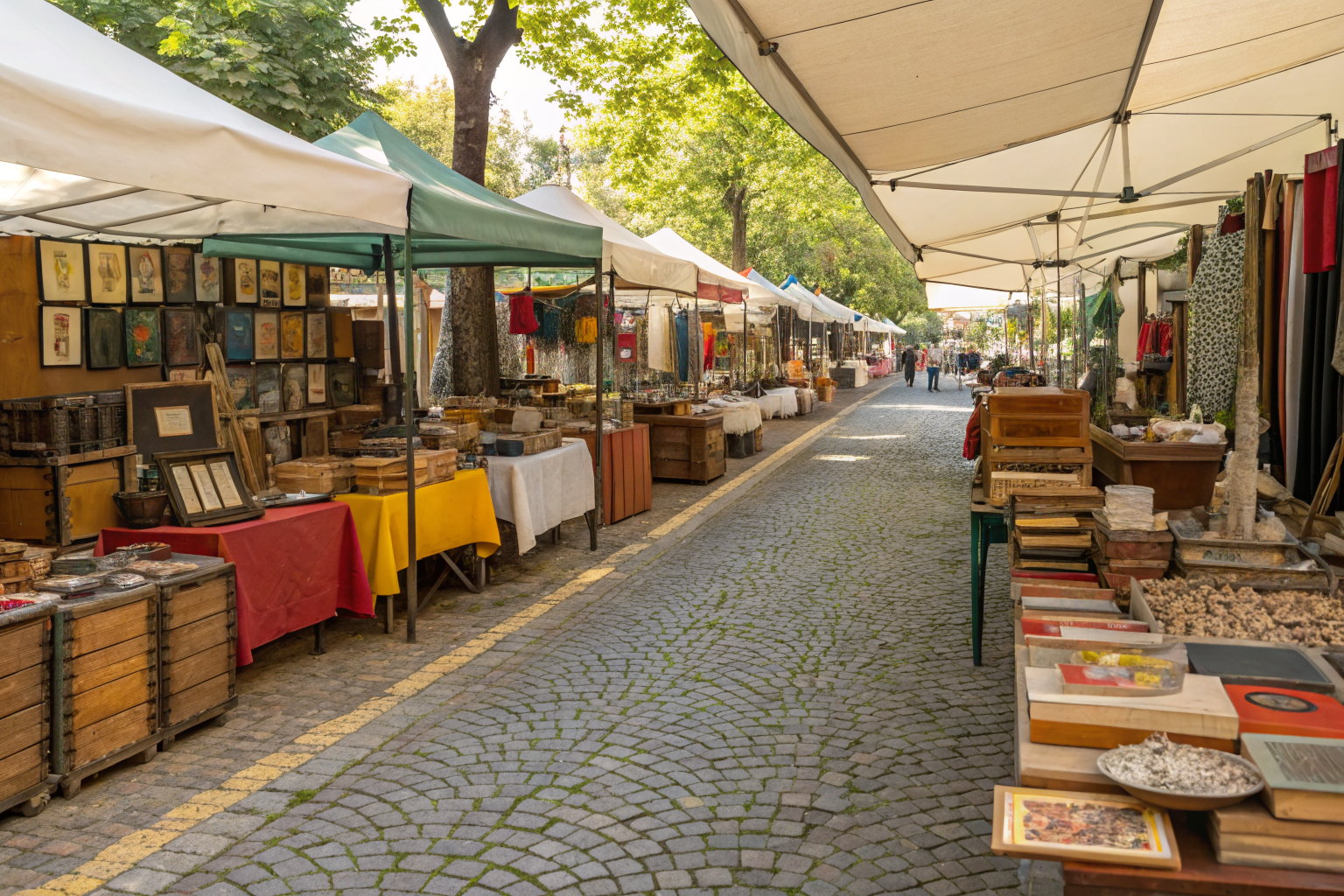
Flea markets in Lisbon are not just places of trade; they are open-air museums where Portuguese history intertwines with modern life. Here, vendors sell a wide variety of goods: from vintage clothing and antiques to famous azulejo tiles and handcrafted cork items. Most operate on weekends or specific weekdays, providing space for locals and tourists to find unique treasures directly from owners. Shoppers visit these bustling markets to haggle, find items unavailable in regular stores, and feel the true atmosphere of Lisbon’s neighborhoods like Alfama and Graça.
Key Benefits of Shopping in Lisbon
- Save Money: Find unique Portuguese items at below-retail prices through direct negotiation (in Euros).
- Unique Assortment: Access to vintage furniture, collectible vinyl, azulejos, and local art.
- Sustainable Consumption: Support the circular economy by giving items a second life, in the spirit of Portuguese resourcefulness.
- Atmosphere: Turn shopping into a fun walk through historic districts like Alfama and Graça.
- Exclusivity: Find rare items from the colonial era and works by local artists not found in mass market.
Purpose of this Guide
This guide is for both first-time visitors and seasoned treasure hunters who want to maximize their visit to Lisbon’s flea markets. It solves common challenges: where to find the best markets (like Feira da Ladra), how to effectively bargain with Portuguese vendors, and how to spot valuable finds among cluttered stalls. You will learn practical tips for preparing your trip, simple strategies for respectful bargaining, and how to avoid common mistakes like overpaying or buying items in poor condition. The goal is to help you confidently find great deals and unique treasures in Lisbon.
Introduction
The scent of old books mingles with the aroma of strong bica coffee from a nearby café as I weave through rows of weathered tables laden with forgotten treasures in Santa Clara Square. The morning sun catches the glint of vintage jewelry, casting reflections across a collection of hand-painted ceramics. This is my element – the electric atmosphere of a bustling Lisbon flea market where every item has a story, and every corner holds the promise of an extraordinary find.
My love affair with Lisbon markets began during a weekend trip to the capital. What started as casual browsing quickly evolved into passionate treasure hunting as I discovered the intoxicating thrill of uncovering hidden gems among seemingly ordinary secondhand shopping venues. That first set of azulejo tiles I found – later used to renovate my kitchen – sparked a journey that has taken me to markets across the city and transformed me from an overwhelmed tourist into a confident collector.
Lisbon flea markets offer something that online shopping and retail stores simply cannot replicate: the tangible excitement of discovery, the satisfaction of rescuing forgotten items, and the human connections forged with vendors who share your passion for unique finds. Each market visit becomes an adventure where patience, knowledge, and intuition combine to reveal treasures that others overlook.
This guide will transform your approach to Lisbon market exploration, sharing the strategies, insights, and hard-won wisdom I’ve accumulated through countless hours of browsing, negotiating, and collecting. Whether you’re seeking vintage furniture for your home, rare collectibles for investment, or simply the joy of the hunt, you’ll learn to navigate these vibrant marketplaces with the confidence and expertise of a seasoned collector.
What makes Lisbon markets special
The cacophony of vendors calling out prices in Portuguese, the rustle of customers rifling through boxes of vinyl records, and the gentle clink of glassware being carefully examined – these sounds create the unique symphony of Lisbon flea markets that I’ve come to cherish. Unlike the sterile silence of thrift stores or the predictable layout of retail establishments, Lisbon markets pulse with an energy that makes every visit feel like stepping into a living museum where history mingles freely with possibility.
During my visits to Feira da Ladra, I’ve witnessed how these markets foster genuine community connections that extend far beyond simple transactions. Regular vendors remember your collecting interests, setting aside items they know will appeal to you. Fellow shoppers share tips about hidden sections or upcoming estate sales. This network of relationships transforms secondhand shopping from a solitary activity into a collaborative treasure hunt where knowledge and discoveries are freely shared.
The environmental impact of choosing Lisbon markets for your shopping needs cannot be overstated. Every vintage dress rescued from obscurity, every antique table given new life, every collectible book finding its way to an appreciative reader represents a victory for sustainable consumption. I’ve calculated that roughly 80% of my home’s furnishings and decorative items came from Lisbon markets, diverting countless pieces from landfills while creating a living space that tells stories spanning decades.
What truly distinguishes Lisbon markets from thrift stores is the incredible diversity under one roof. While thrift stores typically organize donations into predictable categories, flea markets bring together specialized dealers, estate sale leftovers, craftspeople, and casual sellers creating an unpredictable mix. In a single morning, I might examine antiques from a dealer who’s spent forty years in the business, discover vintage clothing from someone cleaning out their grandmother’s attic in Alfama, and uncover rare collectibles from a hobbyist downsizing their collection.
The origins of Lisbon markets
My fascination with Lisbon market history deepened during a transformative weekend in Santa Clara. The Feira da Ladra (Thief’s Market) has existed since the late 19th century, originally located near Castelo de São Jorge before moving to its current home. The name “Ladra” doesn’t necessarily imply theft, but rather the cunning skill needed to negotiate and find hidden value.
The Feira da Ladra emerged from necessity, providing a space for locals to sell goods during economic hardships. These resourceful vendors created what would become the city’s most famous flea market. Walking through its sprawling stalls today, I’m struck by how this practical solution evolved into a cultural institution that attracts millions of visitors annually.
The Portuguese tradition of flea markets spread organically as communities recognized the value of organized second-hand commerce. Unlike the charity-driven model of thrift stores, Lisbon markets developed as legitimate business enterprises where skilled dealers could make livings while preserving cultural artifacts. This entrepreneurial spirit created markets with higher-quality merchandise and more knowledgeable vendors than typical donation-based venues.
My research into Lisbon market origins revealed how economic pressures consistently drive their emergence. Post-war prosperity led to their evolution into leisure destinations where treasure hunting became a popular weekend activity. Today’s markets continue this tradition, adapting to contemporary needs while maintaining their essential character as gathering places where commerce, community, and culture intersect.
Regional names and variations
My travels have taught me that while the concept of flea markets is universal, local terminology reveals fascinating cultural insights. In Lisbon, “Feira da Ladra” is the iconic name, but you’ll also find “Mercado de Velharias” (Antiques Market) used for more specialized dealer areas.
The Lisbon “brocante” carries connotations of higher-quality antiques and collectibles, distinguishing these markets from simple second-hand sales. During my visits to neighborhoods like Madalena, I’ve noticed how vendors take pride in their expertise, often specializing in specific periods or types of objects. This specialization elevates the shopping experience, transforming casual browsing into educational conversations about history and craftsmanship.
In Lisbon, the negotiation culture taught me patience and respect for vendor relationships – skills that have served me well in markets worldwide. Similarly, Sunday markets in Campo de Ourique showcase how flea markets adapt to local economic conditions while maintaining their essential social functions.
The LX Factory vintage scene demonstrates how regional variations can achieve international fame. This massive creative hub transforms old industrial space into one enormous vintage market, with visitors converging for a weekend of unprecedented treasure hunting. The scale and organization required for such events show how deeply flea markets are woven into Lisbon’s cultural fabric, warranting civic support and celebration.
How I navigate Lisbon markets like a pro

My systematic approach to Lisbon market navigation developed from years of frustrated wandering and missed opportunities. Early in my collecting journey, I would arrive at markets overwhelmed by the sheer volume of merchandise, randomly browsing until exhaustion set in. I once spent an entire day at Feira da Ladra only to discover I had missed entire sections containing exactly the vintage furniture I was seeking.
The breakthrough came when I started treating Lisbon markets as geographical puzzles requiring strategic exploration. Now, I begin every visit by walking the entire perimeter of Santa Clara Square to understand the market’s layout and vendor distribution. This preliminary reconnaissance reveals the market’s organization – whether vendors cluster by merchandise type, price point, or simply availability of space. Understanding these patterns dramatically improves the shopping experience for any visitor.
My navigation system prioritizes efficiency without sacrificing serendipity. I identify high-priority sections based on my current collecting interests, noting their locations during my perimeter walk. However, I also leave room for unexpected discoveries by varying my route through lower-priority areas. This balanced approach ensures I don’t miss targeted items while remaining open to surprising finds that make treasure hunting so rewarding.
The key insight that transformed my market navigation was recognizing that vendors often reflect their personalities in their booth organization. Meticulous dealers with carefully arranged displays typically offer higher-quality items at fair prices. Chaotic booths might hide incredible treasures among the clutter, but require more time and patience to evaluate. Learning to quickly assess vendor styles helps visitors allocate their time and energy most effectively.
Timing my visits for the best finds
The eternal debate among Lisbon market enthusiasts centers on optimal arrival timing, and my experience has taught me that success depends entirely on your shopping objectives. Early morning arrivals, typically within the first hour of opening (around 9 AM), provide access to the complete inventory before other shoppers have picked through the best items. I’ve secured some of my most valuable finds – including a signed ceramic piece and a complete set of vintage cutlery – by arriving as vendors were still setting up their displays.
However, end-of-day shopping offers entirely different advantages that suit budget-conscious visitors and bulk purchasers. Vendors facing the prospect of repacking unsold merchandise often become significantly more negotiable as closing time approaches (around 5 PM). I once acquired an entire collection of vintage postcards at 30% of the morning asking price simply because the vendor dreaded loading them back into his van.
| Timing | Pros | Cons | Best For |
|---|---|---|---|
| Early Bird (9 AM) | Best selection, first pick of items, full inventory | Higher prices, more competition, crowds | Rare finds, specific items, serious collectors |
| Mid-Day | Moderate selection, less crowded, vendor availability | Some items picked over, standard pricing | Casual browsing, building vendor relationships |
| End-of-Day (4-5 PM) | Discount opportunities, vendor eagerness to sell | Limited selection, items may be damaged | Bulk purchases, budget shopping, common items |
Mid-day visits occupy the sweet spot for relationship building and relaxed browsing. Vendors have settled into their rhythm, initial crowds have dispersed, and there’s time for meaningful conversations about items and their histories. These interactions have led to some of my most rewarding purchases – not because of better prices, but because vendors shared fascinating stories that enhanced my appreciation of the pieces I acquired.
Early morning visits to markets in central districts offer the best selection before crowds arrive, especially on weekend Feira da Ladra.
Seasonal market considerations
My Lisbon market calendar planning has become as detailed as any business schedule, tracking regular markets, seasonal events, and annual celebrations that serious collectors cannot afford to miss. Spring markets overflow with items from winter cleanouts, making it prime season for furniture and household goods. I’ve learned to schedule furniture shopping trips during April and May when families traditionally declutter their homes after months of indoor confinement.
Summer markets excel for outdoor and recreational items, but the real treasures emerge during back-to-school season when families sort through accumulated possessions. August and September consistently yield excellent finds in books, vintage clothing, and children’s items as households prepare for new academic years. Holiday seasons bring different opportunities, with December markets featuring decorative items and gift-worthy collectibles.
- Spring: Best for furniture and home goods from spring cleaning
- Summer: Outdoor items, garden tools, and vacation-themed decor
- Fall: Back-to-school items, cozy textiles, and harvest decorations
- Winter: Holiday decorations, vintage coats, and indoor entertainment items
- Plan travel around major annual events like Santo António festivals in June
The Feira da Ladra exemplifies how regular events can justify entire vacation plans. This massive twice-weekly gathering transforms Santa Clara Square into Lisbon’s largest flea market, attracting vendors and visitors from across the country. The scale and quality of merchandise available during these days surpasses months of regular market visits, making advance planning and accommodation booking essential for serious collectors.
Essential items I bring to a Lisbon market
My Lisbon market toolkit evolved through trial and error, with each forgotten item teaching me valuable lessons about preparation. The measuring tape earned its permanent place after I fell in love with a beautiful armoire that proved too large for my apartment doorway. The magnifying glass became essential after missing crucial maker’s marks on what turned out to be valuable silver pieces.
Cash remains king at most Lisbon markets, and I’ve learned to carry small Euro bills that facilitate quick transactions and negotiations. Vendors appreciate customers who don’t require change for large bills, and the psychological impact of counting out exact amounts can strengthen your bargaining position. I typically bring twice my intended spending amount in cash, as the best deals often appear when you least expect them.
- Cash in small Euro bills for easy transactions and negotiations
- Reusable shopping bags and a wheeled cart for transport (cobblestones can be tricky)
- Measuring tape for furniture and space planning
- Magnifying glass for examining maker’s marks and details
- Smartphone for price research and authentication
- Hand sanitizer and wet wipes for cleaning hands after browsing
- Comfortable walking shoes (essential for Lisbon’s hills and cobblestones)
- Water bottle and snacks for long browsing sessions
My smartphone has become an invaluable research tool, allowing instant price comparisons and authenticity verification. However, I use this capability judiciously, as excessive phone use can damage vendor relationships and slow down the browsing process. The key is balancing due diligence with maintaining the social dynamics that make Lisbon market shopping enjoyable for everyone involved.
How I spot quality items among the clutter
The ability to quickly assess item quality separates successful Lisbon market shoppers from casual browsers, and this skill develops through hands-on experience examining thousands of pieces over many years. My approach combines systematic inspection techniques with intuitive responses developed through handling authentic vintage and antique items. The difference between machine-made reproductions and handcrafted originals becomes apparent once you’ve trained your fingers to recognize quality construction details.
For antiques, I focus immediately on joinery and hardware as indicators of age and quality. Dovetail joints in drawers, mortise-and-tenon construction in furniture frames, and hand-forged hardware suggest pieces worth closer examination. I once discovered an 18th-century writing desk misidentified as 1920s reproduction simply because I recognized hand-cut dovetails and original brass hardware that the vendor had overlooked.
Vintage clothing evaluation requires different expertise, focusing on fabric quality, construction techniques, and period-appropriate details. Natural fibers like wool, silk, and cotton age better than synthetic blends, while hand-sewn buttonholes and French seams indicate higher-quality garments. Designer labels from recognized fashion houses obviously add value, but I’ve found exceptional pieces from unknown makers whose craftsmanship exceeded contemporary mass production standards.
Collectibles present the greatest authentication challenges, as reproduction quality has improved dramatically over recent decades. I rely on reference materials, online databases, and relationships with specialized dealers to verify authenticity of items outside my expertise areas. The investment in building this knowledge network has prevented costly mistakes and opened doors to collecting categories I might otherwise have overlooked.
Categories worth exploring at Lisbon markets
My collecting experience has identified five categories that consistently offer the best combination of value potential, uniqueness, and quality at Lisbon markets. These categories benefit from the specialized knowledge of dealers, the negotiation opportunities absent from retail environments, and the serendipity that makes treasure hunting so rewarding.
- Vintage Furniture: Look for solid wood construction, quality hardware, and unique design elements
- Antique Jewelry: Check for hallmarks, quality stones, and period-appropriate settings
- Vintage Clothing: Examine stitching quality, fabric content, and designer labels
- Collectibles: Research current market values and verify authenticity markers
- Artwork & Prints: Identify original pieces, quality frames, and local artist works
Vintage furniture represents my most successful collecting category, combining practical utility with investment potential. The key lies in recognizing quality construction that has survived decades of use while maintaining structural integrity. I focus on pieces with interesting design elements, unusual proportions, or superior materials that distinguish them from mass-produced alternatives. A Danish modern credenza I purchased for €75 now anchors my living room and has appreciated to over €800 in value.
Jewelry offers exceptional opportunities for knowledgeable shoppers willing to research hallmarks, stone quality, and period styling. Many vendors lack gemological expertise, creating opportunities for buyers who invest time in learning authentication techniques. I’ve discovered signed designer pieces, quality vintage watches, and antique jewelry selling for fractions of their appraised values simply because vendors focused on obvious flaws while missing subtle quality indicators.
Vintage textiles and azulejo fragments often reflect the aesthetic of historic Lisbon, making market finds tangible connections to the city’s heritage.
Artwork and decorative items
The Lisbon market advantage for artwork and decorative pieces becomes apparent when comparing selection quality and pricing to thrift store alternatives. Lisbon markets attract dealers who understand art values, estate sale buyers who recognize quality pieces, and collectors downsizing carefully curated collections. This results in superior artwork availability and more knowledgeable pricing, though still below gallery retail levels.
My artwork evaluation process begins with frame assessment, as quality frames often indicate valuable contents. Hand-carved wooden frames, gilt detailing, and proper matting suggest someone invested significantly in presentation. I examine prints carefully to distinguish original lithographs from digital reproductions, looking for plate marks, paper quality, and printing technique evidence that indicates authentic vintage production.
The most rewarding artwork discoveries come from recognizing local or regional artists whose work hasn’t achieved national recognition but demonstrates exceptional skill and historical significance. A landscape painting by a local Portuguese artist active in the 1940s now hangs prominently in my home office, purchased for €25 but professionally appraised at €400 due to the artist’s growing posthumous reputation.
Frame restoration has become one of my favorite Lisbon market projects, as quality antique frames often cost more than the artwork they contain. I’ve learned basic restoration techniques for cleaning, re-gilding, and repairing damaged frames, transforming €10 purchases into museum-quality presentation pieces worth hundreds of Euros. This skill has also created opportunities to help other collectors restore their own finds.
Vintage clothing and textiles
Vintage clothing authentication at Lisbon markets requires systematic evaluation techniques that I’ve refined through years of examining thousands of garments. The superiority of Lisbon market vintage selection over thrift store alternatives becomes apparent immediately – dealers understand fashion history, recognize designer pieces, and price accordingly, but still offer significant savings over vintage boutiques.
- Check fabric content labels and construction quality
- Examine stitching for hand-sewn details and French seams
- Look for designer labels and period-appropriate styling
- Assess condition including stains, tears, and wear patterns
- Consider alteration potential and modern styling options
The sustainable consumption benefits of vintage clothing extend beyond environmental considerations to include superior quality and unique styling unavailable in contemporary fashion. I’ve built a wardrobe of vintage pieces that consistently draw compliments and have lasted far longer than modern equivalents. A 1960s wool coat purchased for €35 has become my signature winter piece, professionally tailored to modern fit standards and still going strong after eight years of regular wear.
My vintage textile collection has expanded to include scarves, handbags, and home décor items that showcase craftsmanship and materials rarely found in contemporary production. Hand-embroidered linens, quality leather goods, and intricate lacework represent skills and attention to detail that modern manufacturing economics cannot support. These pieces add character and history to living spaces while supporting sustainable shopping practices.
Furniture and home goods
Furniture evaluation at Lisbon markets requires balancing aesthetic appeal with structural integrity, restoration potential, and practical utility. My systematic assessment process begins with overall construction quality – solid wood versus veneer, joint types, hardware originality, and structural soundness. I’ve learned to recognize quality indicators that suggest pieces worth the investment of time and restoration effort.
The antique furniture market offers exceptional opportunities for buyers willing to look beyond surface imperfections to underlying quality and design merit. A Victorian mahogany table I purchased for €60 required only cleaning and minor hardware replacement to become a stunning dining room centerpiece worth over €500. The key lies in recognizing good bones beneath years of neglect or inappropriate modifications.
My furniture restoration skills have developed through necessity and curiosity, starting with simple cleaning and hardware replacement before advancing to refinishing and structural repairs. YouTube tutorials, library books, and advice from experienced vendors have provided the knowledge base for transforming Lisbon market finds into beautiful, functional pieces that enhance my home while preserving historical craftsmanship.
Storage and organization furniture represents an undervalued category with excellent practical potential. Vintage filing cabinets, library card catalogs, and industrial storage pieces adapt beautifully to modern organizational needs while adding character unavailable in contemporary alternatives. These pieces often sell for far less than their modern equivalents while offering superior construction and unique styling.
Books and ephemera
Book collecting at Lisbon markets encompasses both reading copies and valuable collectibles, requiring different evaluation approaches for each category. Reading copies focus on content and condition for personal enjoyment, while collectibles demand attention to edition information, publication dates, condition grading, and market values. I’ve learned to quickly assess both aspects during busy market browsing.
First edition identification requires familiarity with publisher practices, number line systems, and edition statement variations that evolved over decades of publishing history. However, many valuable books lack obvious first edition markings, making knowledge of specific titles and their publication histories essential for serious collectors. I once discovered a first edition Portuguese novel priced as a reading copy simply because the vendor missed subtle publisher identification clues.
The decorative potential of vintage books extends their value beyond reading or collecting considerations. Color-coordinated book collections, interesting bindings, and unusual sizes create visual interest in home décor while reflecting intellectual interests. I’ve assembled several themed collections – travel books, cookbooks, art books – that serve both decorative and functional purposes in different rooms of my home.
Antique books and ephemera offer glimpses into historical periods through contemporary documents, photographs, and printed materials. Local history items, vintage postcards, and period advertising materials provide unique insights into past eras while offering affordable entry points into historical collecting. These items often sell for modest prices but provide immense satisfaction and educational value to curious collectors.
My approach to negotiation at Lisbon markets
Haggling at Lisbon markets requires balancing respect for vendors with legitimate value-seeking, and my philosophy emphasizes building positive relationships that benefit both parties in the transaction. Successful negotiation begins before any price discussion, starting with genuine interest in items and friendly conversation that establishes rapport with vendors. This approach creates a collaborative atmosphere where both parties work toward mutually satisfactory outcomes.
My negotiation strategy varies based on vendor types and market situations. Experienced dealers with quality merchandise typically have firm pricing based on knowledge and research, making aggressive haggling counterproductive and potentially damaging to relationships. Casual sellers clearing household items often lack pricing expertise, creating opportunities for fair negotiations that help both parties achieve their objectives.
The key insight that transformed my haggling success was recognizing that vendors want to sell their merchandise and appreciate customers who facilitate transactions. Pointing out minor flaws or expressing genuine budget constraints often leads to reasonable price adjustments without creating adversarial dynamics. I focus on finding win-win solutions rather than trying to extract maximum discounts at vendors’ expense.
- DO: Start with friendly conversation and show genuine interest (a little Portuguese helps!)
- DO: Make reasonable offers based on item condition and market value
- DO: Be prepared to walk away if prices don’t meet your budget
- DON’T: Insult items or vendors to justify lower prices
- DON’T: Negotiate on clearly marked firm prices
- DON’T: Haggle over small amounts on inexpensive items
Building vendor relationships has proven more valuable than individual transaction savings, as trusted vendors often reserve interesting items or provide advance notice about upcoming inventory. Several vendors now text me when items matching my collecting interests arrive, giving me first opportunity to purchase pieces before they reach the market floor. These relationships developed through respectful interactions and fair dealing over many years of regular market visits.
Notable flea markets in Lisbon
My Lisbon market adventures have taken me to legendary venues across the city, each offering unique cultural perspectives on secondhand commerce and treasure hunting. These markets showcase how local traditions, economic conditions, and cultural values shape the flea market experience while maintaining universal appeal for collectors and casual shoppers alike.
| Market | Location | Best Finds | Best Time to Visit | Insider Tip |
|---|---|---|---|---|
| Feira da Ladra | Santa Clara Square | Antiques, azulejos, vintage clothes | Tuesday and Saturday mornings | Arrive early for best selection |
| Campo de Ourique | Campo de Ourique | Local crafts, food, vintage | Sunday mornings | Combine with lunch at local cafes |
| LX Factory | Alcântara | Designer vintage, art, decor | Weekend afternoons | Explore the surrounding shops |
| Madalena Vintage | Rua da Madalena | High-end vintage clothing | Weekdays | Check multiple shops on the street |
Many of Lisbon’s best markets are embedded in distinct neighborhoods—from Feira da Ladra in Alfama to modern vintage spots in Príncipe Real.
My Lisbon market adventures
Lisbon flea markets represent the gold standard for quality, history, and cultural significance, with centuries-old traditions that have refined the art of secondhand commerce. The Feira da Ladra in Santa Clara serves as my introduction to serious antique dealing, where knowledgeable vendors offer museum-quality pieces alongside affordable collectibles for beginning collectors.
The Feira da Ladra remains the city’s most famous flea market, sprawling across Santa Clara Square. My first visit overwhelmed me with the sheer scale and quality of merchandise, from Art Deco furniture to vintage clothing. Understanding each area’s character and specialization dramatically improves navigation and shopping success.
The LX Factory transforms Alcântara into a massive creative hub every weekend, attracting visitors for a weekend of unprecedented treasure hunting. The scale defies comprehension – vendors line streets selling everything from fine antiques to household castoffs. I learned to book accommodation months in advance and plan multiple-day visits to adequately explore this extraordinary event.
The Madalena district offers a more intimate Lisbon market experience, operating daily in a charming street surrounded by antique shops and cafes. This market showcases how local markets serve neighborhood communities while attracting international collectors seeking authentic Portuguese antiques, Art Nouveau pieces, and vintage European collectibles unavailable elsewhere.
How I turn Lisbon market finds into treasures
The transformation of Lisbon market discoveries into treasured possessions represents the most satisfying aspect of collecting, combining creative vision with practical restoration skills. My approach emphasizes working with items’ inherent character rather than imposing contemporary aesthetics, preserving historical integrity while adapting pieces for modern use and display.
My first major restoration project – a 1940s vanity table purchased for €30 – taught me fundamental techniques while building confidence in my ability to recognize potential beneath surface imperfections. The piece required stripping multiple paint layers, sanding, staining, and hardware replacement, but the transformation revealed beautiful wood grain and elegant proportions that now anchor my bedroom décor.
Vintage clothing alterations have become another rewarding skill, allowing me to incorporate historical pieces into contemporary wardrobes. Simple adjustments like hemming, taking in seams, or updating closures can transform dated silhouettes into wearable fashion statements. A 1950s dress coat purchased for €25 became my signature winter piece after professional tailoring that preserved its vintage character while ensuring modern fit and comfort.
Creative repurposing projects have produced some of my most unique home décor pieces, transforming industrial objects into functional furniture and turning damaged items into artistic displays. An old wooden toolbox became a coffee table with added glass top, while a collection of vintage suitcases created unique storage solutions that serve as conversation pieces. These projects celebrate objects’ histories while giving them new purposes and extended life cycles.
The future of Lisbon markets in a digital age
Lisbon markets face unprecedented challenges from online marketplaces and changing consumer preferences, yet I observe remarkable adaptations that suggest these cultural institutions will not only survive but thrive in the digital era. Progressive vendors embrace social media promotion, digital payment systems, and online inventory management while maintaining the personal interactions and serendipitous discoveries that define the flea market experience.
The sustainable consumption movement has attracted younger generations to Lisbon markets as alternatives to fast fashion and disposable consumer goods. These new visitors appreciate the environmental benefits of secondhand shopping while valuing unique items that express individual style rather than conforming to mass market trends. This demographic shift brings fresh energy and purchasing power to markets that might otherwise struggle with aging customer bases.
- Social media promotion helps vendors reach wider audiences
- Digital payment options reduce cash-only barriers (though cash is still king)
- Online vendor directories improve market navigation
- Hybrid online-offline models expand shopping opportunities
- Younger generations drive sustainable consumption trends
- Community aspects remain irreplaceable by digital alternatives
Technology integration enhances rather than replaces traditional Lisbon market elements, with smartphone apps helping visitors navigate large markets, research item values, and connect with vendors. However, the tactile experience of handling objects, the social dynamics of negotiation, and the thrill of unexpected discoveries remain irreplaceable by digital alternatives. To sell items at Lisbon markets, vendors need appropriate licenses depending on merchandise type.
My optimistic outlook for Lisbon market futures stems from observing their remarkable adaptability throughout history. These markets have survived economic depressions, political changes, urban renewal projects, and countless retail innovations by maintaining their essential character while embracing beneficial changes. The current digital transformation represents another evolutionary step rather than an existential threat, promising expanded reach and enhanced experiences for both vendors and visitors who appreciate the unique blend of commerce, community, and culture that defines the Lisbon market experience.
Frequently Asked Questions
The Feira da Ladra (Thief’s Market) at Santa Clara Square is the most iconic and largest flea market in Lisbon. It operates on Tuesdays and Saturdays, offering everything from antiques and azulejo tiles to vintage clothing and household items. It’s the top choice for both tourists and locals seeking authentic Portuguese treasures.
At Lisbon flea markets, you can discover a wide range of items including vintage clothing, antiques, furniture, books, jewelry, handmade crafts, and famous azulejo tiles. For those shopping for apparel, learning how to measure waist men can help ensure the perfect fit for vintage pants or belts found among the treasures. These markets often feature one-of-a-kind pieces that aren’t available in regular stores, making them ideal for bargain hunters and collectors.
Feira da Ladra is typically an outdoor event with multiple independent vendors selling a mix of used, new, and handmade items, often involving haggling for prices. In contrast, a thrift store is usually an indoor shop operated by a single organization, selling donated second-hand goods at fixed prices to support charities. While both promote affordable shopping, flea markets offer a more dynamic, social atmosphere with greater variety and negotiation opportunities.
To haggle effectively, research item values beforehand, start with a polite lower offer, and build rapport with the vendor while being willing to walk away if the price doesn’t suit. Observe the vendor’s body language and bundle items for better deals, always remaining friendly to encourage concessions. Using a few Portuguese phrases can also help secure great bargains on everything from antiques to clothing.
Feira da Ladra is open on Tuesdays and Saturdays. Saturdays tend to be busier with more vendors and tourists, while Tuesdays can be slightly quieter with more locals. For the best selection, arrive early in the morning (around 9 AM). For the best prices, visit towards the end of the day (around 4-5 PM).
The term “Feira da Ladra” translates to “Thief’s Market”. The origin is debated, but it likely refers to the cunning skill needed to negotiate and find hidden value, or possibly the belief that some goods sold were stolen. Despite the name, it is a legitimate and regulated market that has been a cultural institution in Lisbon since the 19th century.
