
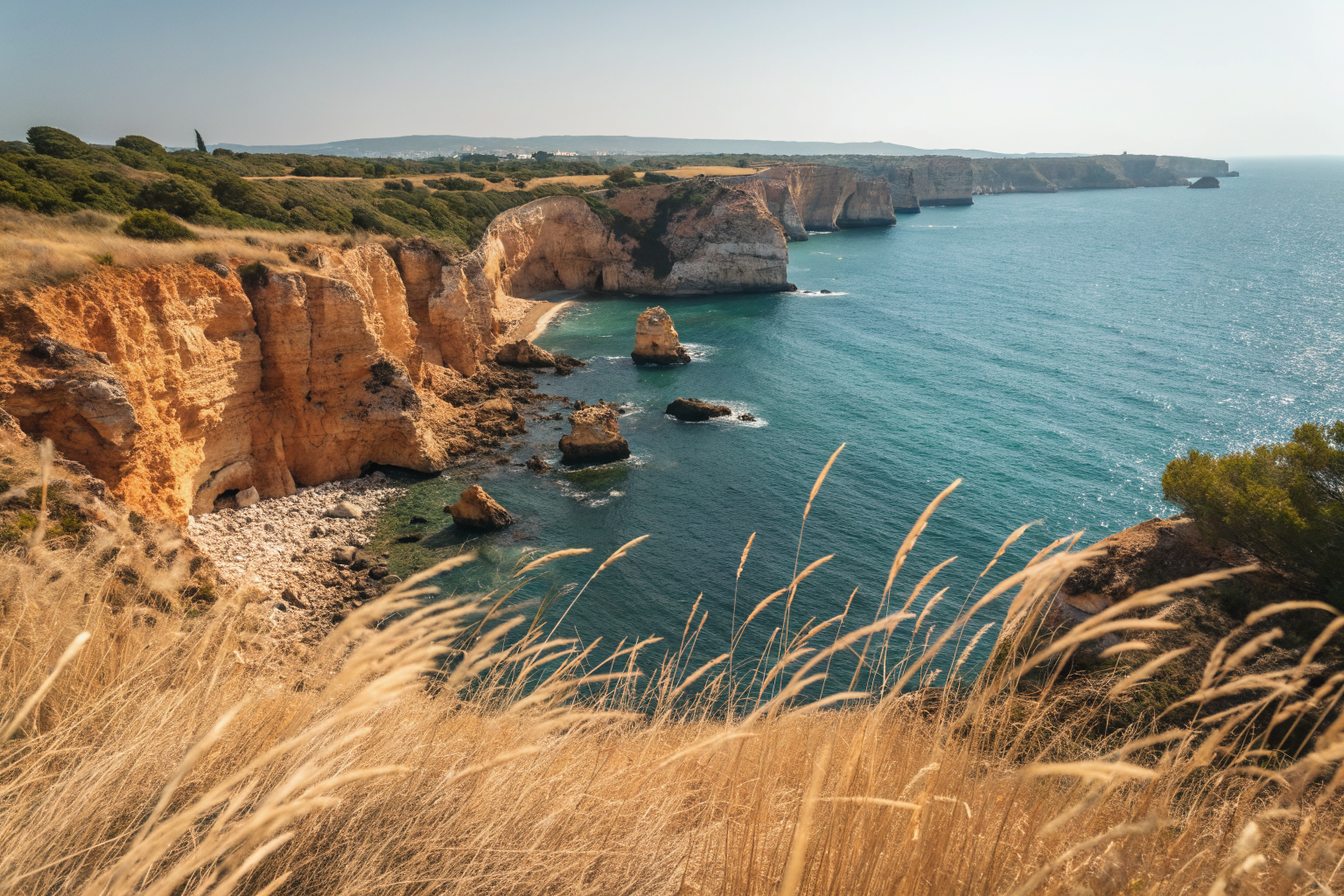
The west coast algarve, known as the Costa Vicentina, is a stunningly rugged and protected stretch of coastline in southern Portugal. Unlike the calmer southern coast, this area faces the Atlantic Ocean, resulting in wilder landscapes, dramatic cliffs, and powerful waves. It is part of a natural park, making it a paradise for nature lovers, surfers, and anyone seeking a more authentic, less developed holiday experience away from the crowded tourist resorts.
Key Benefits at a Glance
- Stunning Unspoiled Scenery: Discover vast, empty beaches, towering sea cliffs, and protected landscapes ideal for photography and relaxation.
- World-Class Surfing: Find consistent Atlantic swells and renowned surf spots like Arrifana and Amado, with schools available for all skill levels.
- Authentic & Peaceful Vibe: Escape the large crowds of the central Algarve and enjoy charming villages, local restaurants, and a tranquil atmosphere.
- Exceptional Hiking Trails: Explore the Rota Vicentina, one of Europe’s best coastal trail networks, offering breathtaking views and invigorating walks.
- Perfect for Road Trips: Easily explore hidden coves, dramatic viewpoints, and picturesque towns like Aljezur and Vila do Bispo by car.
Purpose of this guide
This guide is for travelers, surfers, and nature enthusiasts looking to explore an alternative to the Algarve’s popular resorts. It solves the problem of finding authentic, scenic, and activity-focused destinations in Portugal. Here, you’ll learn what makes the west coast unique, from its top beaches and hiking routes to its laid-back villages. We’ll help you plan your visit, understand what to expect from the climate and surf conditions, and avoid common mistakes like underestimating the power of the Atlantic waves, ensuring a memorable and adventurous trip.
The West Coast Algarve Portugal's untamed paradise

When I first arrived at the West Coast Algarve, I immediately understood why this region feels like Portugal's best-kept secret. Unlike the resort-lined southern coast, this stretch of coastline from Lagos northward presents an entirely different face of the Algarve – one shaped by the raw power of the Atlantic Ocean and protected by the Southwest Alentejo and Vicentine Coast Natural Park.
“150 kilometers of coastline facing the Atlantic Ocean, incredible cliffs, and a rich history.”
— Ecobnb, March 2024
Source link
The Costa Vicentina extends along this western edge, where dramatic cliffs plunge into the ocean and fishing villages maintain their authentic Portuguese character. During my multiple visits over the years, I've watched this region evolve slowly while retaining its wild essence – a testament to the protective status that keeps development at bay.
| Feature | West Coast Algarve | Central/East Algarve |
|---|---|---|
| Coastline | Rugged Atlantic cliffs | Sheltered Mediterranean-style |
| Development | Protected natural areas | Resort towns and golf courses |
| Beaches | Wild, dramatic, surfing | Calm, family-friendly, developed |
| Crowds | Fewer tourists | High tourist density |
| Character | Authentic Portuguese | International resort atmosphere |
- Protected by Southwest Alentejo and Vicentine Coast Natural Park
- Extends from Lagos northward along Costa Vicentina
- Shaped by direct Atlantic Ocean exposure
- Maintains authentic Portuguese fishing village character
- Offers dramatic cliff-top scenery and wild beaches
What strikes me most about the West Coast Algarve is how it rewards those seeking genuine Portuguese culture. While the southern coast caters to international tourism, these western towns and villages pulse with local life, where fishermen still haul their boats onto beaches at dawn and traditional festivals celebrate centuries-old customs.
When to visit understanding western Algarve's seasonal rhythms
The Atlantic Ocean dominates every aspect of visiting the West Coast Algarve, creating weather patterns dramatically different from the sheltered southern coast. During my visits across all seasons, I've experienced firsthand how this oceanic influence shapes not just the climate, but the entire character of the region.
Winter brings powerful storms that crash against the cliffs with mesmerizing force. I've stood at Cape St. Vincent in January, buffeted by winds that make conversation impossible, watching waves that seem to reach the lighthouse itself. The temperatures remain mild compared to northern Europe, but the Atlantic wind adds a bite that the southern coast rarely experiences.
| Month | Avg Temp (°C) | Rainfall (mm) | Wind Level | Crowd Level |
|---|---|---|---|---|
| Jan | 15 | 78 | High | Very Low |
| Feb | 16 | 68 | High | Very Low |
| Mar | 18 | 49 | Moderate | Low |
| Apr | 20 | 38 | Moderate | Low |
| May | 23 | 21 | Low | Moderate |
| Jun | 26 | 8 | Low | Moderate |
| Jul | 29 | 2 | Low | High |
| Aug | 29 | 4 | Low | Very High |
| Sep | 26 | 16 | Low | Moderate |
| Oct | 22 | 67 | Moderate | Low |
| Nov | 18 | 86 | High | Very Low |
| Dec | 16 | 94 | High | Very Low |
Spring transforms the region into a wildflower paradise. My May visits have revealed hillsides carpeted in cistus blooms and the air perfumed with wild herbs. The Atlantic Ocean moderates temperatures beautifully during this season, while the winds calm enough for comfortable hiking and beach exploration.
Summer presents the classic trade-off between perfect weather and peak crowds. The ocean breeze prevents the stifling heat found inland, but popular beaches like Praia do Amado can feel overwhelmed during July and August. I've learned to start beach days before 9 AM and save afternoons for inland exploration.
- May-June offers perfect weather with fewer crowds
- September-October provides warm seas and comfortable temperatures
- Winter brings dramatic storms perfect for wave watching
- Summer heat is moderated by Atlantic breezes
- Spring wildflowers bloom throughout the natural park
Autumn, particularly September and October, represents my personal sweet spot for visiting. The Atlantic Ocean retains summer warmth for swimming, crowds disperse after school returns, and the light takes on that golden quality photographers dream about. Restaurant terraces reopen to locals, and you can actually find parking in Sagres without circling for twenty minutes.
Getting around navigating western Algarve like a local
Arriving at Faro Airport marks the beginning of every West Coast Algarve adventure, but it's the 90-minute drive westward that truly introduces you to this region's character. Unlike the developed coastal strip near Faro, the landscape gradually becomes more rural and dramatic as you approach Lagos and points beyond.
Public transport exists but operates on a schedule that doesn't align with beach-hopping or sunset chasing. I learned this lesson during my first visit when I attempted to reach Cape St. Vincent by bus, only to discover the last return service departed at 5 PM – well before the spectacular sunset I'd traveled to witness.
- Valid driving license and international permit
- GPS device or offline maps app
- Parking coins for town centers
- Comfortable walking shoes for cliff paths
- Camera for unexpected scenic stops
- Water and snacks for remote areas
Renting a car transforms the West Coast Algarve from a series of isolated destinations into an interconnected playground. The roads themselves become part of the experience – narrow lanes winding through cork oak forests, dramatic coastal routes where the Atlantic Ocean appears suddenly around curves, and quiet village streets where you might need to wait for a farmer moving sheep.
- Book car rental at Faro Airport for best rates
- Choose compact car for narrow village streets
- Fill up in larger towns – rural stations are sparse
- Allow extra time for scenic detours
- Download offline maps before heading to remote beaches
Parking strategies vary dramatically between towns. Lagos requires patience and coins for meters, while Aljezur offers free spaces if you're willing to walk. Beach parking ranges from organized lots at popular spots to informal roadside areas where you'll join surfers changing into wetsuits behind car doors.
The key to navigating like a local involves embracing the slower pace. Portugal's rural character dominates here, where arriving five minutes late to dinner reservations is perfectly acceptable, and the most direct route isn't always the most rewarding one.
Must visit towns and villages in western Algarve
Each town along the West Coast Algarve reveals a distinct personality shaped by its relationship with the Atlantic Ocean and its historical role in Portuguese maritime culture. During my repeated visits, I've developed a personal hierarchy of these settlements, though my rankings continue to evolve as I discover new layers of character in each location.
| Town | Size | Vibe | Best For | Amenities |
|---|---|---|---|---|
| Lagos | Large | Historic & Lively | History, nightlife, beaches | Full services |
| Sagres | Medium | Adventure Hub | Surfing, nature, sunsets | Basic services |
| Silves | Medium | Cultural | History, architecture, cuisine | Moderate services |
| Aljezur | Small | Authentic | Surfing, local culture | Limited services |
| Vila do Bispo | Small | Traditional | Village life, hiking | Basic services |
| Monchique | Small | Mountain Retreat | Nature, wellness, views | Limited services |
Lagos serves as the natural gateway, offering the most comprehensive services while maintaining historical significance from the Age of Discovery. Sagres anchors the adventure-seeking crowd with its proximity to world-class surf breaks and Cape St. Vincent. Silves provides cultural depth through its Moorish heritage, while smaller settlements like Aljezur and Vila do Bispo reward visitors seeking authentic Portuguese village life.
What fascinates me about this town network is how each settlement evolved differently despite sharing the same coastal environment. Monchique retreated into the mountains, developing a spa culture around thermal springs, while coastal villages embraced their fishing heritage and adapted to the surfing boom of recent decades.
Don’t miss Portimão’s historic center, where the old town’s riverfront setting and authentic tascas offer a perfect counterpoint to the western coast’s wild beaches.
Lagos the perfect balance of history and beach culture
Lagos represents the West Coast Algarve's most complex urban entity, where cobblestone streets from the Age of Discovery intersect with beach bars serving craft cocktails to international surfers. During my first visit, I dismissed it as too touristy, but repeated exploration revealed layers of authenticity beneath the surface buzz.
The historic center rewards early morning wandering when tour groups haven't arrived and locals conduct their daily business. I've developed a personal walking route that begins at the Igreja de Santo António, continues through the old slave market (now a sobering museum), and ends at the marina where fishing boats dock alongside luxury yachts.
- Ponta da Piedade cliffs and golden beaches
- Historic old town with cobblestone streets
- Lagos Marina with waterfront dining
- Slave Market Museum for historical context
- Igreja de Santo António’s baroque interior
Praia da Luz, just east of Lagos, extends the town's appeal to families seeking calmer waters and a more relaxed atmosphere. This former fishing village has evolved into a popular expat enclave while maintaining its Portuguese character through local festivals and traditional restaurants.
The key to enjoying Lagos involves timing and knowing where locals gather. Sunset drinks work best at lesser-known viewpoints rather than the crowded main beach bars, while authentic dining happens in backstreet tascas where menus remain in Portuguese and fresh fish arrives daily from the harbor.
Silves the heart of moorish Algarve
Inland from the coastal drama, Silves rises from orange groves like a red sandstone jewel, its Moorish castle dominating the skyline and reminding visitors of the Algarve's Islamic heritage. This former capital of the Moors in southern Portugal offers cultural depth often missing from coastal resort towns.
The castle itself rewards the steep climb with panoramic views across the surrounding countryside, but I've found equal fascination in wandering the narrow streets below, where traditional whitewashed houses line lanes barely wide enough for small cars. Local restaurants serve dishes influenced by centuries of Moorish culinary tradition, particularly the sweet orange-based desserts that celebrate the region's agricultural heritage.
- Silves Castle – red sandstone fortress with panoramic views
- Silves Cathedral – Gothic architecture on mosque foundations
- Archaeological Museum – Roman and Moorish artifacts
- Municipal Market – local produce and traditional crafts
- Orange groves – scenic walks through fragrant orchards
What distinguishes Silves from coastal towns is its agricultural connection to the surrounding landscape. During spring visits, the scent of orange blossoms permeates the entire town, while local markets display produce grown in the fertile valley below the castle walls.
The town's restaurants excel at traditional Algarve cuisine, particularly dishes featuring local sweet oranges and almonds. I've discovered several family-run establishments where recipes pass through generations and the wine list features bottles from nearby vineyards rather than international selections.
Sagres where the world ends and adventure begins
At Portugal's southwestern extremity, Sagres occupies a unique position both geographically and culturally within the West Coast Algarve. This windswept town has evolved from a pure surfer outpost into a more diverse destination while maintaining its raw, end-of-the-world character that attracts adventure seekers from around the globe.
The Atlantic Ocean dominates every aspect of Sagres life, from the constant wind that shapes local architecture to the powerful swells that create world-class surfing conditions. Cape St. Vincent looms just kilometers away, adding an almost mystical dimension to daily life in this frontier settlement.
- Visit Sagres Fortress at golden hour
- Watch sunset from Cape St. Vincent lighthouse
- Take surfing lessons at Praia do Tonel
- Explore tide pools at Praia da Mareta
- Dine at clifftop restaurants with ocean views
During my multiple visits spanning several years, I've watched Sagres gradually expand its appeal beyond hardcore surfers and backpackers. New restaurants offer refined cuisine while maintaining the casual atmosphere that defines the town, and accommodation options now include boutique hotels alongside the traditional surf hostels.
The Sagres Fortress provides historical context for the town's strategic importance, while the harbor area reveals its continued dependence on fishing. Local festivals celebrate both maritime traditions and the international surf culture that has become integral to the town's identity.
Cape St Vincent standing at the end of the world
Cape St. Vincent represents more than a geographical extremity – it embodies the spiritual edge of Europe where land meets the infinite Atlantic Ocean in a display of raw natural power. Standing at these towering cliffs, with waves crashing 75 meters below and the lighthouse beam sweeping across waters that stretch unbroken to the Americas, creates an emotional experience that transcends typical sightseeing.
The lighthouse, built in 1904 and visible 60 kilometers at sea, serves as both a practical navigation aid and a symbolic beacon marking Europe's southwestern boundary. Romans called this place "Promontorium Sacrum" – the Sacred Promontory – recognizing its mystical significance long before Prince Henry the Navigator established his navigation school nearby.
- Southwesternmost point of continental Europe
- Lighthouse built in 1904, visible 60km at sea
- Known to Romans as ‘Promontorium Sacrum’
- Prince Henry the Navigator established navigation school nearby
- Cliffs rise 75 meters above Atlantic Ocean
Sunset at Cape St. Vincent draws crowds, but I've found equal magic in dawn visits when the lighthouse beam fades into growing daylight and seabirds begin their daily fishing routines. The wind here blows constantly, carrying salt spray and the cries of gulls, creating a sensory experience that photographs cannot capture.
Local myths persist about this being the end of the world, where medieval sailors feared sailing further west would lead to their doom. Standing here, watching the Atlantic Ocean stretch endlessly toward the horizon, it's easy to understand how such beliefs developed in an age when this truly represented the known world's edge.
Hidden gems authentic towns off the tourist track
Beyond the main tourist circuit lie smaller settlements that preserve authentic Portuguese character while offering distinct experiences within the West Coast Algarve. These villages reward visitors seeking genuine cultural encounters and connections to local traditions that have survived centuries of change.
Aljezur combines Moorish heritage with modern surf culture, its 10th-century castle overlooking a town that serves as gateway to some of the region's finest beaches. The annual sweet potato festival celebrates local agriculture, while surf schools take advantage of nearby breaks that rival those at more famous locations.
- Aljezur – 10th-century Moorish castle, world-class surf beaches, sweet potato festival
- Vila do Bispo – traditional whitewashed houses, local markets, hiking trail access
- Monchique – thermal springs, mountain views, medronho brandy tastings
- Carrapateira – tiny fishing village, dramatic coastline, authentic tavernas
Vila do Bispo maintains the traditional Portuguese village atmosphere with whitewashed houses, local markets, and direct access to Southwest Alentejo and Vicentine Coast Natural Park hiking trails. The town serves as an excellent base for exploring the region's most remote beaches and natural areas.
Monchique offers a completely different experience in the mountainous interior, where thermal springs have attracted visitors since Roman times. The town's restaurants specialize in mountain cuisine featuring wild boar and locally produced medronho brandy, while hiking trails lead to panoramic viewpoints over the entire Algarve.
These smaller settlements operate at a different pace than coastal tourist centers, where local festivals follow traditional calendars and restaurants serve whatever the day's catch or harvest provides. Markets occur on specific days, shops close for extended lunch breaks, and conversations with locals often lead to invitations for coffee or recommendations for hidden beaches.
The charming village of Ferragudo, perched above the Arade River near Portimão, exemplifies the western Algarve’s blend of fishing heritage and scenic beauty.
Beaches of the western Algarve nature's masterpieces
The beaches of the West Coast Algarve represent nature's most dramatic artistry, where the Atlantic Ocean has carved a coastline of such beauty and diversity that it ranks among the world's most spectacular. These aren't the sheltered coves and calm waters of the southern Algarve – these are wild, powerful beaches shaped by oceanic forces and protected within the Costa Vicentina natural park.
“Praia da Bordeira, is located close to the towns of Carrapateira and Bordeira. This beach is most known for its expansive stretch of golden sand that stretches three kilometres along the Western Algarve’s West Coast.”
— Live Like It’s The Weekend, April 2025
Source link
During my years of beach-hopping along this coast, I've developed a deep appreciation for how each stretch of sand offers something different – from family-friendly protected bays to world-class surfing breaks where international competitions unfold. The golden sand backed by towering cliffs creates a visual drama unmatched anywhere I've traveled.
- Shaped by powerful Atlantic Ocean swells
- Protected within Costa Vicentina Natural Park
- Feature golden sand backed by dramatic cliffs
- Offer world-class surfing conditions
- Maintain wild, undeveloped character
What sets these beaches apart from typical Mediterranean destinations is their untamed character. There are no beach clubs or rows of umbrellas – just raw natural beauty where cliffs frame endless expanses of sand and the Atlantic Ocean provides a constantly changing backdrop of waves, colors, and moods.
The diversity within this coastal stretch amazes me. Within a 30-kilometer drive, you can experience the calm, family-friendly waters of Praia da Luz, the challenging surfing conditions at Praia do Tonel, and the endless wilderness of Praia da Bordeira. Each beach serves different needs while maintaining the wild character that defines the West Coast Algarve.
While the western coast offers dramatic Atlantic beaches, travelers seeking calmer waters can easily reach Portimão’s riverfront beaches, where the Arade River meets the sea.
Beach comparison guide finding your perfect stretch of sand
Choosing the right beach along the West Coast Algarve requires understanding how Atlantic Ocean conditions, cliff formations, and natural protection create dramatically different experiences within relatively short distances. My personal beach evaluation system considers scenery, swimming safety, available facilities, crowd levels, surfing conditions, and accessibility – factors that vary significantly between locations.
| Beach | Scenery | Swimming | Facilities | Crowds | Surf | Access |
|---|---|---|---|---|---|---|
| Praia da Luz | Protected bay | Calm, safe | Full | Moderate | None | Easy |
| Praia do Amado | Dramatic cliffs | Strong currents | Basic | Low | Excellent | Moderate |
| Praia da Arrifana | Stunning views | Moderate waves | Limited | Low | Good | Moderate |
| Praia do Tonel | Rugged beauty | Rough seas | None | Very low | Advanced | Difficult |
| Praia da Bordeira | Endless sands | Strong currents | None | Very low | Good | Difficult |
My methodology for beach evaluation evolved through personal experience and occasional mistakes. During my first visit to Praia do Tonel, I underestimated both the access difficulty and the power of the waves, resulting in a challenging afternoon that taught me to research conditions beforehand.
Hidden coves dot this coastline, accessible only through scrambling down cliff paths or discovering unmarked tracks that local surfers guard jealously. These secret spots offer the ultimate reward for adventurous beach-seekers – pristine sand, complete privacy, and the raw beauty of the Atlantic Ocean without any human development in sight.
Top surfing beaches for every level of experience
The West Coast Algarve has earned international recognition as a premier surfing destination, where consistent Atlantic Ocean swells meet varied beach topography to create waves suitable for every skill level. During my progression from nervous beginner to confident intermediate surfer, I've experienced firsthand how different beaches serve different needs in the learning process.
Praia do Amado serves as the region's premier learning ground, where surf schools operate year-round thanks to consistent, forgiving waves and a sandy bottom that minimizes injury risk. I spent my first week here, gradually building confidence in waist-deep water while more experienced surfers caught larger waves on the outer breaks.
| Beach | Skill Level | Wave Consistency | Best Season | Surf Schools |
|---|---|---|---|---|
| Praia do Amado | Beginner | Very High | Year-round | Multiple |
| Praia da Arrifana | Intermediate | High | Oct-Apr | Few |
| Praia do Tonel | Advanced | High | Oct-Mar | None |
| Praia da Bordeira | Intermediate | Moderate | Oct-Apr | None |
| Praia de Odeceixe | Beginner | Moderate | Summer | Limited |
Praia da Arrifana represents the next step up, where intermediate surfers can tackle more challenging waves while still enjoying a relatively safe environment. The beach's amphitheater setting, surrounded by cliffs, creates unique wave dynamics that reward surfers who understand tidal timing and positioning.
- Start at Amado Beach for consistent, forgiving waves
- Progress to Arrifana for more challenging conditions
- Check tide charts – some spots work best at mid-tide
- Respect local surfers and follow lineup etiquette
- Consider wetsuit thickness based on season
Advanced surfers gravitate toward Praia do Tonel and remote breaks accessible only by hiking cliff paths. These spots offer powerful waves and challenging conditions that demand experience and respect for the Atlantic Ocean's power. I've watched expert surfers navigate these breaks with grace while beginners struggle in the whitewater, emphasizing the importance of honest self-assessment when choosing surf spots.
Surfing guide catching waves on the atlantic coast
Learning to surf on the West Coast Algarve involves understanding not just wave mechanics but also the cultural integration required to join a tight-knit surf community that values respect for both the ocean and local customs. My journey from complete beginner to confident intermediate surfer taught me lessons that extend far beyond wave-riding technique.
Seasonal variations dramatically affect both wave quality and water temperature. Winter brings the largest swells and most consistent surf, but also requires 5mm wetsuits and the mental toughness to paddle out in cold, stormy conditions. Summer offers warmer water and gentler conditions perfect for learning, though wave consistency decreases and crowds increase at popular breaks.
| Surf School | Location | Group Size | Price Range | Specialty |
|---|---|---|---|---|
| Algarve Surf School | Sagres | 6-8 | €35-45 | Beginners |
| Pure Surf Camp | Aljezur | 4-6 | €40-50 | All levels |
| Sagres Natura | Sagres | 4-6 | €45-55 | Eco-friendly |
| West Coast Surf | Lagos | 6-8 | €30-40 | Budget-friendly |
Equipment selection varies significantly with seasonal conditions and personal progression. My early mistakes included using summer wetsuits in spring conditions and choosing boards too small for my skill level, resulting in frustrating sessions and slower learning progress.
- 5mm wetsuit for winter (Dec-Mar)
- 3mm wetsuit for spring/autumn (Apr-May, Oct-Nov)
- 2mm shorty for summer (Jun-Sep)
- Reef booties for rocky entries
- Sunscreen and rash guard for UV protection
Surf etiquette becomes crucial when joining established lineups where local surfers have surfed the same breaks for decades. Understanding right-of-way rules, respecting territorial boundaries, and demonstrating ocean awareness earn acceptance into the community that guards access to the best waves.
- DO observe other surfers before entering water
- DO wait your turn in the lineup
- DON’T drop in on someone else’s wave
- DON’T surf alone at remote breaks
- DO respect local environmental protection rules
Family friendly beach havens
While the West Coast Algarve is renowned for its wild, powerful beaches, several locations offer family-friendly conditions where children can safely enjoy the Atlantic Ocean without the challenging surf and strong currents found at more exposed locations. These protected beaches combine natural beauty with practical amenities that make family beach days both memorable and manageable.
Praia da Luz exemplifies the ideal family beach, where a natural bay provides protection from Atlantic swells while maintaining the region's spectacular cliff-backed scenery. Lifeguards patrol during summer months, and the gradual sandy entry allows children to play safely in shallow water while parents relax on the wide beach.
- Lifeguard supervision during summer months
- Calm, protected waters for safe swimming
- Easy parking and beach access paths
- Nearby cafés and restroom facilities
- Natural or artificial shade options
- Shallow areas suitable for young children
River-mouth beaches like Praia de Odeceixe offer unique family experiences where freshwater streams meet the ocean, creating warmer, shallower pools perfect for young children. These locations often feature calmer conditions during incoming tides when river flow moderates ocean waves.
Timing becomes crucial for family beach visits along this coast. Early morning and late afternoon provide the most comfortable conditions, while midday heat and stronger afternoon winds can challenge families with young children. I've observed successful family strategies that involve morning beach time, midday lunch breaks in shaded areas, and return visits during the golden hour before sunset.
Natural wonders exploring the southwest Alentejo and Costa Vicentina natural park
The Southwest Alentejo and Vicentine Coast Natural Park defines the West Coast Algarve's protected character, encompassing 75,000 hectares of diverse landscapes where Mediterranean and Atlantic ecosystems converge. This designation preserves not only the dramatic coastline but also the unique flora, fauna, and traditional land uses that have shaped this region for centuries.
My favorite hiking experiences have unfolded along the park's extensive trail network, where ancient footpaths connect fishing villages, reveal hidden beaches, and provide access to viewpoints impossible to reach by car. The Rota Vicentina trail system offers options ranging from gentle coastal walks to challenging inland routes through cork oak forests and traditional farming landscapes.
- Fishermen’s Trail (easy) – coastal path with stunning ocean views
- Historical Way (moderate) – inland route through traditional villages
- Sagres Peninsula Loop (moderate) – dramatic cliffs and lighthouse views
- Monchique Mountain Trail (challenging) – highest peak in Algarve
- Aljezur Dunes Walk (easy) – unique ecosystem with rare plants
Wildlife encounters add unexpected excitement to park exploration. I've spotted white storks nesting on clifftop pinnacles, watched peregrine falcons hunt above the beaches, and discovered tracks of wild boar in remote forest sections. The park's location on major migratory routes creates seasonal opportunities to observe species passing between European and African habitats.
- White storks nesting on cliffs (spring/summer)
- Iberian lynx tracks in remote areas (very rare)
- Peregrine falcons hunting along coastline
- Wild boar signs in forested sections
- Dolphins visible from clifftop viewpoints
- Endemic plants like Armeria and Limonium
Responsible tourism within the park requires understanding and respecting conservation goals. Staying on marked trails, avoiding sensitive nesting areas during breeding season, and following Leave No Trace principles ensure this natural treasure remains protected for future generations. Local guides offer insights into ecological relationships and traditional uses that casual visitors might miss.
Flora and fauna the park's biodiversity treasures
The Southwest Alentejo and Vicentine Coast Natural Park protects an extraordinary diversity of plant and animal species, including numerous endemic varieties found nowhere else on Earth. This biodiversity results from the unique confluence of Mediterranean, Atlantic, and North African influences, creating micro-habitats that support specialized communities of life.
Endemic plants like the Armeria species paint clifftops in pink and white during spring blooms, while rare Limonium varieties cling to salt-sprayed rocks just above the tide line. My botanical education came through local guides who revealed the subtle differences between common and rare species, teaching me to recognize treasures hidden among more common vegetation.
| Season | Wildlife Highlights | Plant Blooms | Best Viewing Times |
|---|---|---|---|
| Spring | Nesting birds, migrating species | Wildflowers, cistus | Early morning |
| Summer | Seabirds, marine life | Lavender, rosemary | Dawn, dusk |
| Autumn | Migration routes active | Autumn crocuses | All day |
| Winter | Resident species, storm watching | Almond blossoms | Midday warmth |
Birdwatching opportunities vary dramatically with seasons and locations within the park. Spring migration brings spectacular diversity as European species return from African wintering grounds, while autumn offers chances to observe species preparing for southern journeys. Resident populations of seabirds, raptors, and songbirds provide year-round interest for patient observers.
Photography timing becomes crucial for capturing both wildlife behavior and optimal lighting conditions. Early morning provides the best opportunities for wildlife activity and soft light on flowering plants, while late afternoon offers dramatic backlighting that emphasizes the textures and colors of endemic vegetation against clifftop settings.
Cultural experiences and local cuisine in western Algarve
Beyond its natural wonders, the West Coast Algarve offers authentic cultural experiences that connect visitors to centuries of Portuguese maritime tradition and agricultural heritage. The region's isolation from mass tourism has preserved local customs, seasonal festivals, and culinary traditions that provide genuine insights into Portugal's coastal culture.
Seafood dominates local cuisine, reflecting the region's dependence on Atlantic fishing grounds that have sustained coastal communities for generations. In Lagos, Sagres, and Aljezur, restaurants serve fish caught by boats visible from dining terraces, prepared using recipes passed through generations of fishing families.
- Cataplana de marisco – seafood stew in copper pot
- Caldeirada – traditional fisherman’s stew
- Grilled sardines with cornbread and salad
- Percebes (gooseneck barnacles) – local delicacy
- Medronho brandy – mountain firewater
- Fresh oysters from Ria Formosa
- Carob and almond sweets
- Local honey from wildflower meadows
Traditional markets in smaller towns like Aljezur and Vila do Bispo operate on weekly schedules where local farmers sell produce grown using methods unchanged for decades. These markets offer opportunities to purchase ingredients for self-catering while observing social interactions that reveal community relationships and local values.
Seasonal festivals celebrate both religious traditions and agricultural cycles, from spring almond blossom celebrations to autumn harvest festivals. During my visits to local festivals, I've experienced genuine hospitality from residents eager to share their traditions with respectful visitors who demonstrate interest in local culture rather than just photo opportunities.
Artisan crafts continue in workshops scattered throughout the region, where traditional techniques produce ceramics, textiles, and woodwork using local materials. These crafts represent more than souvenirs – they embody cultural knowledge and aesthetic traditions that connect contemporary artisans to their ancestors' skills and creativity.
Accommodation guide where to stay in western Algarve
Choosing accommodation in the West Coast Algarve involves balancing access to beaches and attractions with the authentic local atmosphere that draws visitors to this region. Location decisions significantly impact your experience, with larger towns like Lagos and Sagres offering more amenities but potentially less intimate connections to Portuguese culture.
Lagos provides the most comprehensive accommodation options, from luxury hotels with full services to budget hostels catering to surfers and backpackers. The town's size supports restaurants, shops, and entertainment venues that remain open year-round, making it ideal for visitors seeking convenience and variety.
| Area | Price Range | Pros | Cons | Best For |
|---|---|---|---|---|
| Lagos | €50-200 | Amenities, nightlife, beaches | Crowds, higher prices | First-time visitors |
| Sagres | €40-150 | Nature, surfing, sunsets | Limited dining, windy | Adventure seekers |
| Aljezur | €35-120 | Authentic, peaceful, value | Few amenities, remote | Culture enthusiasts |
| Rural areas | €30-180 | Privacy, nature, unique | No services, car essential | Nature lovers |
Sagres attracts visitors seeking proximity to nature and adventure activities, with accommodation options ranging from surf camps to boutique hotels that embrace the town's end-of-the-world atmosphere. The constant Atlantic wind influences architecture and daily routines, creating a unique living environment that some find invigorating and others challenging.
Aljezur offers the best value for visitors prioritizing authentic Portuguese village life over tourist amenities. Guesthouses and small hotels here often feature traditional architecture and family management that provides personal attention and local insights unavailable at larger establishments.
Rural accommodation scattered throughout the region includes converted farmhouses, eco-lodges, and unique properties that offer complete immersion in the natural landscape. These options require rental cars and self-sufficiency but reward guests with privacy, starlit skies, and intimate connections to the protected environment.
Eco friendly and sustainable stays
The West Coast Algarve's protected natural character attracts accommodations that embrace environmental responsibility and sustainable practices, creating options for travelers seeking to minimize their ecological impact while enhancing their connection to the region's pristine landscapes.
Eco-lodges designed with local materials and renewable energy systems demonstrate how sustainable practices can enhance rather than limit guest experiences. During stays at several eco-friendly properties, I've discovered how solar heating, rainwater collection, and organic gardens contribute to both environmental protection and authentic local experiences.
- Monte da Casteleja – solar-powered eco-lodge near Sagres
- Quinta do Barranco da Estrada – organic farm stay in Aljezur
- Memmo Baleeira – sustainable hotel with ocean views
- Casa na Comporta – eco-friendly guesthouse with local materials
- Parque de Campismo Sagres – low-impact camping with facilities
Sustainable practices extend beyond energy and water conservation to include local food sourcing, traditional building techniques, and integration with surrounding ecosystems. Properties that embrace these principles often provide guests with educational opportunities about local ecology, traditional land uses, and conservation efforts.
Glamping sites and eco-camping facilities offer outdoor experiences with minimal environmental impact while providing comfort levels that appeal to travelers seeking nature immersion without sacrificing basic amenities. These accommodations often occupy stunning locations within or adjacent to protected areas, offering direct access to hiking trails and natural attractions.
Living in western Algarve an insider's perspective
Extended stays in the West Coast Algarve reveal significant differences between tourist impressions and year-round living realities. During my longer visits and through friendships with expats who've relocated permanently, I've gained insights into both the rewards and challenges of making this region home.
The seasonal economy creates dramatic changes in community dynamics, employment opportunities, and social life. Summer brings international energy and economic activity, while winter reveals the core Portuguese community that sustains these towns through quieter months when many businesses close and social life centers around local gatherings.
- PRO: Year-round mild climate and natural beauty
- PRO: Lower cost of living than northern Europe
- PRO: Welcoming expat community and locals
- PRO: Excellent fresh seafood and local produce
- CON: Limited job opportunities outside tourism
- CON: Seasonal economy affects services and social life
- CON: Language barrier for Portuguese integration
- CON: Remote location limits cultural activities
Community integration requires effort and Portuguese language skills for meaningful participation in local life. Expats who thrive here invest time in learning the language, participating in local festivals, and building relationships that extend beyond the international community.
Property costs vary significantly between coastal locations and inland areas, with Lagos commanding premium prices while villages like Aljezur offer better value for those willing to accept fewer amenities. Rural properties provide the best value but require self-sufficiency and reliable transportation.
Healthcare, internet connectivity, and other essential services meet European standards in larger towns but become more limited in rural areas. These practical considerations significantly impact quality of life for permanent residents, particularly during winter months when some services operate on reduced schedules.
Sample itineraries for exploring western Algarve
Effective West Coast Algarve itineraries balance the region's diverse attractions while accounting for driving distances, optimal timing for activities, and the slower pace that enhances appreciation of this special place. Based on my experience testing routes with visitors of different interests and energy levels, I've developed frameworks for various trip durations and focuses.
Three-day introductory itineraries work best when based in Lagos, allowing day trips to major attractions while returning to comfortable accommodation and dining options each evening. This approach suits first-time visitors who want comprehensive exposure without the complexity of changing accommodations.
- Day 1: Arrive Lagos, explore old town and Ponta da Piedade
- Day 2: Drive to Sagres, visit fortress and Cape St. Vincent sunset
- Day 3: Beach day at Praia do Amado, return via Aljezur
Five-day cultural itineraries allow deeper exploration of historical sites, traditional villages, and authentic local experiences. This duration permits overnight stays in different towns, revealing how each location's character changes between day and evening atmospheres.
- Day 1: Lagos arrival and historic center exploration
- Day 2: Silves castle and cultural sites
- Day 3: Sagres and Cape St. Vincent
- Day 4: Aljezur and traditional village experience
- Day 5: Monchique mountains and thermal springs
Week-long comprehensive itineraries enable full immersion in the region's diverse offerings, from adventure activities and natural exploration to cultural experiences and relaxation. This duration allows for spontaneous discoveries and weather-dependent activity adjustments.
- Day 1-2: Lagos base – beaches and history
- Day 3-4: Sagres area – surfing and nature
- Day 5: Silves cultural immersion
- Day 6: Monchique mountain retreat
- Day 7: Hidden villages and final beach day
Crowd-avoidance strategies become crucial during peak season, when early morning starts and late afternoon activities provide the best experiences at popular attractions. Cape St. Vincent sunrise visits offer solitude impossible during sunset hours, while beach exploration before 9 AM reveals the coast's wild character before daily crowds arrive.
The West Coast of the Algarve features rugged cliffs, expansive sandy beaches, and powerful Atlantic waves ideal for surfing. Popular spots include Praia da Bordeira with its 3km golden sands, Praia de Arrifana flanked by cliffs and near a village with amenities, and Praia do Amado known for international surf competitions. For detailed beach guides, explore region overview. Nature lovers appreciate the area's trails in Costa Vicentina park and secluded coves like Praia da Pipa. Hikers and surfers often base in Carrapateira or Aljezur for access. Check traveler tips for rugged paths and dining.
Frequently Asked Questions
The West Coast beaches in Algarve feature dramatic cliffs, wild waves, and a more rugged, natural landscape ideal for surfing and hiking, while the Southern coast offers calmer waters, golden sands, and resort-style amenities suited for families and relaxation. West Coast spots like Praia da Bordeira are less crowded and emphasize raw beauty, contrasting with the busier, tourist-heavy southern areas such as Praia da Rocha. This distinction makes the West Coast perfect for adventure seekers, whereas the South caters to those wanting easy access and facilities.
Some of the most beautiful beaches in western Algarve include Praia da Amoreira with its stunning river estuary and dunes, Praia do Amado known for its surfing waves and scenic cliffs, and Praia da Arrifana offering picturesque views and a sheltered bay. Odeceixe Beach stands out for its unique position on the border of Algarve and Alentejo, featuring a calm river and ocean side. These spots are celebrated for their natural, unspoiled beauty and dramatic landscapes.
The best time to visit the west coast Algarve is from May to October, when the weather is warm and sunny, with temperatures averaging 20-30°C, ideal for beach activities and surfing. Spring (May-June) and fall (September-October) offer fewer crowds and milder conditions compared to the peak summer months of July and August. Avoid winter if you prefer warmer weather, as it can be rainy and windy, though it’s great for off-season tranquility.
Yes, having a car is highly recommended for getting around West Algarve, as public transportation is limited and many beaches and towns like Sagres or Aljezur are spread out and not well-connected by buses. Renting a car allows flexibility to explore remote spots and scenic drives along the coast. While some areas have taxi services or organized tours, a personal vehicle ensures you can visit hidden gems at your own pace.
The best Algarve beaches for surfing are primarily on the west coast, such as Praia do Amado, which offers consistent waves and surf schools for all levels, and Praia da Arrifana with its reliable swells and beautiful setting. Other top spots include Praia da Bordeira for its long sandy stretches and powerful breaks, and Castelejo Beach known for advanced surfers due to its strong currents. These locations benefit from Atlantic exposure, providing ideal conditions year-round, especially in autumn and winter.
