
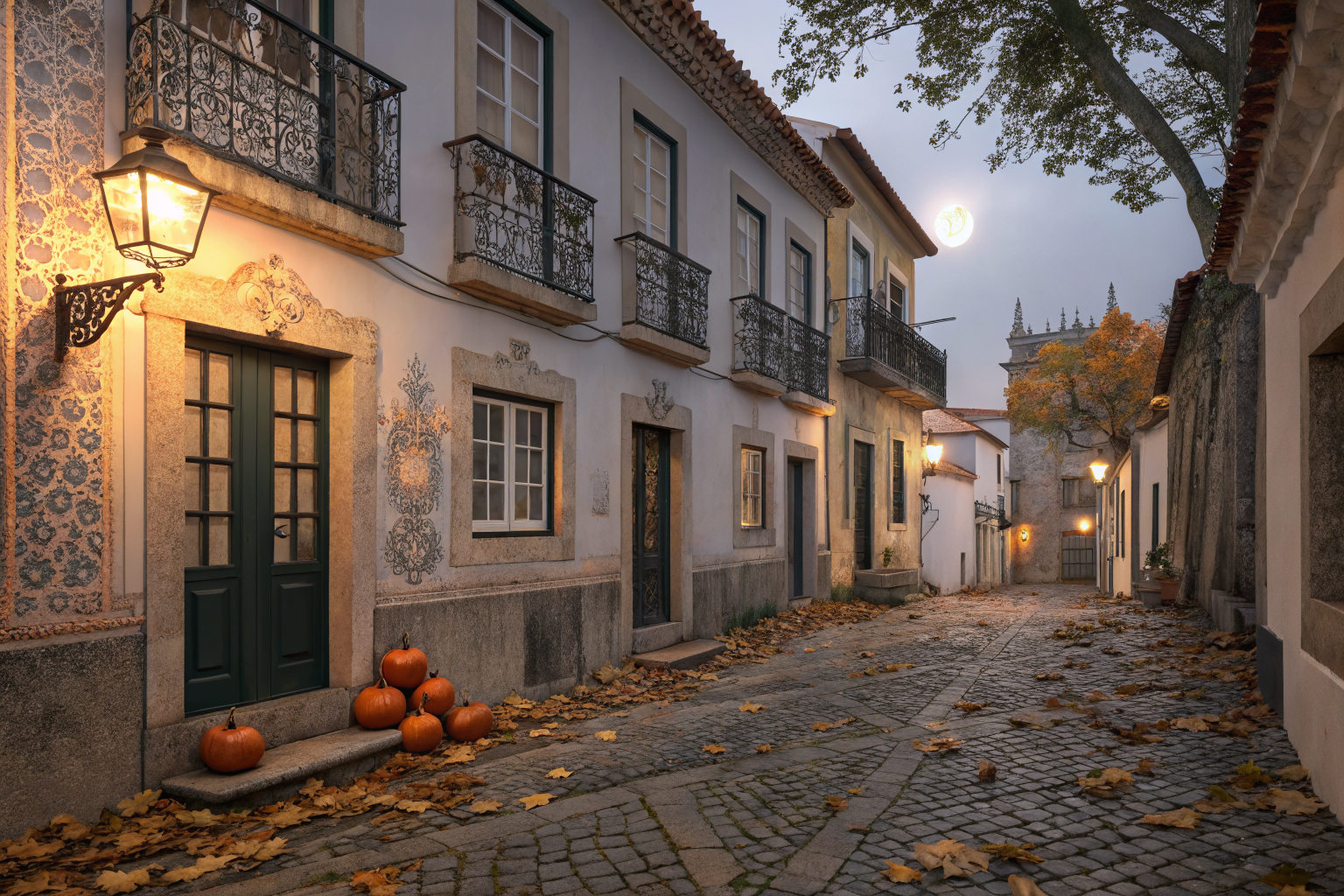
Halloween portugal is an evolving celebration that blends modern festivities with deep-rooted traditions. While not a native holiday, American-style Halloween with costumes and parties has gained popularity in cities like Lisbon and Porto, especially among younger generations and expat communities. However, it coexists with the more traditional ‘Dia de Todos os Santos’ on November 1st, which involves honoring the dead and the custom of ‘Pão-por-Deus,’ a unique form of trick-or-treating where children receive bread or treats.
Key Benefits at a Glance
- Experience a Unique Blend: Enjoy modern Halloween parties while also discovering authentic Portuguese traditions like ‘Pão-por-Deus’.
- Find Events Easily: Major cities and Algarve resorts host numerous themed nightclub events, family-friendly gatherings, and costume parties.
- Enjoy a Safer Atmosphere: Celebrations are generally more community-focused and less intense than in other countries, creating a welcoming environment.
- Connect with Local Culture: Participating in or observing ‘Pão-por-Deus’ offers a genuine connection to Portugal’s cultural heritage.
- Less Commercial Pressure: Experience the fun of the season without the overwhelming marketing and retail focus found elsewhere.
Purpose of this guide
This guide is for travelers, expats, and locals who want to understand and celebrate Halloween in Portugal. It solves the problem of navigating a holiday that is part new trend, part local tradition. You will learn the difference between commercial Halloween events and the culturally significant ‘Dia de Todos os Santos’ customs. We provide actionable tips to help you find parties, participate respectfully in local traditions, and avoid the common mistake of expecting large-scale, American-style trick-or-treating in every neighborhood.
The Evolution of Halloween in Portugal

Over the past two decades, Halloween in Portugal has transformed from a completely foreign concept to a recognized cultural phenomenon, particularly in urban areas. This evolution represents a fascinating case study in how globalization and American pop culture influence traditional societies while adapting to local contexts.
When I first visited Portugal in the early 2000s, Halloween was virtually non-existent. Today, walking through Lisbon or Porto in late October reveals a different story entirely. Shop windows display carved pumpkins, costume stores appear seemingly overnight, and bars advertise themed parties. This transformation didn't happen overnight—it's been a gradual process driven by several interconnected factors.
American television shows and movies served as the primary introduction to Halloween imagery for most Portuguese people. Series like "Friends" and "The Simpsons," along with Hollywood horror films, familiarized audiences with jack-o'-lanterns, trick-or-treating, and costume parties. The Culture of Portugal has proven remarkably adaptable, absorbing these foreign elements while maintaining its own distinct character.
The influence of expatriate communities cannot be understated. International schools, multinational companies, and foreign residents demonstrated Halloween celebrations firsthand, showing Portuguese people how the holiday could be celebrated. What began as curiosity evolved into participation, particularly among younger generations eager to embrace new cultural experiences.
Halloween Terminology in Portuguese
Understanding Halloween vocabulary helps visitors navigate Portuguese celebrations and shows how the language has adapted to accommodate this imported tradition. The Portuguese have creatively translated Halloween concepts while maintaining some English terms that have become universally recognized.
- Dia das Bruxas – Halloween (literally ‘Witches’ Day’)
- Doçura ou travessura – Trick or treat
- Bruxa – Witch
- Fantasma – Ghost
- Abóbora – Pumpkin
- Máscara – Mask
- Assombrado – Haunted
- Medo – Fear
- Doces – Sweets/Candy
The term "Dia das Bruxas" has become the standard Portuguese translation for Halloween, though many young people simply use the English word. Pronunciation tip: "DEE-ah dahs BROO-shahs" with the "x" making a "sh" sound. The phrase "doçura ou travessura" directly translates the concept of trick or treat, though it sounds more formal than the casual English equivalent.
Interestingly, some Halloween terms retain their English pronunciation even when written in Portuguese contexts. Words like "Halloween party" or "costume" often appear unchanged in Portuguese advertising and social media posts, reflecting the global nature of this cultural import.
The Rise of Halloween in Portuguese Culture
The factors behind Halloween's growing popularity in Portugal reveal how modern cultural transmission works in our interconnected world. Multiple influences converged to create the perfect conditions for Halloween's adoption, particularly among urban Portuguese people seeking new forms of entertainment and cultural expression.
- American TV shows and movies introduced Halloween imagery
- International schools and expat communities demonstrated celebrations
- Commercial opportunities drove retail adoption
- Social media amplified Halloween content and ideas
- Urban nightlife venues embraced themed parties
- Educational institutions incorporated Halloween as cultural learning
Globalization created the infrastructure for Halloween's arrival, but local adaptation ensured its survival. Portuguese businesses recognized commercial opportunities, with retailers importing costumes and decorations to meet growing demand. Nightlife venues discovered that Halloween themes attracted customers during traditionally slower autumn months.
Educational institutions played a crucial role by introducing Halloween as a cultural learning experience. English teachers used Halloween vocabulary lessons to engage students, while international schools organized celebrations that local families could observe and eventually join. This educational approach helped legitimize Halloween as more than just commercial entertainment.
Social media acceleration cannot be overlooked. Portuguese users sharing Halloween content, whether from abroad or local celebrations, normalized the holiday's imagery and concepts. Instagram and Facebook posts featuring costumes and decorations made Halloween feel accessible and familiar to people who had never directly experienced it.
Does Portugal Celebrate Halloween
Yes, Portugal does celebrate Halloween, though it's a relatively recent and less widespread phenomenon compared to English-speaking countries, primarily gaining popularity in urban areas over the past decade.
The celebration of Halloween in Portugal varies significantly by region and community. In major cities like Lisbon and Porto, Halloween has established itself as a recognized part of the autumn social calendar. You'll find costume parties in bars and clubs, Halloween-themed decorations in shopping centers, and even some neighborhoods where trick-or-treating occurs.
“In Portugal, Halloween is a more of a recent phenomenon, and even though it’s celebrated, it’s not widespread. While you’ll find definitely see plenty of evidence of it throughout major cities like Lisbon and Porto, the countryside doesn’t nearly celebrate it as much.”
— Portugal Homes, 2025
Source link
However, the nature of Portuguese Halloween celebrations differs markedly from those in countries where Halloween has deeper cultural roots. Portuguese Halloween tends to be more adult-oriented, focusing on themed parties and social gatherings rather than the family-centered trick-or-treating traditions common in North America.
The Algarve region, with its large expatriate population and tourism focus, shows perhaps the strongest Halloween presence outside major cities. International residents and tourists have created demand for Halloween events, leading local businesses to organize themed activities and decorations.
Rural areas remain largely unaffected by Halloween fever. In smaller towns and villages, traditional Portuguese celebrations like All Saints' Day and Pão por Deus continue to dominate the early November period, with Halloween making minimal impact on local customs.
How I've Experienced Halloween Across Portugal
During my numerous October visits to Portugal, I've witnessed the evolution of Halloween celebrations firsthand. The transformation has been remarkable, particularly in urban centers where the holiday has found its most enthusiastic reception.
In Lisbon, Halloween manifests most visibly in the Bairro Alto and Cais do Sodré nightlife districts. Bars and clubs embrace Halloween themes with elaborate decorations, costume contests, and themed cocktails. I've attended parties where Portuguese creativity shines through unique costume interpretations, often incorporating local cultural elements into traditional Halloween characters.
“Portugal increasingly embraces Halloween with costumes, parties and themed attractions—especially in Lisbon, Porto and the Algarve—while traditional observances like All Saints’ Day and Pão‑por‑Deus remain central to the season.”
— Idealista Portugal, October 2025
Source link
Porto offers a slightly different Halloween experience, with the city's university population driving much of the celebration. Student areas like Cedofeita and Rua Miguel Bombarda host costume parties and themed events that attract both Portuguese and international students. The atmosphere feels more intimate and community-oriented compared to Lisbon's larger-scale celebrations.
Shopping centers across major cities have embraced Halloween as a commercial opportunity. I've observed elaborate window displays, Halloween costume sections in department stores, and even pumpkin carving workshops for children. These commercial expressions help normalize Halloween imagery for Portuguese families who might otherwise have limited exposure to the holiday.
Trick-or-treating remains limited but does occur in specific contexts. International school communities, expatriate neighborhoods, and some family-friendly apartment complexes organize trick-or-treating events. Portuguese children participating in these activities often mix traditional Portuguese costumes with Halloween themes, creating unique hybrid celebrations.
While Halloween grows in urban centers, traditional observances like Pão-por-Deus connect to broader Portuguese seasonal customs—our guide to Christmas traditions reveals how autumn and winter celebrations form a continuous cultural narrative.
My Observations: Urban vs Rural Halloween Experiences
The contrast between urban and rural Halloween experiences in Portugal reveals how globalized cultural phenomena spread unevenly across different communities and geographic areas.
| Urban Areas | Rural Areas |
|---|---|
| Elaborate decorations in shops | Minimal commercial decorations |
| Costume parties and nightlife events | Family gatherings focus on traditions |
| Trick-or-treating in neighborhoods | Pão-por-Deus door-to-door visits |
| International community participation | Local Portuguese customs emphasized |
| Commercial Halloween merchandise | Homemade treats and traditional foods |
In cities, Halloween competes for attention with traditional observances, creating a layered celebration where people might attend a Halloween party on October 31st and visit family graves on November 1st for All Saints' Day. This duality reflects Portugal's ability to accommodate new cultural influences while maintaining traditional practices.
Rural areas, particularly in northern regions like the Douro valley, remain largely focused on traditional Portuguese customs. When I've visited small towns during late October and early November, conversations with locals reveal limited interest in or awareness of Halloween celebrations. Instead, preparations focus on All Saints' Day observances and traditional seasonal activities.
The age demographic also influences Halloween participation. Urban young adults and teenagers show the strongest enthusiasm, while older generations remain more connected to traditional celebrations. This generational divide suggests that Halloween's future in Portugal may depend on how current young people maintain these practices as they age.
What Halloween Looks Like in Portugal Today
Contemporary Halloween in Portugal presents a unique visual landscape that blends international Halloween imagery with distinctly Portuguese elements. The aesthetic differs noticeably from Halloween celebrations in countries with longer Halloween traditions.
Pumpkin carving has gained popularity, especially in northern regions where pumpkins are traditionally called coca or coco, named after a mythical creature from Portuguese folklore. This linguistic connection helps bridge traditional Portuguese culture with imported Halloween customs, creating meaningful cultural fusion.
Halloween costumes in Portugal often reflect both international and local influences. While traditional witches, vampires, and zombies remain popular, I've observed increasing numbers of costumes inspired by Portuguese folklore. Characters like the lobisomem (werewolf) and bruxa (witch) take on distinctly Portuguese characteristics, incorporating local legends and stories.
Jack-o'-lanterns appear in shop windows and private homes, though the carving styles often differ from American patterns. Portuguese carved pumpkins frequently feature more geometric designs or traditional Portuguese symbols, reflecting local artistic preferences and cultural aesthetics.
The overall atmosphere of Portuguese Halloween celebrations tends to be less intense than in countries with longer Halloween traditions. The focus remains on fun and creativity rather than genuine scares, making Portuguese Halloween celebrations feel more approachable for people unfamiliar with the holiday's darker themes.
Traditional Portuguese Celebrations Around Halloween
Portugal's traditional autumn celebrations provide essential context for understanding how Halloween fits into the broader cultural landscape. These indigenous traditions, with their deep historical roots, continue to play a central role in Portuguese culture during late October and early November.
Rather than competing with Halloween, traditional Portuguese celebrations complement the imported holiday, creating a rich tapestry of observances that serve different cultural and spiritual needs. Portuguese people have demonstrated remarkable ability to maintain their traditional practices while selectively adopting elements of Halloween that enhance rather than replace existing customs.
The most significant traditional celebration is Pão por Deus ("Bread for God"), which occurs on November 1st morning. This centuries-old custom involves children visiting neighbors' homes to request traditional treats, creating natural parallels with Halloween's trick-or-treating while maintaining distinctly Portuguese character and spiritual significance.
All Saints' Day (November 1st) serves as Portugal's most important autumn observance, functioning as a national public holiday when families honor deceased relatives through cemetery visits, flower offerings, and religious services. This solemn tradition contrasts sharply with Halloween's playful atmosphere, yet both holidays acknowledge themes of mortality and remembrance.
Pão-por-Deus: Portugal's Answer to Trick-or-Treating
Pão por Deus represents Portugal's indigenous door-to-door tradition, predating trick-or-treating by centuries while serving similar community-building functions. This traditional practice demonstrates how Portuguese people have long engaged in seasonal customs that bring communities together through food sharing and intergenerational connection.
- Children gather in small groups on November 1st
- Visit neighbors’ homes door-to-door
- Recite traditional verses asking for treats
- Receive bread, cakes, nuts, or small coins
- Thank families and move to next house
- Share collected treats with family at home
The tradition's name translates to "Bread for God," reflecting its spiritual origins in Christian charity and community care. Unlike trick-or-treating, which emphasizes individual candy collection, Pão por Deus focuses on community solidarity and religious devotion, with treats representing shared blessings rather than entertainment rewards.
Regional variations exist throughout Portugal, with different areas emphasizing particular foods or verses. In northern regions, children might receive traditional broas (spiced biscuits), while southern areas favor nuts, dried fruits, or small coins. These regional differences reflect local agricultural traditions and historical food customs.
The practice has experienced revival in recent years, partly as a cultural counterpoint to Halloween's growing influence. Schools and cultural organizations actively promote Pão por Deus as an authentic Portuguese tradition worth preserving, teaching children traditional verses and encouraging family participation.
Traditional Verses and Sayings for Pão-por-Deus
The oral tradition of Pão por Deus includes numerous verses that children recite when visiting homes, creating a rich linguistic heritage that connects contemporary Portuguese people with their cultural ancestors.
- Pão por Deus, fiel de Deus – Bread for God, faithful to God
- Bolinho no saquinho, castanha no forninho – Little cake in the bag, chestnut in the oven
- Se não tem pão, dê-me um tostão – If you have no bread, give me a coin
- Santinhos da porta, dai-me uma broa – Little saints of the door, give me a loaf
These verses follow traditional Portuguese poetic patterns, often featuring rhyming couplets and religious references that reflect the custom's spiritual origins. The language tends to be formal and archaic, preserving linguistic elements that might otherwise disappear from modern Portuguese speech.
Pronunciation guidance: Portuguese verses should be recited slowly and clearly, with emphasis on the rhyming words. The rhythm resembles traditional Portuguese folk songs, creating a melodic quality that makes verses easier to memorize and more pleasant to hear.
Learning and reciting these verses provides children with connection to Portuguese cultural heritage while developing language skills and confidence in public speaking. Many families treat verse memorization as an important cultural education, passing down variations that have been used for generations.
All Saints' Day and All Souls' Day Observances
All Saints' Day represents Portugal's most significant autumn religious and cultural observance, functioning as a public holiday that brings families together to honor deceased relatives and reflect on mortality themes that resonate with Halloween's underlying spiritual concerns.
- Visit family graves early in the morning
- Clean and decorate gravesites with fresh flowers
- Attend special church services and masses
- Light candles in memory of deceased relatives
- Gather for traditional family meals
- Share stories and memories of loved ones
The observance begins with dawn cemetery visits, where Portuguese people clean gravesites, replace old flowers with fresh arrangements (particularly chrysanthemums), and light candles in memory of deceased family members. These activities create a solemn, respectful atmosphere that contrasts sharply with Halloween's playful approach to death imagery.
Church services hold special importance on All Saints' Day, with masses dedicated to remembering the saints and deceased faithful. Many Portuguese attend services they might otherwise skip, reflecting the day's spiritual significance within Catholic tradition that remains central to Portuguese cultural identity.
Family gatherings traditionally follow cemetery visits and religious services, with meals featuring seasonal foods and traditional Portuguese dishes. These gatherings provide opportunities for storytelling, memory sharing, and intergenerational connection that strengthens family bonds while honoring deceased relatives.
For more context on this celebration, explore Halloween origins and All Saints' Day traditions.
Is it the Same as the Day of the Dead
Portuguese All Saints' Day observances differ significantly from Mexican Day of the Dead celebrations, despite both traditions focusing on honoring deceased family members and occurring during the same time period.
| Portuguese All Saints’ Day | Mexican Day of the Dead |
|---|---|
| Solemn, respectful atmosphere | Festive, celebratory mood |
| Private family gatherings | Public community celebrations |
| Fresh flowers and candles | Colorful altars and decorations |
| Church services emphasized | Home altars and offerings |
| Quiet cemetery visits | Music and dancing at graves |
| Traditional Portuguese foods | Special Day of the Dead dishes |
The fundamental difference lies in emotional approach: Portuguese observances emphasize solemnity, prayer, and quiet reflection, while Mexican celebrations embrace joyful remembrance through music, dancing, and festive gatherings. This contrast reflects broader cultural differences in attitudes toward death and mourning.
Portuguese traditions focus on individual family observances rather than community-wide celebrations. Cemetery visits tend to be private affairs, with families maintaining gravesites and conducting personal remembrance rituals without elaborate public displays or community participation.
The visual aesthetics also differ dramatically. Portuguese All Saints' Day features muted colors, simple flower arrangements, and understated decorations, while Mexican Day of the Dead celebrations showcase bright colors, elaborate altars, and artistic sugar skulls that transform death imagery into celebration art.
How I've Seen Halloween and All Saints' Day Blend Harmoniously
During my years observing Portuguese culture, I've witnessed how Halloween and All Saints' Day have evolved to complement rather than compete with each other. Portuguese people have demonstrated remarkable cultural adaptability, finding ways to celebrate both traditions without feeling they must choose between them.
The key to this harmony lies in timing and purpose. Halloween celebrations typically occur on October 31st evening, focusing on entertainment, costumes, and social gatherings. All Saints' Day observances happen the following morning and day, emphasizing family, tradition, and spiritual reflection. This temporal separation allows people to engage with both traditions without conflict.
Many Portuguese families have developed hybrid approaches that honor both celebrations. Children might attend Halloween parties on October 31st, then participate in Pão por Deus visits the next morning, followed by family cemetery visits in the afternoon. This layered celebration reflects Portugal's ability to absorb new cultural influences while maintaining traditional practices.
The Culture of Portugal has proven remarkably flexible in accommodating seemingly contradictory approaches to similar themes. Where Halloween treats death as entertainment, All Saints' Day approaches it with reverence, yet both perspectives can coexist within the same cultural framework when people understand their different purposes and contexts.
Where I Recommend Experiencing Halloween in Portugal
For travelers interested in experiencing Halloween in Portugal, certain cities and regions offer more developed celebrations and activities. My recommendations are based on personal attendance at various events and observation of how different areas approach Halloween celebrations.
| City | Event Type | Family-Friendly | Cost Range |
|---|---|---|---|
| Lisbon | Themed parties and ghost tours | Mixed | €15-50 |
| Porto | Costume contests and pub crawls | Adults mainly | €10-40 |
| Algarve | Resort Halloween events | Yes | €20-60 |
| Coimbra | University Halloween parties | Young adults | €5-25 |
| Braga | Traditional and modern blend | Yes | €10-30 |
Lisbon offers the most diverse Halloween experiences, from sophisticated themed dinners in upscale restaurants to elaborate costume parties in nightclub districts. The city's international character ensures high-quality events with creative themes and professional organization.
Porto's Halloween scene centers around its vibrant student population and historic center. The city's compact size creates an intimate atmosphere where costume parties spill into the streets, creating impromptu celebrations that feel more community-oriented than commercial.
The Algarve region caters particularly well to families and international visitors, with resort hotels organizing comprehensive Halloween programs that include activities for all ages. These events often blend Portuguese cultural elements with international Halloween traditions.
Family-Friendly Halloween Activities I've Discovered
For families traveling with children, Portugal offers several Halloween activities that provide safe, entertaining experiences while introducing kids to Portuguese culture and Halloween traditions.
- Shopping center Halloween decorations and photo opportunities
- Children’s costume contests at community centers
- Pumpkin carving workshops at international schools
- Halloween-themed storytelling sessions at libraries
- Family-friendly haunted house attractions
- Traditional Pão-por-Deus participation with local families
Shopping centers in Lisbon, Porto, and the Algarve create elaborate Halloween displays that provide excellent photo opportunities without requiring admission fees. These decorations often incorporate Portuguese cultural elements, making them educational as well as entertaining.
International schools frequently organize Halloween events that welcome visiting families, providing opportunities for children to interact with local and expatriate kids while experiencing Portuguese-style Halloween celebrations. These events often include cultural education components that explain both Halloween and Portuguese traditions.
Community centers and libraries offer Halloween-themed activities that combine entertainment with cultural learning. Storytelling sessions might feature Portuguese folklore alongside Halloween stories, while craft activities teach traditional Portuguese techniques applied to Halloween decorations.
Adult Halloween Events Worth Checking Out
Portugal's adult Halloween scene offers sophisticated celebrations that showcase Portuguese creativity and hospitality while providing memorable experiences for visitors seeking more mature Halloween entertainment.
Lisbon's upscale hotels and restaurants create themed dining experiences that combine Portuguese cuisine with Halloween atmosphere. These events often feature creative menu presentations, costume contests, and live entertainment that showcases Portuguese talent within Halloween themes.
Porto's historic center provides atmospheric settings for ghost tours and themed pub crawls that blend local history with Halloween storytelling. These events offer cultural education alongside entertainment, teaching visitors about Portuguese folklore and legends.
The Algarve's beach resorts organize sophisticated Halloween parties that take advantage of the region's pleasant October weather. These events often feature outdoor settings with elaborate decorations, live music, and opportunities to experience Halloween celebrations in uniquely Portuguese coastal environments.
Portuguese Halloween Traditions: My Cultural Experience
Over the years, I've observed the emergence of distinctly Portuguese Halloween traditions that blend imported Halloween customs with local cultural elements. These hybrid celebrations represent fascinating examples of cultural adaptation and creativity.
Portuguese folklore has begun influencing Halloween celebrations, with traditional legends and characters appearing alongside conventional Halloween imagery. The lobisomem (werewolf) of Portuguese folklore takes on Halloween characteristics, while traditional bruxa (witch) stories provide local context for Halloween witch costumes.
Regional Portuguese foods are increasingly incorporated into Halloween celebrations. Traditional autumn treats like castanhas assadas (roasted chestnuts) and jeropiga (sweet wine) appear at Halloween parties, creating uniquely Portuguese Halloween flavors that distinguish these celebrations from purely imported traditions.
The Culture of Portugal influences Halloween decorations through traditional Portuguese artistic elements. Carved pumpkins might feature Portuguese symbols or geometric patterns inspired by traditional Portuguese tiles, while Halloween costumes incorporate Portuguese folk costume elements.
These emerging traditions suggest that Halloween in Portugal is evolving beyond simple cultural importation toward genuine cultural fusion that creates something uniquely Portuguese while maintaining recognizable Halloween characteristics.
My Traveler's Guide to Halloween Season in Portugal
Visiting Portugal during Halloween season requires understanding both imported Halloween celebrations and traditional Portuguese observances. Successful visits balance respect for local customs with participation in emerging Halloween traditions.
- Pack layers for cool October/November weather
- Bring costume pieces if planning to participate
- Book accommodations early for Halloween weekend
- Respect solemn nature of All Saints’ Day observances
- Learn basic Portuguese Halloween vocabulary
- Carry cash for traditional Pão-por-Deus encounters
Weather considerations are crucial for October/November visits. Portuguese autumn can be unpredictable, with warm days and cool evenings requiring layered clothing options. Halloween parties often extend late into the night, making warm clothing essential for comfort.
Cultural sensitivity becomes particularly important during All Saints' Day observances. While Halloween celebrations are generally welcomed, visitors should understand that November 1st is a serious religious and cultural day for many Portuguese people. Cemetery visits should be conducted respectfully, and loud Halloween-related activities should be avoided near religious sites.
Portuguese cuisine during Halloween season offers unique opportunities to experience autumn flavors. Traditional chestnuts, seasonal wines, and regional specialties provide authentic Portuguese experiences that complement Halloween celebrations and create memorable culinary discoveries.
Accommodation booking requires advance planning for Halloween weekend, particularly in Lisbon, Porto, and the Algarve where Halloween events attract both domestic and international visitors. Early booking ensures better rates and preferred locations near Halloween activities.
When I Recommend Visiting Portugal for Halloween Experiences
Timing your Portugal visit for optimal Halloween experiences requires understanding both Halloween celebrations and traditional Portuguese observances that occur during early November.
- October 31st – Main Halloween celebrations and parties
- November 1st – All Saints’ Day (public holiday, limited services)
- November 2nd – All Souls’ Day observances continue
- Late October weekend – Peak Halloween events in cities
- Early November – Traditional Pão-por-Deus activities
- First week November – Autumn festivals and cultural events
The optimal visit window extends from late October through early November, allowing travelers to experience both Halloween celebrations and traditional Portuguese observances. This timing provides comprehensive cultural exposure while maximizing opportunities for unique experiences.
All Saints' Day being a public holiday affects travel plans significantly. Many businesses, museums, and tourist attractions close or operate reduced hours, while public transportation may have limited schedules. Planning activities around these closures ensures smoother travel experiences.
Weather during this period generally remains pleasant, though rain becomes more frequent. Indoor Halloween events provide backup options for inclement weather, while traditional Portuguese celebrations often continue regardless of weather conditions.
How I See the Future of Halloween in Portugal
Based on my observations over multiple visits, Halloween in Portugal appears to be establishing itself as a permanent, though distinctly Portuguese, cultural addition. The trajectory suggests continued growth and evolution rather than simple adoption or rejection.
The Culture of Portugal has demonstrated remarkable ability to adapt foreign influences while maintaining cultural identity. Halloween's future in Portugal likely involves continued fusion with traditional elements, creating celebrations that feel authentically Portuguese while maintaining recognizable Halloween characteristics.
Younger generations show strong enthusiasm for Halloween celebrations, suggesting the holiday will continue growing as these individuals reach adulthood and establish their own family traditions. However, the simultaneous revival of traditional Portuguese customs like Pão por Deus indicates that Halloween will complement rather than replace indigenous traditions.
Commercial interests will likely continue driving Halloween's development, with Portuguese businesses finding increasingly sophisticated ways to market Halloween products and experiences. This commercial support provides infrastructure for Halloween's continued growth while creating economic incentives for cultural adaptation.
The future of Halloween in Portugal represents a broader pattern of cultural globalization where imported traditions adapt to local contexts rather than simply replacing existing customs. This evolution creates richer, more diverse cultural landscapes that enhance rather than diminish traditional practices.
Frequently Asked Questions
Halloween is not a traditional holiday in Portugal, but it has been gaining popularity in recent years, especially in urban areas and among younger generations influenced by American culture. Many bars, clubs, and international schools host Halloween parties and events on October 31. However, it often blends with local customs around All Saints’ Day.
In Portugal, Halloween celebrations are relatively low-key compared to the US, featuring costume parties, themed events in nightlife spots, and some decorations in tourist areas. It’s more commercial and modern, with influences from expats and tourism, rather than deeply rooted traditions. Families might participate lightly, but the focus shifts to All Saints’ Day observances the next day.
Portuguese traditions like Pão por Deus on November 1 share similarities with Halloween’s trick-or-treating, where children go door-to-door collecting bread, sweets, and money while singing rhymes. All Saints’ Day involves visiting cemeteries and honoring the dead, echoing Halloween’s themes of spirits and remembrance. These customs blend Catholic influences with folk practices, creating a cultural parallel.
Pão por Deus is a Portuguese tradition observed on November 1, where children knock on doors asking for “bread for God” and receive treats like bread, fruits, or candies in return. It relates to Halloween as a form of trick-or-treating, rooted in All Saints’ Day and helping the poor or souls in purgatory. While not identical, it captures a similar spirit of community and sharing around the same time of year.
In Portugal, Halloween on October 31 is increasingly observed as a fun, secular event with parties and costumes, while All Saints’ Day on November 1 remains a solemn public holiday focused on remembering the dead through church services and cemetery visits. The two coexist by appealing to different aspects—modern entertainment versus religious tradition—allowing people to participate in both without conflict. This blend reflects Portugal’s evolving cultural landscape influenced by globalization.
