
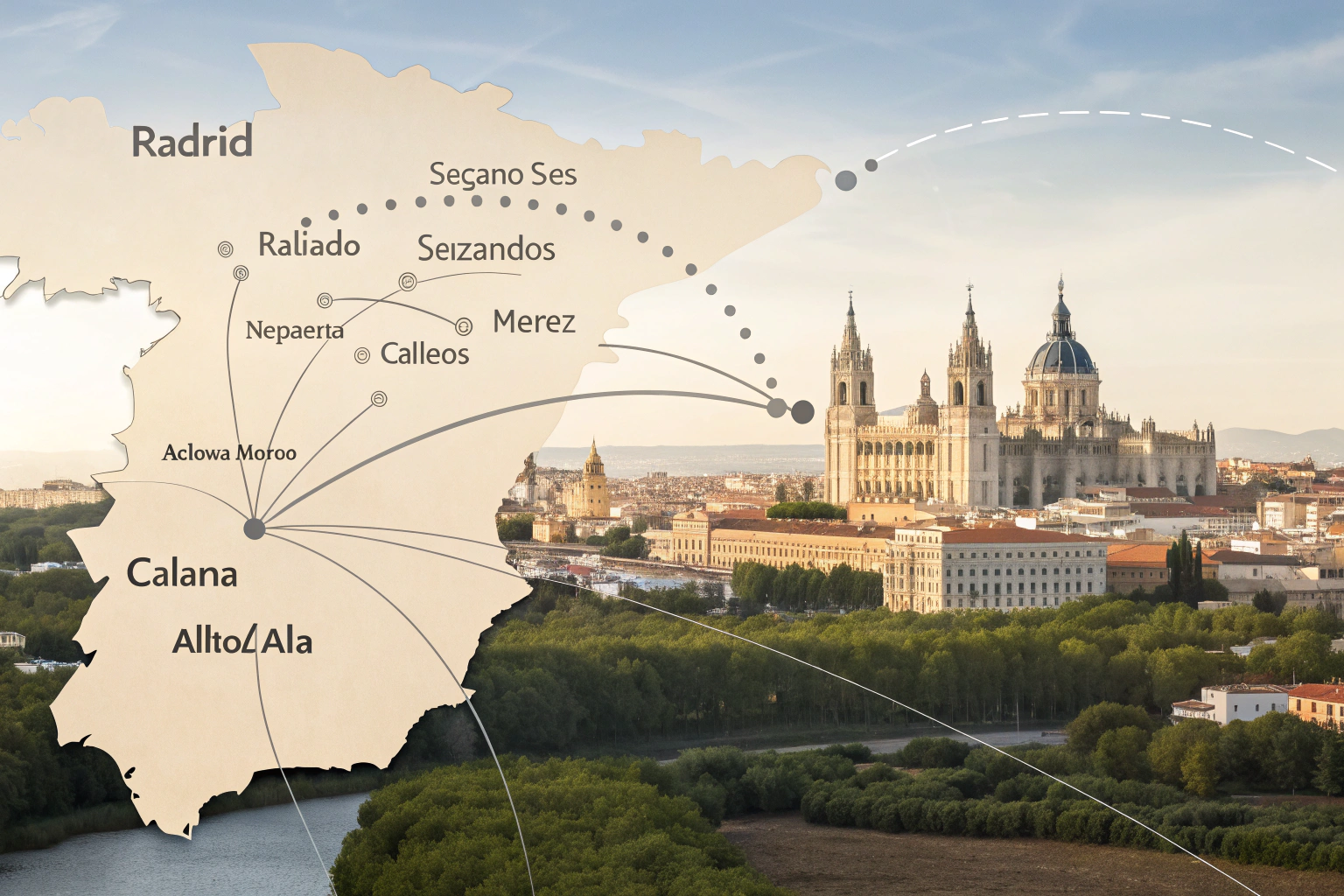
Taking day trips from madrid involves visiting historic cities and cultural landmarks located a short journey from Spain’s capital. Leveraging the country’s world-class high-speed train (AVE) and bus networks, destinations like Toledo, Segovia, and El Escorial are incredibly accessible. This allows travelers to experience diverse regions without the hassle of changing accommodations, though planning transport and maximizing time are common user concerns. This guide simplifies that process for a seamless experience.
Key Benefits at a Glance
- Speed & Convenience: Travel to UNESCO World Heritage cities like Toledo or Segovia in as little as 30 minutes by high-speed train, maximizing your sightseeing time.
- Cost-Effective Travel: Save significant money and time by using Madrid as your home base, avoiding the expense and hassle of booking new hotels for short visits.
- Rich Cultural Variety: Explore vastly different historical sites, from the ancient Roman aqueduct in Segovia to the imposing medieval walls of Ávila or the grand El Escorial monastery.
- Stress-Free Logistics: Navigate easily with Spain’s reliable and affordable public transportation, eliminating the need for a rental car and the stress of parking in historic city centers.
- Diverse Experiences: Go beyond historic cities to discover the royal gardens of Aranjuez, hike in the Sierra de Guadarrama mountains, or see the iconic windmills of La Mancha.
Purpose of this guide
This guide is designed for travelers based in Madrid who want to enrich their Spanish holiday by exploring nearby regions without complex planning. It solves the challenge of choosing from dozens of options and helps manage the logistics of a short journey. Here, you will find a clear breakdown of top destinations, step-by-step advice for booking train or bus tickets, and tips to avoid common pitfalls like missing the last train back. Our goal is to help you confidently plan a memorable trip that fits your schedule, budget, and interests.
Introduction: Why Venture Beyond Madrid's Borders?

Three years ago, I stood in Madrid's bustling Puerta del Sol, overwhelmed by the city's energy but curious about what lay beyond its borders. That curiosity led me to discover that Madrid serves as Spain's perfect cultural gateway, positioned strategically in the heart of the Iberian Peninsula with easy access to some of Europe's most remarkable destinations.
While Madrid dazzles with its royal palaces and vibrant plazas, your Spanish journey becomes even richer when you combine these excursions with a broader Portugal and Spain itinerary—linking Madrid’s historic heart with coastal Portugal’s relaxed charm.
Madrid's central location makes it an ideal base for exploring Spain's diverse cultural treasures. Within just one hour of travel, you can immerse yourself in medieval Toledo's three-culture heritage, marvel at Segovia's 2,000-year-old Roman engineering, stroll through Aranjuez's royal gardens, or walk the literary streets of Alcalá de Henares where Cervantes was born.
«Toledo has been a UNESCO World Heritage Site since 1986, and it’s now one of the most visited places in Spain.»
— Migrating Miss, 2025
UNESCO recognition
What makes these destinations truly special is their UNESCO World Heritage recognition, which guarantees authentic cultural experiences that have shaped Spanish identity for centuries. Each location offers distinct flavors of Spanish culture — from Toledo's legendary marzipan to Segovia's traditional cochinillo asado — creating opportunities to taste authentic Spain beyond the capital's cosmopolitan dining scene.
- Madrid serves as the perfect gateway to Spain’s UNESCO World Heritage treasures
- Four world-class destinations accessible within 1 hour of Madrid
- Day trips reveal authentic Spanish culture beyond the capital
- Strategic location allows exploration of medieval, Roman, and royal heritage
- Each destination offers unique culinary specialties and cultural experiences
Essential Planning Tips for Perfect Madrid Day Trips
After dozens of day trips from Madrid, I've learned that successful excursions depend on understanding Spanish cultural rhythms and choosing the right transportation for each destination. The key lies in respecting local customs like the afternoon siesta while maximizing your sightseeing time.
Spanish towns follow traditional schedules that differ significantly from northern European patterns. Most attractions close between 1:30 PM and 4:00 PM for siesta, creating natural breaks for leisurely lunches. This cultural pattern actually enhances your experience, encouraging you to slow down and savor regional specialties during the quieter afternoon hours.
- Comfortable walking shoes and weather-appropriate clothing
- Portable phone charger and offline maps downloaded
- Cash for small vendors and traditional restaurants
- Light backpack with water bottle and snacks
- Camera or smartphone with extra storage space
Smart planning also means considering seasonal variations. Spring and autumn offer ideal weather and fewer crowds, while summer brings longer daylight hours but intense heat during midday. Winter provides peaceful exploration opportunities, though some attractions have reduced hours.
Transportation Options from Madrid
Madrid's excellent transportation network connects you to surrounding destinations through multiple options, each suited to different travel styles and budgets. The high-speed AVE train system represents Spain's crown jewel of public transportation, while regional trains and buses offer economical alternatives for budget-conscious travelers.
«The high-speed AVE train from Madrid’s Chamartín Station gets you to Segovia in less than 30 minutes and for about EUR 14 for the cheapest tickets.»
— Next Level of Travel, 2025
Train details
The Cercanías Madrid suburban rail network provides the most economical option for nearby destinations like Aranjuez and Alcalá de Henares. These trains run frequently throughout the day and integrate seamlessly with Madrid's metro system, making transfers simple and efficient.
| Transport | Speed | Cost | Convenience | Best For |
|---|---|---|---|---|
| High-speed train (AVE) | Fastest | €€€ | High | Toledo, distant cities |
| Regional train | Moderate | € | High | Segovia, Alcalá |
| Bus | Slowest | € | Moderate | Budget travelers |
| Car rental | Variable | €€ | Maximum | Multiple destinations |
| Guided tours | Scheduled | €€€ | Highest | First-time visitors |
When to Leave and Return for Maximum Enjoyment
Timing your departure and return transforms a good day trip into an exceptional experience. Early morning departures between 8:00 and 9:00 AM allow you to reach destinations before tour groups arrive, providing peaceful moments to appreciate architectural details and capture photographs without crowds.
The Spanish siesta tradition, far from being an inconvenience, creates perfect opportunities for extended lunches at local restaurants. During these quiet afternoon hours, you can experience authentic Spanish dining culture while attractions prepare to reopen for evening visitors.
- Depart Madrid between 8:00-9:00 AM to avoid crowds
- Arrive at destination by 10:00 AM for optimal sightseeing
- Plan lunch between 1:30-3:00 PM during siesta hours
- Resume sightseeing after 4:00 PM when sites reopen
- Return to Madrid by 7:00-8:00 PM to avoid rush hour
Evening returns also offer practical advantages. Trains and buses are less crowded after 7:00 PM, and you'll arrive in Madrid with energy remaining for evening tapas or a leisurely stroll through the capital's illuminated streets.
Should You Take a Guided Tour or Go Independently?
The choice between guided tours and independent travel depends on your priorities, experience level, and desired depth of cultural immersion. Both approaches offer distinct advantages that suit different travel styles and circumstances.
Guided tours excel at providing historical context and ensuring you don't miss significant details. Professional guides share stories and insights that transform architectural features into compelling narratives, particularly valuable in culturally complex destinations like Toledo where Christian, Jewish, and Islamic influences interweave.
For more information on planning your itinerary, explore Rick Steves' guide or consult cultural heritage resources for deeper historical context.
- Guided Tours: Expert commentary, no planning stress, group discounts, fixed schedule
- Independent Travel: Flexible timing, personal pace, authentic discoveries, lower cost
Independent travel rewards curious explorers with spontaneous discoveries and authentic interactions. You can linger at viewpoints that captivate you, follow intriguing side streets, and adjust your schedule based on weather or personal energy levels.
Most Accessible Day Trips from Madrid Under 1 Hour
Madrid's strategic location in central Spain places four UNESCO World Heritage destinations within easy reach, making it possible to explore medieval streets, Roman engineering marvels, royal palaces, and literary landmarks all within day trip distance. These destinations represent different facets of Spanish culture and history, from religious tolerance to architectural innovation.
If you’re staying in Madrid and looking to extend your Spanish adventure beyond these historic towns, don’t miss the opportunity to explore authentic local culture through Madrid souvenirs—handcrafted keepsakes that capture the spirit of the city long after your day trips end.
- Toledo — Medieval three-culture heritage and marzipan specialties
- Segovia — Roman aqueduct and fairy-tale Alcazar castle
- Aranjuez — Royal palace with spectacular seasonal gardens
- Alcalá de Henares — Cervantes birthplace and university town
Each destination offers unique advantages for different types of travelers. History enthusiasts gravitate toward Toledo's layered cultural heritage, while architecture lovers prefer Segovia's Roman and medieval masterpieces. Garden enthusiasts find seasonal beauty in Aranjuez, and literature fans make pilgrimages to Cervantes' birthplace in Alcalá de Henares.
Toledo: Spain's Medieval Gem
Toledo stands as one of the most popular options, accessible in just 30-35 minutes by high-speed train from Madrid's Atocha Station. This UNESCO World Heritage medieval town features a stunning Gothic cathedral, a 10th-century mosque, two synagogues, and beautifully preserved cobblestone streets perfect for wandering.
The city's unique position as a meeting point of Christian, Jewish, and Islamic cultures created an architectural and cultural fusion unmatched elsewhere in Europe. Walking through Toledo's narrow medieval streets reveals this multicultural heritage at every turn, from Mudéjar architectural details to ancient synagogue remnants.
- Toledo Cathedral — Gothic masterpiece with El Greco paintings
- Alcázar fortress — Military museum with panoramic city views
- Jewish Quarter — Synagogue del Tránsito and narrow medieval streets
- Santo Tomé Church — Houses El Greco’s ‘Burial of Count Orgaz’
- Mirador del Valle — Best viewpoint for classic Toledo photographs
Toledo's culinary traditions center around marzipan, a sweet almond confection that local convents have perfected over centuries. The best marzipan comes from small family shops tucked away from tourist areas, where recipes remain unchanged since medieval times. Alternative bus options from Plaza Eliptica leave every half hour and take approximately 90 minutes, offering a budget-friendly alternative to the high-speed train.
Segovia: Roman Engineering and Fairy-Tale Castle
Segovia is another UNESCO World Heritage site featuring the iconic Roman Aqueduct, built around the 1st Century AD and still functional today, constructed entirely from stone without concrete. The high-speed AVE train from Madrid's Chamartín Station reaches Segovia in less than 30 minutes, with tickets starting around €14.
The Roman aqueduct represents one of the world's most impressive examples of ancient engineering, stretching over 15 kilometers from the mountains to the city center. Standing beneath its towering arches provides a visceral connection to Roman ingenuity and the continuity of Spanish civilization across two millennia.
- Roman Aqueduct — 2000-year-old engineering marvel with 167 arches
- Alcázar Castle — Disney-inspired fortress with royal chambers
- Cathedral — Last Gothic cathedral built in Spain
- Plaza Mayor — Perfect spot for cochinillo asado lunch
- Jewish Quarter — Hidden courtyards and ancient walls
Segovia's culinary crown jewel is cochinillo asado, a traditional roast suckling pig that local restaurants have perfected over generations. The most authentic cochinillo experiences happen in family-run establishments near Plaza Mayor, where proprietors demonstrate the traditional cutting ceremony using only a plate's edge.
Aranjuez: Royal Splendor and Garden Paradise
Aranjuez combines royal architecture with spectacular gardens that transform dramatically through the seasons, creating different experiences depending on when you visit. The royal palace and gardens earned UNESCO World Heritage status for their outstanding universal value as a cultural landscape.
The Cercanías Madrid C3 line provides direct access to Aranjuez in approximately 45 minutes, making it one of the most economical day trips from the capital. During spring and summer months, the historic Strawberry Train offers a nostalgic journey with period carriages and traditional costumes.
- Spring: Cherry blossoms and tulip displays in formal gardens
- Summer: Lush greenery and fountain shows, Strawberry Train operates
- Autumn: Golden foliage and harvest decorations throughout grounds
- Winter: Bare tree architecture and peaceful, crowd-free exploration
The palace interiors showcase different periods of Spanish royal taste, from Baroque grandeur to neoclassical restraint. The Porcelain Room stands as the palace's most spectacular chamber, completely covered in decorative porcelain that creates an almost surreal environment of artistic excess.
Alcalá de Henares: Cervantes' Birthplace
Alcalá de Henares combines literary pilgrimage with architectural splendor as the birthplace of Miguel de Cervantes, author of Don Quixote. The city's university, founded in 1499, represents one of Europe's first planned university towns and earned UNESCO World Heritage recognition for its outstanding Renaissance architecture.
The Cercanías Madrid C2 and C7 lines connect directly to Alcalá de Henares in approximately 35 minutes, making it easily accessible for literature enthusiasts and architecture lovers alike. The city maintains an authentic Spanish atmosphere with fewer international tourists than Toledo or Segovia.
- Cervantes Birthplace Museum — Recreated 16th-century family home
- University of Alcalá — UNESCO World Heritage Plateresque facade
- Plaza de Cervantes — Central square with Cervantes statue
- Corral de Comedias — Oldest public theater in Europe
- Archbishop’s Palace — Renaissance architecture and guided tours
The university's Plateresque facade represents Spanish Renaissance architecture at its finest, with intricate stone carving that rewards close examination. The annual Cervantes Prize ceremony, Spain's highest literary honor, takes place here each April, connecting contemporary Spanish literature to its historical roots.
Additional destinations worth exploring include San Lorenzo de El Escorial, located northwest of Madrid in the Guadarrama mountains, which houses the Royal Site—a massive Renaissance complex including a monastery, library, palace, and gardens. The C3a Cercanías train from Chamartín Station or Bus 664 from Moncloa station provide direct access.
Ávila showcases some of Europe's best-preserved medieval city walls built beginning in 1090 AD. Located about an hour and a half northwest of Madrid, visitors can walk the 1,700-meter perimeter offering beautiful city views.
Cuenca defies expectations with its old town perched dramatically on a rocky ridge above the Huécar gorge, featuring steep cobbled streets and UNESCO World Heritage status. The train journey takes approximately one hour.
Conclusion: Making the Most of Madrid's Prime Location
Madrid's position in the heart of Spain transforms it from merely a destination into a gateway for cultural exploration. These day trips have deepened my understanding of Spanish history, revealing how different regions contributed to the country's complex cultural identity through centuries of interaction and exchange.
Each destination adds layers to your Spanish experience that the capital alone cannot provide. Toledo's multicultural heritage illuminates Spain's diverse past, Segovia's Roman engineering connects you to ancient European civilization, Aranjuez's royal gardens showcase Spanish artistic refinement, and Alcalá de Henares celebrates the literary genius that gave the world Don Quixote.
- Book transportation tickets in advance during peak season
- Download offline maps and translation apps before departing
- Respect siesta hours — many sites close 1:30-4:00 PM
- Try regional specialties at local restaurants, not tourist areas
- Allow extra time for unexpected discoveries and photo stops
- Check opening hours and holidays before traveling
The beauty of Madrid's central location lies not just in convenience, but in the opportunity to experience Spain's full cultural spectrum within short distances. Use your time in Madrid as a springboard for deeper cultural exploration, and you'll return home with stories that span two millennia of Spanish civilization.
Frequently Asked Questions
Toledo is widely regarded as the best day trip from Madrid due to its rich history, stunning architecture, and UNESCO World Heritage status. You can explore medieval synagogues, cathedrals, and mosques, all within a compact, walkable city. It’s easily accessible by train, making it ideal for a full day of cultural immersion.
Top day trips from Madrid include Toledo for its historical blend of cultures, Segovia for its fairy-tale aqueduct and castle, and Ávila for its impressive medieval walls. Other favorites are El Escorial, a massive monastery complex, and Aranjuez with its royal palace and gardens. These destinations offer a mix of history, architecture, and natural beauty, all within a short distance.
For a comfortable day trip from Madrid, aim for destinations within 100-150 km, which typically take 1-2 hours by train or car. This allows ample time for exploration and return without exhaustion, such as to Toledo (70 km) or Segovia (90 km). Longer trips up to 200 km, like to Salamanca, are possible but may feel rushed if relying on public transport.
Opting for a guided tour for day trips from Madrid is great for hassle-free experiences, including transportation and expert insights, especially for first-timers. Going independently offers more flexibility in pacing and itinerary, ideal if you prefer exploring at your own speed via trains or rental cars. Consider your comfort with logistics and group sizes when deciding.
Family-friendly day trips from Madrid include Warner Bros. Movie World near San Martín de la Vega for thrilling rides and character meet-ups. Segovia offers engaging sights like the aqueduct and alcazar, which kids often see as a real-life Disney castle, plus easy walks. Aranjuez’s gardens and boat rides provide relaxed outdoor fun suitable for all ages.
Segovia is often hailed as the most beautiful town near Madrid, thanks to its dramatic Roman aqueduct, fairy-tale alcazar, and picturesque old town. Perched on a rocky outcrop, it offers stunning views and a blend of Gothic and Renaissance architecture. It’s just a short train ride away, making it perfect for a scenic day trip.
