
One of the reasons I moved to the South of France—instead of Paris—was my longing for a slower, more intentional way of living. I wanted to step back from the constant chase for what’s new and trendy, to reset my priorities, and to escape the fast-paced rhythm so typical of North American life. While my career in web marketing and personal projects still keep me busier than the locals, I’ve learned to carve out space for slowness—and that shift has brought me more peace than I ever expected. Over time, I’ve come to see “slow living” not as a destination, but as a daily choice: to be present, to travel with purpose, and to seek experiences that nourish rather than exhaust.
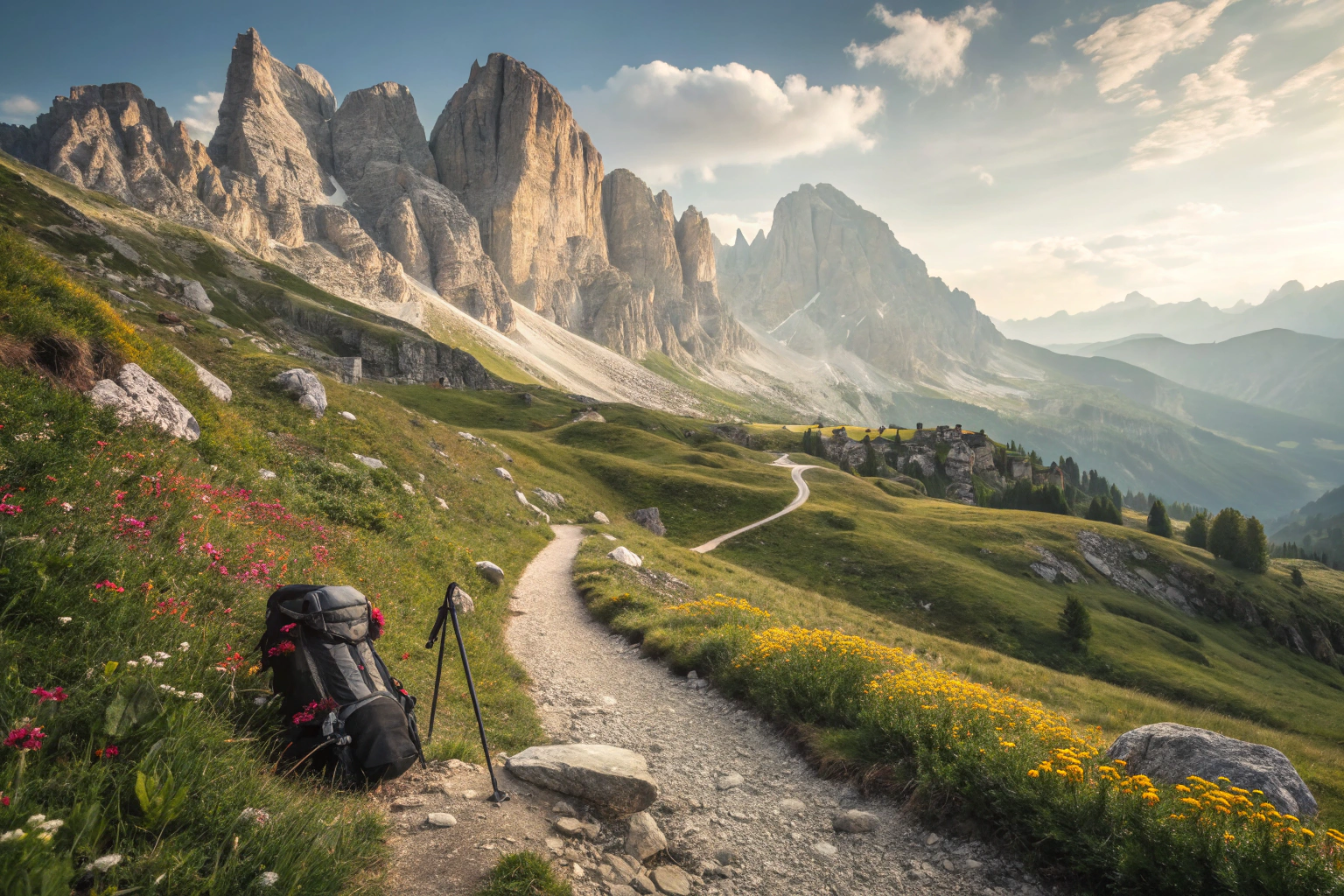
That’s exactly why hiking in the Dolomites feels like the ultimate extension of this philosophy. Backpacking here isn’t about racing to the summit or carrying everything on your back—it’s about moving gently through some of the world’s most breathtaking alpine landscapes, resting in warm mountain huts, and letting the rhythm of the trail guide you. In the Dolomites, slowness isn’t a luxury; it’s built into the journey itself.
Dolomites backpacking refers to multi-day hiking trips through the stunning Dolomite mountain range in northeastern Italy, a UNESCO World Heritage site. Unlike traditional backpacking, it often involves staying in a network of catered mountain huts (rifugi), allowing hikers to carry lighter packs. This unique system combines breathtaking alpine scenery with the comfort of warm beds and hot meals, making it accessible to a wide range of outdoor enthusiasts concerned about gear weight and logistics.
Key Benefits at a Glance
- Travel Light with Mountain Huts: Stay in catered huts (rifugi) with beds and meals, eliminating the need to carry a tent, sleeping bag, or most cooking gear.
- Navigate with Ease: An extensive network of clearly signed and numbered trails makes navigation straightforward, reducing the risk of getting lost even without a guide.
- Experience World-Class Scenery: Hike through dramatic landscapes of jagged peaks, pristine alpine lakes, and lush meadows that are accessible to hikers, not just expert mountaineers.
- Find Trails for Every Skill Level: From gentle valley walks to challenging via ferratas (iron paths), the Dolomites offer routes suitable for beginners and seasoned alpinists alike.
- Enjoy Unique Cultural Immersion: Experience authentic Italian and Tyrolean hospitality, cuisine, and culture right on the trail in the welcoming, family-run rifugi.
Purpose of this guide
This guide is for anyone planning a backpacking adventure in the Dolomites, from first-time visitors to experienced trekkers. It solves the key challenges of planning a trip, such as choosing the right trails, understanding the rifugio booking system, and packing efficiently for hut-to-hut hiking. You will learn the essential steps to prepare for your journey, how to avoid common mistakes like underestimating altitude or booking huts too late, and how to create a safe, unforgettable experience in one of the world’s most beautiful mountain ranges.
Understanding the Dolomites: A backpacker’s introduction
The Dolomites stand as one of Europe’s most spectacular mountain ranges, rising dramatically from the valleys of northern Italy like ancient cathedrals carved from pale limestone. These extraordinary peaks, part of the greater Alps system, offer backpackers an unparalleled combination of stunning alpine scenery, rich cultural heritage, and remarkably accessible mountain infrastructure that sets them apart from any other hiking destination in the world.
Designated as a UNESCO World Heritage Site in 2009, the Dolomites encompass nine mountain groups across the provinces of South Tyrol, Trentino, and Veneto. What makes these mountains truly unique is their geological composition — ancient coral reefs that were thrust skyward millions of years ago, creating the distinctive pale limestone formations that glow pink and orange during sunrise and sunset, earning them the nickname «Pale Mountains.»
- UNESCO World Heritage Site designation since 2009 for geological significance
- Unique pale limestone peaks formed from ancient coral reefs
- Trilingual region blending Italian, German, and Ladin cultures
- Over 18 peaks exceeding 3,000 meters in elevation
- Home to Europe’s most extensive via ferrata network
For backpackers, the Dolomites represent the perfect fusion of challenging terrain and civilized comfort. Unlike many alpine regions where wild camping and heavy pack loads are necessary, the Dolomites feature an extensive network of rifugios (mountain huts) that allow hikers to trek from peak to peak carrying only day packs while enjoying hot meals and comfortable beds each night.
The region’s unique position at the crossroads of Italian and Austrian cultures creates a fascinating backdrop for any hiking adventure. In South Tyrol, you’ll hear German spoken as commonly as Italian, while ancient Ladin traditions persist in remote valleys. This cultural richness extends to the local cuisine, architecture, and hospitality that backpackers encounter throughout their journey.
Getting to the Dolomites: Transportation options

Reaching the Dolomites requires some strategic planning, but multiple gateway cities provide excellent access to this mountain paradise. The key is understanding that Bolzano serves as the primary western gateway to the region, while Cortina d’Ampezzo offers eastern access, both situated within the autonomous province of South Tyrol.
| Airport | Distance to Dolomites | Transportation Options | Approximate Cost |
|---|---|---|---|
| Venice Marco Polo | 160km | Bus, Car Rental, Train+Bus | €25-80 |
| Innsbruck | 120km | Bus, Car Rental | €30-70 |
| Munich | 280km | Train, Car Rental, Bus | €40-120 |
| Verona | 180km | Bus, Car Rental | €25-75 |
Venice Marco Polo Airport offers the most convenient international access, with direct ATVO bus connections to major Dolomites towns. The journey takes approximately 2.5 hours to reach Cortina d’Ampezzo or 3 hours to Bolzano. For those arriving via Innsbruck, regional buses provide scenic routes through the Brenner Pass, offering your first glimpse of alpine grandeur before reaching your destination.
- Fly into Venice Marco Polo or Innsbruck for closest access
- Take ATVO bus from Venice or regional bus from Innsbruck
- Transfer at Bolzano or Cortina d’Ampezzo for final destination
- Consider car rental for maximum flexibility between trailheads
Car rental deserves serious consideration for backpackers planning to explore multiple valleys or start different sections of long-distance trails. The freedom to move between trailheads, especially when connecting different segments of routes like the Alta Via trails, can significantly enhance your Dolomites experience. However, parking can be limited at popular trailheads during peak season, so early starts are essential.
Best seasons for Dolomites backpacking
Timing your Dolomites backpacking adventure correctly can mean the difference between an unforgettable experience and a challenging ordeal. While I personally favor September for its stable weather and golden light, the traditional June through September window offers the most reliable conditions for multi-day treks, particularly when planning to hike the famous Alta Via 1 or Alta Via 2 routes.
The seasonal accessibility of trails directly correlates with rifugio operations and weather patterns. Most mountain huts operate from mid-June through mid-September, with some extending into early October depending on weather conditions and altitude. Understanding these patterns is crucial when planning your itinerary and making accommodation reservations.
| Season | Weather | Crowds | Rifugio Availability | Best For |
|---|---|---|---|---|
| June-August | Warm, occasional storms | High | Full service | First-time visitors |
| September | Cool, stable | Moderate | Limited hours | Photography, solitude |
| October | Cold, variable | Low | Most closed | Fall colors, experienced hikers |
| Winter | Snow, extreme cold | Very low | Closed | Specialized winter sports |
Summer backpacking (June through September)
Summer represents peak season in the Dolomites, bringing the most stable weather patterns and full rifugio services. Temperatures at elevation typically range from 10-20°C during the day, dropping to 5-10°C at night. This is when popular routes like Alta Via 1 and iconic destinations such as Tre Cime di Lavaredo see their highest visitor numbers, requiring strategic planning to avoid overcrowding.
The summer season also coincides with the most reliable mountain hut availability, with all rifugios operating full services including hot meals, comfortable dormitory accommodation, and emergency support. Weather patterns during this period typically feature morning clarity followed by afternoon thunderstorms, making early starts essential for both safety and photographic opportunities.
«All mountain refuges are available for use in the summer, making it the ideal time for overnight treks from one rifugio to another. Additionally, you’ll be able to make the most of your trip by actively engaging in various pursuits, thanks to the sunny forecast.»
— We Are Global Travellers, 2022
Source link
- Start hikes before 7 AM to avoid afternoon crowds
- Book rifugios 2-3 months in advance for peak season
- Carry rain gear for frequent afternoon thunderstorms
- Choose weekdays over weekends for popular routes like Tre Cime
Shoulder seasons: Spring and fall magic
Shoulder seasons offer a completely different Dolomites experience, with September and early October providing some of the most spectacular hiking conditions of the year. During my own autumn visits to Val Gardena and Alta Badia, the golden larch trees create a stunning contrast against the pale limestone peaks, while significantly reduced crowds allow for more intimate mountain experiences.
Fall hiking in the Dolomites presents unique opportunities for photography and solitude, but requires more careful planning due to variable weather and limited services. Many rifugios operate reduced hours or close entirely after mid-October, making it essential to verify accommodation availability well in advance.
- Many rifugios close after mid-October
- Weather can change rapidly, pack layers
- Larch trees peak golden color in early October
- Trail conditions may include snow above 2,000m
- Significantly fewer crowds on popular routes
Spring hiking presents its own challenges and rewards, with wildflower blooms beginning in May at lower elevations and extending through July at higher altitudes. However, snow conditions can persist well into June above 2,500 meters, making route planning more complex and potentially requiring microspikes or other traction devices.
Winter considerations for the adventurous
Winter transforms the Dolomites into a specialized mountaineering destination requiring advanced skills and equipment far beyond typical backpacking requirements. While Cortina d’Ampezzo serves as an excellent base for winter sports activities, true winter backpacking in the high country demands extensive mountaineering experience, avalanche training, and specialized gear.
- Avalanche safety training and equipment mandatory
- Winter mountaineering experience required above treeline
- Emergency shelter and communication devices essential
For most backpackers, winter visits are better focused on lower-elevation snowshoe tours, cross-country skiing, or using the extensive cable car network to access winter hiking trails. The dramatic beauty of snow-covered peaks provides incredible photographic opportunities, but the technical demands place winter backpacking firmly in the advanced mountaineering category.
Accommodation options for backpackers
The Dolomites offer backpackers a unique accommodation ecosystem that sets this region apart from most mountain ranges worldwide. Rather than relying solely on tent camping or expensive hotels, the extensive mountain hut network provides an ideal middle ground that combines mountain adventure with comfortable amenities and cultural immersion.
Understanding your accommodation options is crucial for planning both your budget and gear requirements. The choice between rifugios, camping, and town-based lodging affects everything from pack weight to daily itinerary flexibility, making this one of the most important decisions in your Dolomites planning process.
| Type | Cost per Night | Pros | Cons |
|---|---|---|---|
| Rifugio | €25-45 | Mountain location, meals available | Advance booking required |
| Camping | €8-15 | Flexibility, budget-friendly | Weather dependent |
| Town Hotels | €40-80 | Comfort, services | Daily transport to trails |
| Wild Camping | Free | Complete freedom | Restricted areas, weather risk |
The rifugio system: Mountain huts explained
The mountain hut system represents the heart of Dolomites backpacking culture, providing a uniquely European approach to multi-day trekking. These refuges, deeply rooted in South Tyrol alpine tradition, offer far more than simple overnight accommodation — they serve as social hubs, cultural centers, and gateways to understanding the region’s rich mountain heritage.
My first rifugio experience at Rifugio Lagazuoi perfectly encapsulated what makes these mountain huts special. After a challenging day hiking through dramatic limestone formations, arriving at the refuge felt like discovering a mountain oasis. The warm welcome, hearty local cuisine featuring speck and knödel, and conversations with fellow hikers from across Europe created memories that extended far beyond the spectacular views.
Modern rifugios typically offer dormitory-style accommodation with comfortable bunk beds, clean shared bathrooms, and dining rooms serving traditional alpine cuisine. Many feature spectacular terraces where hikers gather each evening to watch the famous Dolomites alpenglow illuminate the surrounding peaks. The social aspect cannot be overstated — rifugios create natural communities of mountain enthusiasts sharing stories and trail recommendations.
- Book online or call directly, avoid third-party sites
- Bring cash as many rifugios don’t accept cards
- Pack light sleeping bag liner for hygiene
- Arrive before 5 PM to secure your reservation
- Try local specialties like speck and knödel
Post-COVID considerations have affected rifugio operations, with many implementing capacity restrictions and modified meal services. Booking has become more competitive, making advance reservations absolutely essential, particularly for popular huts along routes like Alta Via 1. The rifugio experience includes breakfast and dinner in most cases, significantly reducing pack weight since hikers need carry only lunch and snacks.
Camping and freedom camping considerations
Camping in the Dolomites operates under specific regulations that vary between provinces and protected areas within South Tyrol and surrounding regions. Understanding these rules is essential for responsible outdoor recreation and avoiding potential fines or conflicts with local authorities.
Formal campgrounds provide the most straightforward camping option, offering amenities like showers, restaurants, and often spectacular mountain views. These established sites typically operate from May through October and provide excellent bases for exploring multiple valleys while maintaining a consistent accommodation base.
- Camping Olympia (Toblach) — near Tre Cime access
- Camping Sass Dlacia (Val Gardena) — central location
- Camping Catinaccio (Vigo di Fassa) — mountain views
- Camping Al Plan (Val Badia) — quiet family-run site
- Wild camping allowed above 2,500m with restrictions
Wild camping regulations in the Dolomites are complex and strictly enforced. Generally, bivouacking (emergency overnight camping) is permitted above 2,500 meters elevation, but only from sunset to sunrise and only with lightweight, non-permanent shelters. Within national parks and nature reserves, even this limited wild camping may be prohibited entirely.
Environmental responsibility becomes paramount when camping in this UNESCO World Heritage landscape. Leave No Trace principles should be followed religiously, with particular attention to waste disposal, water source protection, and vegetation preservation. The fragile alpine environment shows damage easily and recovers slowly, making every camper’s behavior critical for long-term conservation.
Budget-friendly towns and bases
Strategic town selection can significantly impact both your budget and daily logistics when backpacking in the Dolomites. Gateway communities like Bolzano, Toblach, and Bruneck offer affordable accommodation options while providing excellent access to major trail networks and public transportation connections.
Val Gardena villages present an interesting middle ground, combining authentic mountain atmosphere with reasonable prices and central location advantages. These towns serve as excellent bases for exploring multiple valleys without the premium prices found in more famous resort destinations like Cortina d’Ampezzo.
- Toblach — gateway to Tre Cime, train connections
- Bruneck — budget accommodations, valley access
- Ortisei (Val Gardena) — central location, cable cars
- La Villa (Alta Badia) — authentic atmosphere, hiking access
- Corvara — affordable base for multiple valleys
Town-based accommodation offers several advantages for budget-conscious backpackers, including access to grocery stores for resupply, laundry facilities, and reliable internet for weather updates and trail conditions. Many towns also provide cable car access to high-altitude trailheads, allowing day hikers to reach spectacular terrain without long valley approaches.
The trade-off involves daily transportation to trailheads and the loss of the full mountain immersion experience that rifugio-to-rifugio trekking provides. However, for shorter visits or those preferring comfortable beds and private bathrooms, town basing represents an excellent compromise between comfort and mountain access.
Top backpacking routes and trails
The Dolomites trail network encompasses everything from gentle valley walks to challenging high-altitude traverses, but the crown jewels remain the numbered Alta Via routes that provide multi-day mountain-to-mountain adventures. Alta Via 1 and Alta Via 2 represent the most famous and well-developed long-distance trails, offering distinctly different experiences for backpackers of varying skill levels.
Trail infrastructure throughout the Dolomites maintains exceptionally high standards, with clear signage, regular maintenance, and detailed time estimates posted at major junctions. The numbered trail system uses consistent markers throughout the region, making navigation straightforward even for first-time visitors.
| Trail | Length | Duration | Difficulty | Elevation Gain | Highlights |
|---|---|---|---|---|---|
| Alta Via 1 | 120km | 10-12 days | Moderate | 9,000m | Classic traverse, rifugio culture |
| Alta Via 2 | 180km | 14-16 days | Difficult | 12,000m | Technical sections, via ferrata |
| Tre Cime Circuit | 10km | 1 day | Easy-Moderate | 400m | Iconic peaks, photography |
| Cinque Torri Loop | 8km | Half day | Easy | 300m | WWI history, accessible |
«The Dolomites have all you could possibly need for guided hiking, as well as for self-guided hikes. The trails are carefully signposted, and the markings are regularly updated. A marker post with direction signs can be found at each fork in the path.»
— MONT Trekking, 2025
Source link
Alta Via 1: The classic Dolomites traverse
Alta Via 1 stands as the definitive Dolomites backpacking experience, offering a perfect introduction to the region’s spectacular terrain, rifugio culture, and diverse geological formations. This north-to-south traverse typically requires 10-12 days to complete, though the route can be shortened or extended based on individual preferences and fitness levels.
The route showcases the full diversity of Dolomites landscapes, from the dramatic limestone towers of the Tre Cime area to the gentler meadows and forests of the southern sections. Each day brings new geological wonders, from ancient coral reef formations to glacial valleys carved during the last ice age.
- Day 1-2: Toblach to Rifugio Fanes via Braies Lake
- Day 3-4: Cross Fanes plateau to Rifugio Lagazuoi
- Day 5-6: Traverse Tofane group to Rifugio Dibona
- Day 7-8: Cinque Torri area to Rifugio Vazzoler
- Day 9-10: Pelmo circuit to Rifugio Coldai
- Day 11-12: Final push to Belluno via Rifugio Bianchet
My own completion of Alta Via 1 in September provided an ideal introduction to Dolomites backpacking. The mountain hut system worked flawlessly, with each rifugio providing not just accommodation but cultural insights into alpine traditions. Evening conversations with fellow hikers, hearty mountain cuisine, and spectacular sunrise views from high-altitude terraces created memories that extend far beyond the physical challenge of the trail itself.
The route’s moderate difficulty makes it accessible to fit hikers without extensive mountaineering experience, though good physical conditioning remains essential. Daily elevation gains typically range from 600-1,000 meters, with well-maintained trails and clear signage throughout. Weather can change rapidly at altitude, making proper gear selection crucial for safety and comfort.
Alta Via 2: For the more adventurous
Alta Via 2 represents a significant step up in both technical difficulty and physical demands, stretching nearly 180 kilometers over 14-16 days with substantial elevation gain exceeding 12,000 meters total. This route appeals to experienced hikers seeking a more challenging Dolomites adventure, incorporating via ferrata sections and rock climbing elements that require specialized skills and equipment.
The technical aspects of Alta Via 2 cannot be understated — several sections involve exposed scrambling, via ferrata climbing with safety equipment, and route-finding skills beyond typical hiking requirements. Weather dependence increases significantly due to the more remote nature of the route and limited escape options in case of storms or emergencies.
- Requires via ferrata experience and climbing gear
- More remote with longer daily stages than Alta Via 1
- Technical scrambling sections above 2,500m elevation
- Weather-dependent route with limited escape options
- Recommended only for experienced mountain hikers
Unlike Alta Via 1’s relatively straightforward hiking, Alta Via 2 demands comfort with exposure, basic rock climbing techniques, and the ability to use via ferrata equipment safely. The route passes through more remote terrain with longer approaches between rifugios, requiring greater self-sufficiency and emergency preparedness.
Shorter circuit options and day hikes
For backpackers with limited time or those preferring to explore the Dolomites from established base camps, numerous shorter circuits provide access to the region’s most iconic landscapes without committing to lengthy traverses. Tre Cime di Lavaredo stands out as the most famous day hike, offering world-class mountain scenery accessible to hikers of moderate fitness levels.
The Cinque Torri area provides another excellent shorter option, combining spectacular rock formations with fascinating World War I historical sites. These shorter routes work excellently when combined with cable car assistance for accessing high-altitude terrain without lengthy valley approaches.
- Tre Cime di Lavaredo circuit — 3-4 hours, iconic views
- Cinque Torri loop — 2-3 hours, WWI history
- Seceda Ridge walk — 4-5 hours, dramatic ridgeline
- Alpe di Siusi traverse — 6-7 hours, alpine meadows
- Puez-Odle circuit — 2 days, geological diversity
These shorter options excel for photography enthusiasts, families with children, or those combining hiking with other activities like cultural exploration or culinary tourism. Many can be completed as comfortable day hikes from town accommodations, eliminating the need for rifugio reservations while still providing access to spectacular Dolomites scenery.
Frequently Asked Questions
Backpacking the Dolomites can take anywhere from a few days to several weeks, depending on the route you choose. Popular trails like Alta Via 1 typically require 8-12 days to complete, covering about 120 kilometers with varying terrain. Plan for extra time to account for weather, rest days, and side trips to fully enjoy the stunning landscapes.
In the Dolomites, you can stay in mountain refugios (huts) that offer beds, meals, and basic amenities along popular trails. Camping is allowed in designated campsites, but wild camping is restricted in many areas to protect the environment, so check local regulations. For more comfort, towns like Cortina d’Ampezzo provide hotels and hostels as base points for day hikes.
The best time for backpacking in the Dolomites is from late June to early September, when trails are snow-free and weather is generally stable with mild temperatures. July and August are peak months for clear skies and blooming wildflowers, though crowds can be higher. Avoid winter months unless you’re experienced in snow hiking, as conditions can be treacherous.
Some of the most scenic routes include Alta Via 1, which spans dramatic peaks from Lake Braies to Belluno, and Alta Via 2, known for its rugged terrain and via ferrata sections. The Tre Cime di Lavaredo loop offers breathtaking views of iconic rock formations in a shorter hike. For variety, the Puez-Odle Nature Park trail provides alpine meadows and stunning vistas.
For backpacking in the Dolomites, aim for a lightweight pack weighing 10-15 kg, including essentials like a tent, sleeping bag, clothing layers, food, water filter, and navigation tools. Pack versatile items to handle variable weather, such as rain gear and warm layers, while minimizing extras to reduce strain on longer treks. Always include a first-aid kit and emergency supplies for safety in remote areas.
